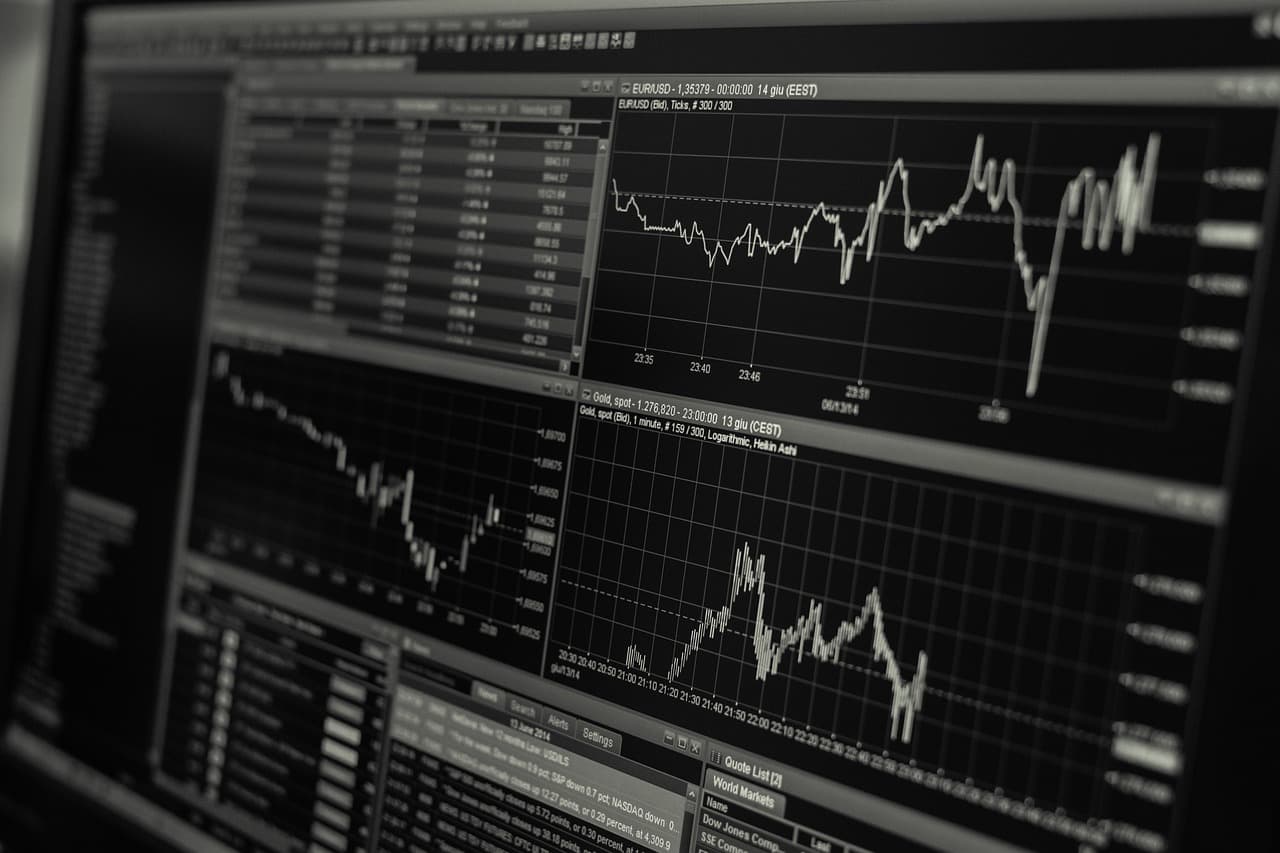
Jump Trading, a quantitative trading firm, is using GPT‑6 Astra–driven agents to assign longer, more ambiguous research tasks to automated systems. The firm builds predictive models that combine market data, news and events, and various alternative data sources to forecast asset prices; because markets are complex and noisy, exact prediction is rarely possible.
Lucas Baker, Head of LLM R&D at Jump Trading, says that even a small statistical edge over randomness can be sufficient: “if you’re slightly better than a coin flip at scale, that’s enough for a successful strategy,” he explains.
Agents embedded in research workflows
Baker leads agentic research and development aimed at constructing the agents, harnesses, and infrastructure that let quantitative researchers explore ideas more broadly and deeply. Introducing GPT‑6 Astra has materially expanded the scale and complexity of workflows that can be delegated to agents — from routine coding and bug fixes to sophisticated quantitative studies that validate new hypotheses.
Over the past year, AI tools have evolved from helpers for one‑off code snippets or bug hunting into systems capable of producing entire codebases and services autonomously. Baker and his team find AI most effective when treated like a colleague: researchers define the central problem, the work environment, and evaluation criteria, and then steer one or many agents in real time about where to focus or what job to run next.
Recursive improvement and long‑running tasks
According to Baker, GPT‑6 Astra enables agents not only to find meaningful, practical improvements but also to merge and stack those gains through recursive refinement. During a single long‑running task, the system can analyze its own findings, compare them to the initial proposal’s agreed criteria, and actively redirect efforts without requiring a human to inspect each iteration. As Baker puts it: “You can define something that needs to run for days—it needs to pull from many data sources, it needs to make those subtle calls about what is important and what is not, and it needs to interrelate everything—to create a comprehensive analysis that actually works now.”
Risk management and regulated environments
Jump Trading operates across every time horizon and asset class, and every step of its process is complex. In finance, where regulation is strict, mistakes carry financial and compliance consequences. Baker stresses the importance of recognizing the risks of delegating work to AI, while noting that agentic intelligence can also improve quality, security, and monitoring — not just add features.
Key controls include strong system design and boundaries, clear constraints, infrastructure that supports steerability and observability, and human review of changes. Baker says: “If you have a safe environment where the agent or system is free to produce any output that it needs, but there is also a human review process at the end of it where critical validation takes place with human acceptance, that’s what gives us confidence.”
For example, if an agent generates a trading signal, it is scoped and reviewed like any other output: treated as an informative but potentially flawed signal and integrated into a stringently reviewed and controlled execution environment.
Toward ubiquitous “autoresearch”
Baker expects a future in which “autoresearch,” the recursive improvement of measurable systems by agent researchers, becomes a routine component of a quantitative researcher’s workflow. Today, even GPT‑6 Astra’s longest tasks still require regular check‑ins with the person who defined the task — about which data to pull, how long to run, what counts as important, and whether intermediate results make sense.
Advanced autoresearch would begin with a human‑defined system (inputs, environment definition, evaluation metrics, trade‑offs, and priorities) but then entrust the rest to a loosely structured fleet of agents coordinated by other agents. Within a well‑structured research pipeline, these agents could make intelligent decisions on how to explore ideas, allocate compute time, and integrate promising findings starting from little more than an open question.
Baker asks rhetorically: “What does it look like when you can put all of this end to end, ask a general question that even you don’t know the answer to, and have a useful result come back? If you can solve a Millennium problem, you can probably also figure out some pretty interesting facts about quant finance.”
Model capabilities have advanced rapidly
Baker notes that each year has brought not only steady benchmark improvements but also step changes in what models can do. These advances were often hard to predict months in advance: while early agents in 2024 impressively could write a single file without errors, by 2025 it became possible to create entire codebases from scratch, and by 2026 multiple agents collaborating dynamically could make progress on open research questions.
“What's next year?” he asks. “It’s a pretty incredible prospect.”