Frontier language models released in the second half of 2026 are considerably better than their predecessors at visual reasoning and creative design, according to the source article’s author. Although they produce text, they can use code to make two-dimensional graphics and three-dimensional models. One advantage of this approach is that the resulting elements can be edited directly afterward.
Designing a poster with Gemini 4 Neon
The author tested Gemini 4 Neon’s two-dimensional design skills in Google AI Studio. The model was asked to create an SVG poster promoting the Kakapo recovery project, first researching the necessary details and then designing the image in a 1970s graphic style.
The final result took several rounds. AI Studio does not render SVG files, so the model running there could not spot visual errors without help. The author first requested a more realistic kakapo, especially its face, using image searches for references. Screenshots were then used to point out text that did not fit inside its rounded containers.
The author considered the finished poster successful. AI Studio used Google searches to gather the figures shown on it, which the author checked and found to be correct. The illustration also included red rimu tree fruit on a branch, an important food during the kakapo breeding season.
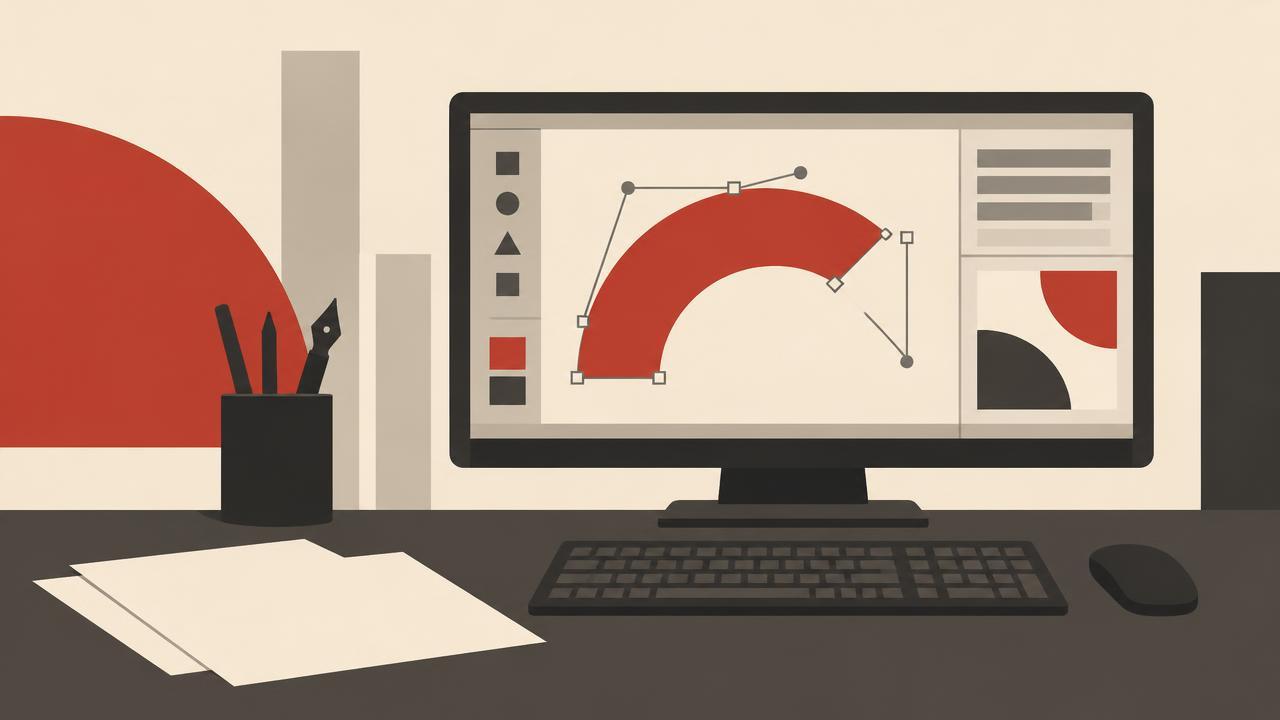
The text in the SVG can be edited directly, and the poster can also be changed visually in programs such as Inkscape, Adobe Illustrator or Boxy SVG. That means a new image does not have to be generated for every adjustment.
More formats, the same principle
SVG is only one option. A model connected to a coding agent can also run programs to produce images, targeting formats and tools such as HTML and CSS, two-dimensional HTML Canvas elements, Blender scripts, WebGPU shaders or PDF files. In general, it can target visual media represented by a file or produced by a script.
The author argues that this is also helping drive the spread of “vibe” game development: Claude Opus 5.5, GPT-6 Astra and Gemini 4 Neon can write code to produce usable 3D models, textures and sprites. Elements built with code can be adjusted, reused or remixed by writing more code.
How image generators differ
Most AI image generators directly produce bitmap images. Stable Diffusion, DALL-E and Midjourney were among the early leaders in the field. Over roughly the 15 months referenced in the source, language-model-driven variants also emerged, including Google’s Nano Banana and OpenAI’s ChatGPT Images. These can edit existing images and preserve details, allowing a design to be refined over multiple conversational turns.
They still have limitations: odd glitches can become visible when an image is enlarged, and lettering generated as part of the image may lack the consistency of typography based on an actual font. The output is essentially flat; although users can request changes in text or mark up an image, they cannot directly manipulate individual elements and layers in the same way as in an editable design.
The author argues that code-generated graphics address these problems. Dedicated image generators still have a role for photorealistic images, but for explanatory diagrams, editable posters, user interfaces, visualizations and game assets, the author would favor the code-driven approach.
The business case for design tools
After the arrival of Nano Banana and ChatGPT Images, the author thought Anthropic might be at a disadvantage because OpenAI and Google offered strong image-generation models within their product suites. Both companies also had generative video models: Google still offers Veo and Omni, while OpenAI has discontinued Sora. With PowerPoint still important in business, the author expected many enterprise customers to regard high-quality image generation as a necessary feature.
Today, however, Claude can produce visually compelling presentations and website designs, while Claude Design offers a full design-system platform built around code-driven graphics. The author sees this as a variation of the “bitter lesson”: a specialized image model once seemed necessary for design tasks, but text-output language models improved enough to create visual designs themselves by writing code.