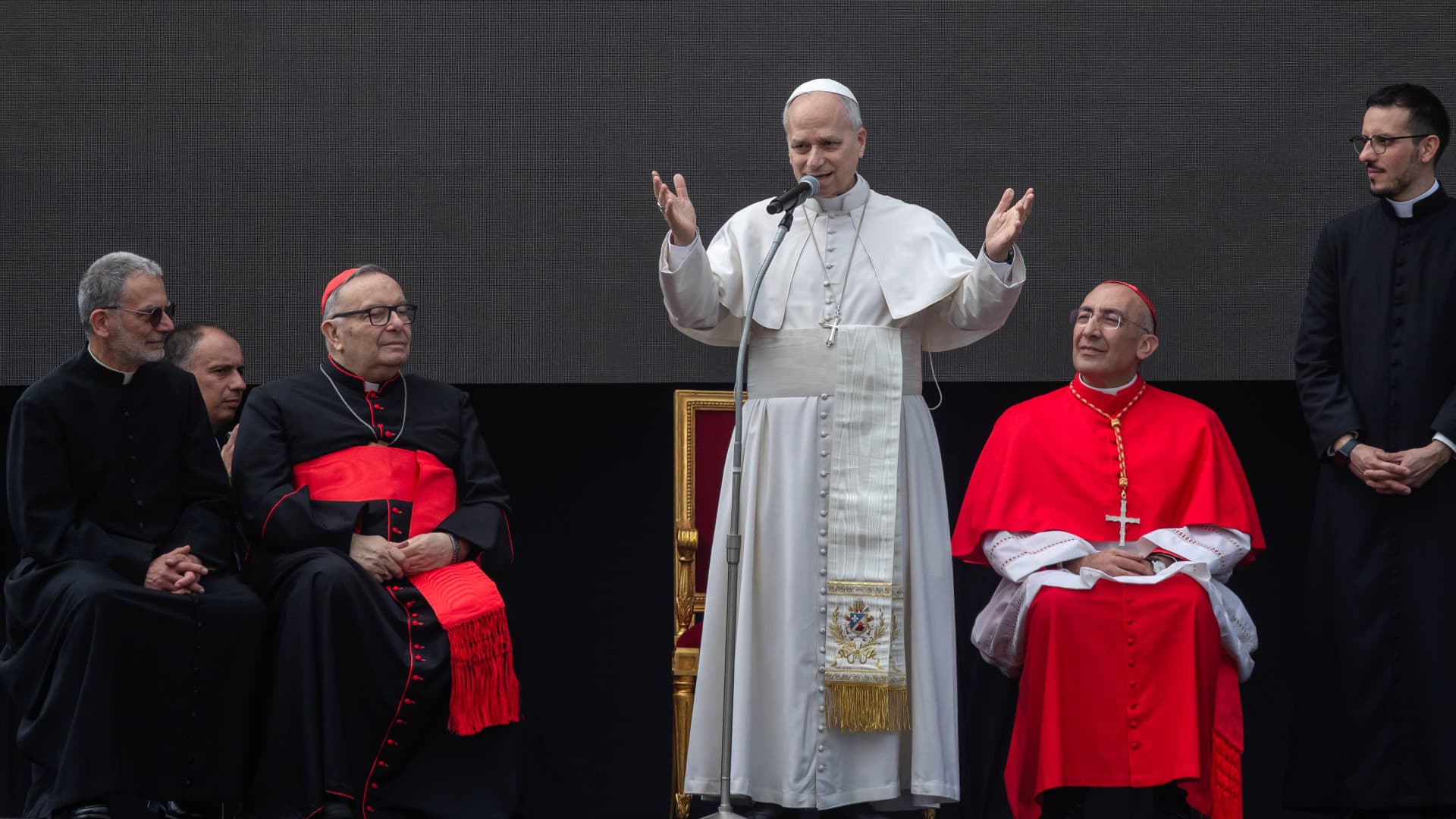
Pope Leo XVI published his first encyclical on Monday, titled "Magnifica Humanitas" (Great Humanity), a nearly 43,000-word circular in which he urged governments worldwide to slow the development of artificial intelligence (AI), according to Reuters. The document addresses technology governance, the ethics of war, and the Catholic Church's historical responsibilities.
AI at the center: slowdown, legal frameworks and data ownership
The pope called for "more active political engagement" capable of slowing down when everything accelerates. He demanded robust legal frameworks, independent oversight and responsible political decision-making for AI. Leo emphasized that ownership of AI-related data should not be left exclusively in private hands and highlighted the need to protect workers' rights and shield children from the technology's harmful effects.
The encyclical also draws attention to the human suffering behind the supply chains that sustain global computing capacity: in some parts of the world, children and young people work under hazardous conditions to mine rare earths, leaving "their bodies wounded and worn" so that computation can proceed uninterrupted, the pope wrote.
Arms, profit and the rejection of the just war theory
The encyclical strongly criticizes the profit motive of the military-industrial complex and its role in driving conflicts. Pope Leo warned that some leaders may stoke armed conflicts to divert attention from domestic political problems. "Humanity is sliding into a culture of violence in which peace appears not as a duty but as a fragile pause between conflicts," he wrote.
A major theological assertion in the document is the rejection of the just war theory. While that teaching has existed in Church thought since at least the fifth century and holds that war may only be waged in defense against aggression, Leo states that the doctrine "has become obsolete," arguing it has too often been used to justify various wars.
Military AI and strict ethical limits
The pope insisted that military uses of artificial intelligence must be confined by the "strictest ethical limits." He called it unacceptable to delegate lethal decisions to AI systems. He also underscored the human costs embedded in technological systems, reiterating the plight of those who extract the raw materials that power global computation.
Apology for slavery and the Babel analogy
As a historically significant gesture, the encyclical includes an apology on behalf of the Catholic Church for its tacit tolerance of the Atlantic slave trade. Leo acknowledged that the Church only firmly condemned the trade in the nineteenth century and offered a personal apology: "This is a wound in Christian memory. For this, on behalf of the Church, I sincerely ask forgiveness," the text says.
The pope invoked the biblical Tower of Babel, urging world leaders and all persons of good will to stop building new "Babel towers" and instead cooperate in the service of the common good.
Preparation and implications
Reuters reports the document was prepared over roughly a year. The encyclical spans technological, ethical, political and historical concerns and sends a clear message to policymakers, businesses and society: slow down, regulate, and act responsibly with new technologies, while preserving peace and human dignity.
Key figures and timing
- Publication: Monday (source: Reuters).
- Length: nearly 43,000 words.
- Preparation time: about one year.
(Further reactions from political and civil actors are likely to follow.)