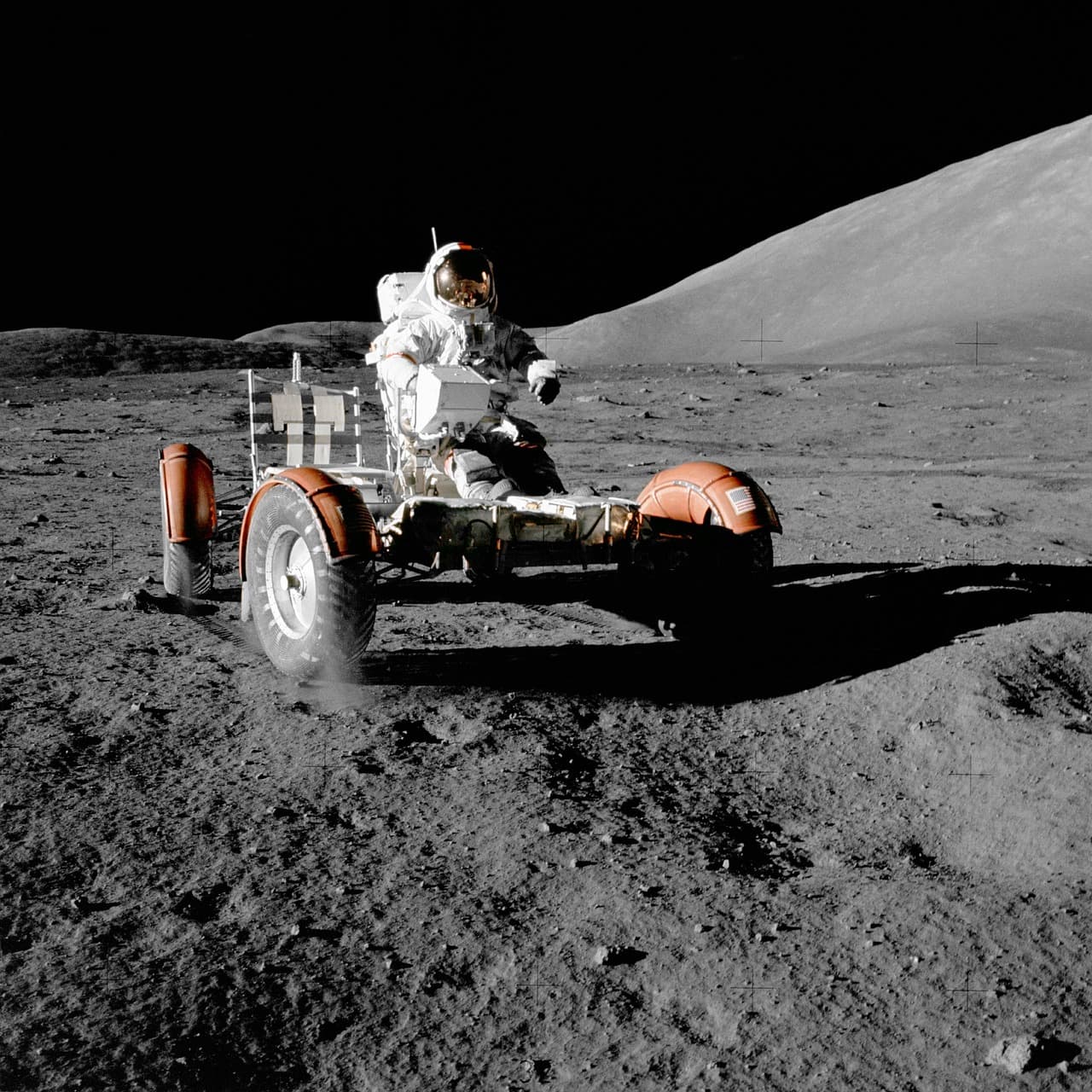
Lunar Outpost, a startup that builds robotics for space infrastructure, announced it will use Nvidia Jetson processors to control the lidar system on its next lunar rover. If the plan succeeds, the Jetson chips would likely be among the first GPUs to operate on the lunar surface.
Justin Cyrus, chief executive officer of Lunar Outpost, said the company is comparing the Nvidia Jetson platform with its flight compute platform, which has more spaceflight heritage, to evaluate pros and cons. The company is pushing to adopt more capable, GPU-powered systems in extreme environments if they prove reliable.
NASA has been funding private companies to explore the Moon in preparation for returning human astronauts, possibly as early as 2028. That program, modeled on NASA’s commercial partnerships such as those with SpaceX, asks companies to develop landers and rovers that carry scientific instruments to map terrain and search for resources like water.
Nvidia recently announced a partnership with Firefly Aerospace in which the Jetson platform would operate on a satellite orbiting the Moon to process imagery. That satellite is intended to collect mapping data and to track the increasing number of robots operating on the lunar surface.
Lunar Outpost’s next rover will be carried aboard a lander built by Intuitive Machines. The rover is designed to carry a sensor package into craters and other locations difficult to explore from orbit. A subsequent mission will target Reiner Gamma, a lunar feature where a magnetic anomaly has puzzled scientists.
The company said each mission is expected to launch on a Falcon 9 rocket before the end of the year.
Why Jetson matters for rovers
Nvidia’s Jetson platform is not as well known as large AI accelerators used in datacenters, but it is a critical component for many physical AI systems. Jetson modules are designed to be compact and power-efficient, enabling robots to process sensor inputs locally and react more quickly to their surroundings.
Cyrus said Lunar Outpost’s autonomy stack was more deterministic five years ago; now it combines deterministic control with a layer of physical AI. The company runs both approaches in parallel and is determining where physical AI can plug into their stack to enable capabilities that haven’t been possible before.
Technical challenges: radiation and temperature swings
Operating GPUs in space is challenging, and the Moon presents harsher conditions than near-Earth orbit. Most spaceborne GPUs operate in orbits relatively shielded from radiation and extreme temperature changes. The Moon is directly exposed to cosmic radiation and experiences large temperature swings between lunar day and night.
"Your system has to survive lunar night and has to do so on very low power," Cyrus said.
If engineers can run these chips reliably in that environment, Lunar Outpost expects its vehicles to be more capable, with faster local processing and greater autonomy. NASA’s long-term plans for a sustained human presence on the Moon will likely rely on autonomous systems to prepare sites and perform heavy work.
Cyrus described Lunar Outpost’s work as moving from exploration toward permanence: figuring out how to build a lasting outpost. He said the combination of deterministic models and a physical AI layer is what will allow a sustainable robotic workforce to support human presence in space.
Next steps: multiple rovers and a larger vehicle
Over the next few years Lunar Outpost plans several small autonomous rovers and one larger vehicle named Pegasus intended to carry astronauts. Pegasus is planned to fly on a rocket developed by Blue Origin, but that launch vehicle suffered an anomaly this summer and its return to flight is not yet certain.
"It does seem like they’re making pretty darn good progress on the pad," Cyrus said, while noting he cannot speak to Blue Origin’s or NASA’s exact timelines. He added that Lunar Outpost has been told it remains on the same timeline for 2028.
Longer-term visions such as space data centers and robot fleets operating on the Moon therefore remain tied to the availability of larger rockets and supporting infrastructure.