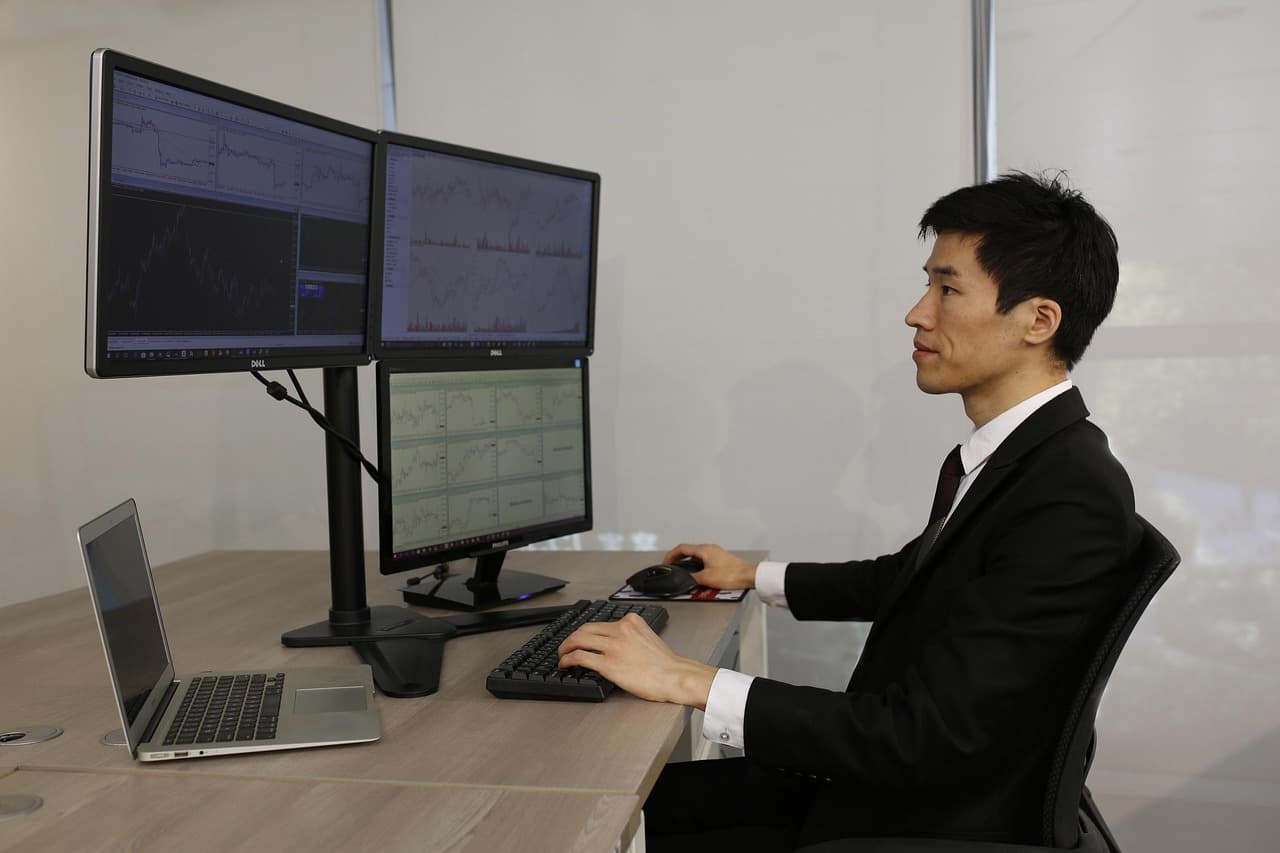
Anekha Sokhal, CEO of Moshi and a former energy derivatives trader at JP Morgan, presented at AI Engineer New York the tool she wished she had while trading: a recommendation engine that links vast market information to what matters for a trader’s book.
Who and why
Sokhal’s background combines mathematics and statistics (undergraduate studies at Warwick), derivatives trading at JP Morgan (emerging markets and commodities), a Fulbright scholarship to the U.S., machine learning research (including an ICLR publication in collaboration with Stability AI) and projects involving NASA. Those experiences informed the design of Moshi.
What Moshi does
Moshi provides real‑time, portfolio‑centric market insights for traders, initially focusing on commodity, energy and macro markets. The product’s goal is to process volumes and varieties of data beyond human capacity and surface signals, explanations and recommendations tailored to a trader’s positions.
Details presented in the talk:
- Data volume: Sokhal illustrated Moshi’s throughput with an example — "in four seconds Moshi learns 300 new things" — to convey the scale of continuous ingestion and inference.
- Data types handled: structured time series (futures markets, technical indicators, moving averages), fundamental time series (supply/demand and physical market events), and unstructured/alternative data (news, podcasts, X/Twitter).
- Private user data: Moshi integrates users’ private or proprietary inputs — subscriptions, internal analytics, and unique operational data (e.g., LNG ship counts) — alongside public signals.
- Pipeline: data cleaning and transformation, statistical and ML tagging, building an n‑dimensional graph ontology, then surfacing actionable outputs in a software interface so that each time a trader opens Moshi they see items relevant to their portfolio and can get multi‑day answers in seconds using LLMs.
How it differs from legacy platforms
Sokhal resists describing Moshi as simply a "new Bloomberg." Instead she positions it as a distinct class of software: market data processing combined with personalized recommendation capabilities. She summarized it metaphorically as what might happen if Bloomberg, Claude and Netflix were combined — i.e., market data + LLM interaction + a recommendation system that pushes relevant content to the user.
Moshi’s recommender attempts to identify second‑ and third‑order connections (for example, signalling when an energy equities development could indirectly affect oil positions), something that a raw news stream may not surface but that a connected graph or a recommender can highlight.
Trust, signal and noise filtering
Traders often follow a set of trusted voices and sources; Moshi aims to surface confidence scores and contextual signals so users can see not only an item of information but how it aligns or diverges across sources. Divergent reports themselves can be informative (e.g., differing ship counts across Reuters, Bloomberg and WSJ may indicate uncertainty and an exploitable opportunity).
Document processing and the build vs. buy question
Moshi handles messy PDFs and other documents using an in‑house vision–language model to parse and ingest user uploads into its database. Sokhal emphasized the importance of not sending customer data to third parties without explicit agreement, and noted that choosing between off‑the‑shelf vendors (e.g., Reducto) and building in‑house depends on a team’s engineering capacity — Moshi’s team, for example, includes many members with prior NASA collaboration experience and favors building proprietary models when appropriate.
Conference fallout, customer conversations and hiring
Following Sokhal’s AIE talk the team received heavy inbound interest from traders, consultants and AI engineers; she extended her stay in New York to handle back‑to‑back meetings and planned follow ups including webinars to scale the intake process.
On hiring, Sokhal reported receiving 2,500 applicants for a single open role in a short period, illustrating both the high inbound interest and the noise that founders must filter when hiring. For Moshi the current priority is meeting prospective customers and partners rather than aggressive recruitment.
Summary
Moshi aims to be a workflow‑aware platform that ingests heterogeneous market data, filters for reliability, integrates private user inputs, and surfaces personalized recommendations and signals for traders. The product draws on Sokhal’s blend of trading experience, mathematical background and ML research, and places emphasis on trusted sources, document extraction, and early customer conversations before scaling hiring.
Related mentions from the discussion
- Moshi — the company
- Anekha Sokhal — background and work
- GIQ research referenced in the interview
- Reducto — an example document‑processing vendor
- AI Engineer New York — the conference
The podcast episode contains timestamps covering the whole conversation (0:00–25:55) including topics such as Sokhal’s career path, Moshi’s architecture, data types, recommendation systems, trusted sources, build vs. buy, customer meetings and hiring.