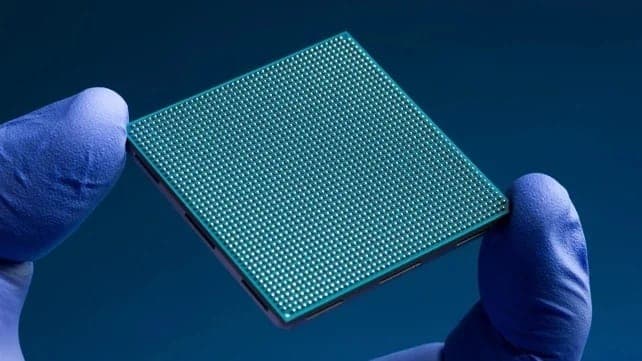
NASA has begun developing its own processor tailored to the needs of distant space missions, aiming to reduce reliance on ground intervention by enabling local data processing and autonomous decision-making. The program targets a chip family called High Performance Spaceflight Computing (HPSC), developed in partnership with the American company Microchip Technology.
Why this matters
As missions move farther from Earth, communication delays and limited bandwidth make it difficult to send and receive data quickly. That increases demand for onboard systems that can process large volumes of data locally — in particular to support artificial intelligence-based decision making and time-critical activities such as spacecraft landings.
Features of the HPSC
- HPSC is designed as a system-on-a-chip (SoC), conceptually similar to chips found in smartphones but built to withstand the extreme conditions of space and to operate reliably for many years millions of kilometers from Earth.
- According to NASA statements, the unit delivers roughly 100 times the computing capacity of current systems. Early operational experience reported so far indicates the HPSC's performance may be as much as 500 times greater than existing radiation-hardened chips.
- The chip family is intended to process the large data streams produced during AI workloads in a scalable manner. Power management was a design priority: functions can be turned off or placed into lower-power modes depending on use so the processor does not exhaust the spacecraft's other resources.
Testing and timeline
The first version of the HPSC has been completed and testing began in February 2026. Tests are ongoing, and NASA expects to report detailed results in a matter of months. Test activities include:
- radiation exposure testing,
- thermal cycling,
- shock and vibration tests,
- simulations using high-fidelity landing scenarios derived from real NASA missions.
The landing scenario simulations require substantial hardware capability because they must process all sensor inputs simultaneously during descent and touchdown.
The implications
If the HPSC meets expectations, it could allow distant spacecraft to act more autonomously, accelerate in-situ scientific analysis, and reduce the volume of data that must be returned to Earth. Those capabilities will be especially valuable for future lunar and interplanetary missions where communication delays and bandwidth limits are significant constraints.
Development and testing of HPSC are ongoing; NASA and Microchip Technology plan to publish more comprehensive results as the evaluation progresses.