The Jet Propulsion Laboratory (JPL) at NASA has developed an experimental rover called ERNEST that can navigate terrains that have challenged previous planetary rovers. In recent field trials in the Colorado Desert of Southern California, ERNEST covered roughly 26 kilometers with minimal human intervention, according to Techxplore.
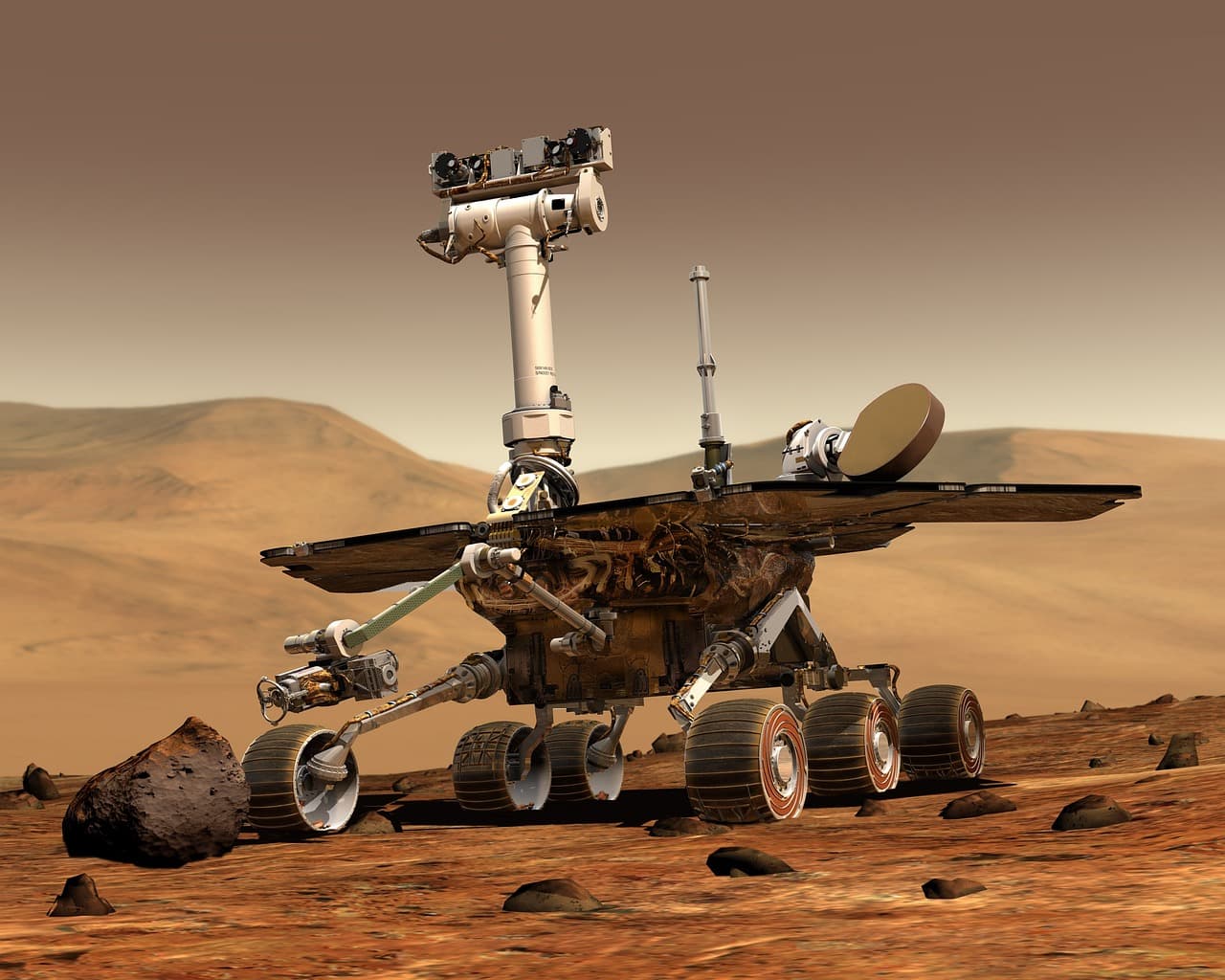
The 1.2-meter-long vehicle's key innovation is an active suspension system: each of its mesh wheels is independently actuated, enabling the rover to step over obstacles that would stop vehicles like Curiosity or Perseverance. The system continuously adjusts weight distribution and supports multiple locomotion modes. Besides conventional rolling, ERNEST can "walk" on its wheels, move forward with snake-like undulation, and travel laterally.
Issa Nesnas, lead technologist at JPL, explained that the tests were designed to advance both mobility hardware and autonomous control software simultaneously. The researchers emphasize that future lunar missions will require vehicles to traverse long distances across difficult terrain under changing lighting conditions, so improvements in both mechanics and perception-driven autonomy are necessary.
During the latest test series the rover achieved a speed of about 1 kilometer per hour, a considerable step forward compared with current, slower Mars rovers. Planetary scientist James Keane said a similar vehicle scaled to about twice ERNEST's size could allow scientists to undertake genuine "hikes" on the Moon or even Mars — longer, more autonomous exploration traverses.
The ERNEST development began as a rethinking of NASA's decades-old rocker-bogie suspension. Engineers evaluated 11 different configurations using two smaller prototypes and then spent months testing behavior on courses filled with lunar-regolith-like material.
The final hardware was completed in autumn 2024, but the team stressed that the hardware alone was insufficient. They employed reinforcement learning built on artificial intelligence so the rover could learn maneuvers from its own experience. JPL created a high-fidelity simulation environment that allowed engineers to run thousands of hours of virtual tests over a single weekend. After the extended training, ERNEST was trialed on obstacle courses featuring sand dunes, debris piles, steps and steep slopes; the rover autonomously found viable routes and completed multiple tests successfully.
In the next development phase the system will decide autonomously when to engage the active suspension and how to avoid hazardous obstacles. Researchers say these capabilities could play an important role in mapping the Moon's rugged surface and in future long-distance planetary exploration missions where vehicles must travel extensive distances with limited ground intervention.
Based on the ERNEST prototype's experimental results, the JPL team plans to use the lessons learned to design larger — potentially twice as large — rovers for the next generation of distant-planet exploration.