Early-summer developments in AI combine two trends: open-weight models are closing the gap with closed-source frontier systems, and regulatory pressure — notably the standoff between Anthropic and the U.S. government — is prompting new access controls and identity checks. Several Anthropic models were brought back online on July 1, while providers and governments have introduced or signaled further restrictions and verification requirements.
Key events
- Anthropic released Claude Sonnet 5 (Sonnet 5), positioned for agentic use cases and said to be less expensive than Opus 4.8. The company also introduced Claude 5 Fable, described as a "Mythos-class" general-use model.
- Fable 5 reopened to the public on July 1; the report notes it will no longer be available via subscription after July 7 and will be accessible only through usage credits.
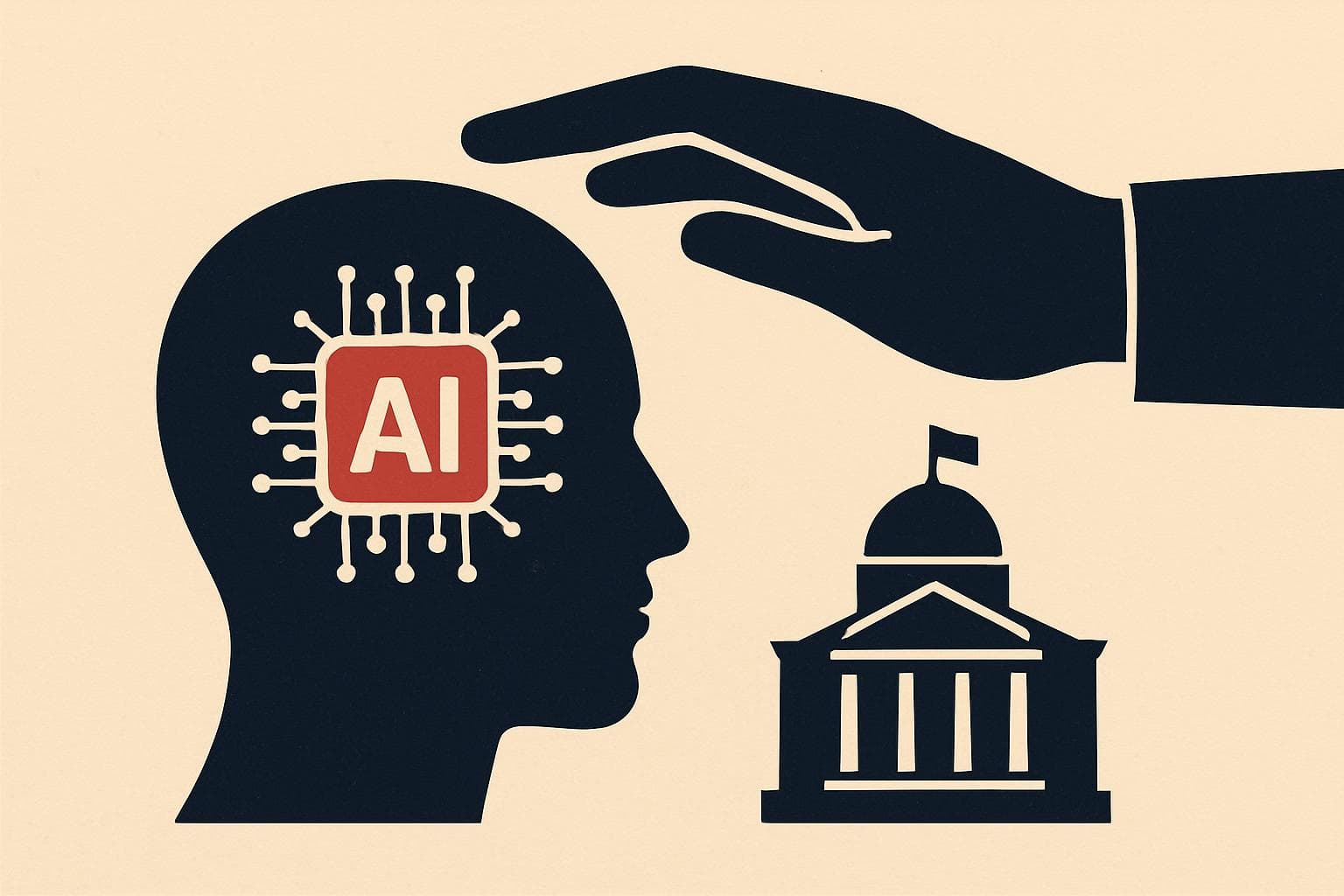
- Anthropic temporarily took Mythos and Fable offline for several weeks after the U.S. government asked the company to restrict access for certain foreign nationals. Anthropic will require identity verification for "a few use cases" starting July 8.
- The U.S. government demanded that OpenAI approve users of its GPT-5.6 model during a "review period."
- Anthropic has demanded penalties against Alibaba, alleging distillation from Anthropic models was used to train Alibaba’s Qwen model.
Models and technology updates
- Open-weight models: Z.AI’s GLM-5.2 ranks highly on the Artificial Analysis Intelligence Index as a top open model despite its smaller size.
- NVIDIA Nemotron 3 Ultra: an open-weight model trained on 550 billion tokens, combining the Mamba architecture, mixture-of-experts, and transformers; aimed at high performance on complex, long-running tasks.
- VibeThinker-3B: a small (3B parameter) model that the report says is competitive on benchmarks for math, code, and general reasoning.
- Google DiffusionGemma: a 26B-parameter MoE open-weight model that generates text blocks in parallel through a diffusion algorithm; reported to be about four times faster than similarly sized models.
- Google announced Gemini 3.5 Live Translate, a real-time voice-to-voice translation service that keeps up with normal conversation and matches pacing and pitch.
- Xiaomi released MiMo-V2.5-Pro-UltraSpeed in collaboration with the TileRT project; it claims 1,000 tokens/second and says open weights are forthcoming.
- Apple officially announced its Apple Foundation Models, described in the source as "co-developed with Google." The announcement raises the prospect of more competitive assistant capabilities for Siri.
- Google added Gemma 4 12B to its Gemma 4 family: an open-weight multimodal model that can run on laptops with 16 GB of RAM.
- Microsoft announced MAI-Thinking-1, a MoE frontier model with 35B active parameters and roughly 1T total parameters in the family; the MAI family includes specialized models for coding, transcription, and image generation.
- NVIDIA open-sourced Cosmos 3, releasing data, training scripts, and tools for frontier models focused on the physical world (robotics, autonomous vehicles).
- The Open R1 project aims to produce a fully open-source clone of DeepSeek-R1 based on DeepSeek’s technical report.
Performance and competitions
- The Artificial Analysis Intelligence Index places open models like Z.AI GLM-5.2 ahead of many open competitors, but top scores are still held by Claude Fable 5, Claude Opus 4.8, and GPT-5.5.
- Hugging Face launched the Fast Gemma Challenge, a competition to accelerate Gemma-4-E4B by using agentic approaches; leaderboards show results in real time.
Software development and agents
- Agents are evolving from single-developer coding aids into team infrastructure with shared memory, standards, governance, billing, and observability.
- Notable tools and services: Murakkab (plain-language agent-workflow authoring), Claude Tag (Claude integration with Slack for shared team instance), Qodo (enterprise-scale AI-generated code management), TesterArmy (agent-driven continuous testing), and Microsoft SkillOpt (open-source framework for optimizing AI skills via gradient descent).
- Many vendors are shifting to usage-based billing; GitHub Copilot users have expressed dissatisfaction at rising costs associated with usage pricing.
- Microsoft’s Build announcements positioned Windows as a "platform for agents," noted plans to replace some OpenAI models with Polaris (an in-house model), and open-sourced the Windows Agent Framework.
- Skipper is a new coding agent that claims to produce a complete working service from a specification without human intervention.
Security and risks
- New malware strains exploit model guardrails or embed their own LLMs on infected machines to develop customized attacks.
- OpenAI’s Lockdown Mode is rolling out to personal and business accounts; it prevents ChatGPT from sending data to external sites, blocking one key exfiltration step though not preventing prompt injection.
- Anthropic published a Defending Code Reference Harness to help practitioners find and mitigate vulnerabilities in AI-assisted workflows.
- Researchers built an agent-enabled worm that runs open-weight models on infected devices to discover and tailor attacks for new victims.
- IBM and Red Hat announced Project Lightwell, a security clearinghouse for open-source software—an effort highlighted as important for addressing large-scale security issues.
- Chrome added Device Bound Session Credentials, tying session cookies to a specific device to reduce account takeover risk.
Operations, infrastructure and other developments
- NVIDIA developed a new water-cooling system that substantially reduces water needs for data center cooling.
- Databricks launched Unity AI Gateway, a set of tools intended to help organizations manage AI costs.
- Observability has emerged as a key capability for managing AI spending following the end of token-maximizing tactics.
Societal and research notes
- AI’s impact on workflows continues to shift practices: leadership in handling many pull requests, attention as a scarce resource versus agent autocomplete, and books and posts exploring how to live and work with AI.
- Argentina is considering legal structures for "non-human corporations" operated by AI agents or robots, where human shareholders may be optional.
- In healthcare and neuroscience: an ALS patient regained speech using brain implants, and China’s Neuracle became the first company to receive approval for a brain-computer interface chip, which had been used experimentally in 2024.
Takeaway
Open models are making meaningful technical gains while governments and enterprises tighten controls on access and usage. The Anthropic–U.S. government interactions, the reintroduction of Fable and Mythos variants, and a wave of new open and closed models together point to an AI landscape that is both more capable and more regulated. Teams and organizations should plan for shifting cost models, stronger identity and access requirements, and the operational realities of integrating agentic systems into collaborative workflows.