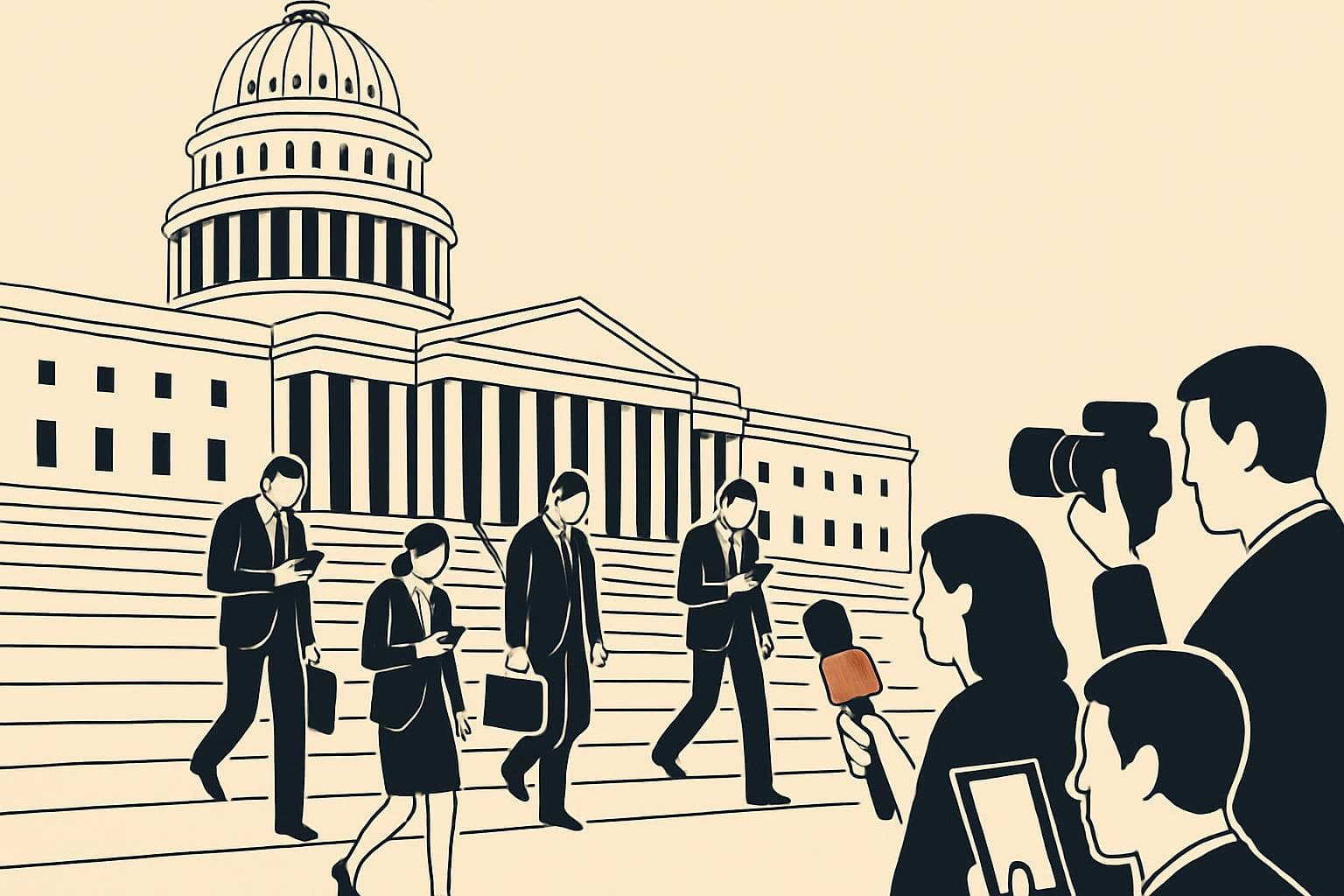
According to the Financial Times, OpenAI has held preliminary talks about offering the U.S. government roughly a 5% equity stake in the company. This proposal is in early-stage conversations, a person familiar with the matter told the paper.
Why it matters
If the Trump administration accepted such an offer, the federal government would have a financial interest in decisions about when and whether to limit the public release of an OpenAI model. That would create a closer link between a major AI developer and a principal regulator.
OpenAI’s stated aim and scope
OpenAI frames the potential government stake as a mechanism to give the public a share of AI’s financial upside. CEO Sam Altman has previously expressed interest in some form of public wealth fund. The plan could include other AI labs contributing similar stakes, and the shares might be placed into accounts or vehicles designed to give American households exposure to AI investments. Anthropic has supported related ideas in a recent paper proposing “universal pre-distributive capital accounts.”
Political and legal considerations
For context, the U.S. government acquired a 9.9% stake in Intel last August; Intel’s shares have risen nearly 400% since then, though that performance coincided with a broader rally in chip stocks. The Intel stake was arranged under the CHIPS Act; a comparable arrangement with AI labs would likely require an act of Congress.
Critics say the offer looks more like a PR or political move to curry favor with the administration than a genuine mechanism to share benefits with the public. One investor in both Anthropic and OpenAI told Axios the proposal reads as a political maneuver rather than a practical plan to distribute gains.
David Sherman, AI and financial inclusion strategist at io.net, emailed that a government stake would be a “troubling milestone” damaging competition among labs. He argued it would give a government seal of approval to one AI company while many developers, researchers and businesses are excluded by rising token prices and long GPU queues.
Regulation and alternative approaches
The White House is still deciding when to permit wider releases of OpenAI’s most powerful models; Altman has said the current regulatory process is not fully “optimal.” He also proposed a U.S.-led international forum to set AI regulatory standards, which could be a way to facilitate government investment without imposing direct regulatory control.
There are alternative policy suggestions for sharing AI’s financial benefits: proposals include requiring AI companies to allocate a share of pre-tax income to the public or imposing a tax on tokens. Kevin Bankston, an AI governance advisor, wrote on X: “JUST. TAX. THEM.” Bill Gates previously proposed a robot tax in 2017 as a way to slow automation and tax the economic value similarly to how employee income is taxed.
Bottom line
Sam Altman wrote in the Financial Times earlier this week that “The labs develop the technology, but citizens and their elected representatives must make the rules.” The idea of a government equity stake is currently preliminary and would likely provoke legal, political and competitive debates if pursued further.