In his new book Hyperscale, journalist Paris Marx examines how data center infrastructure, which has existed for decades, has become a source of political conflict as generative artificial intelligence has spread. In an interview with TechCrunch, Marx discussed the water and electricity demands of construction, local opposition and the responses of technology companies.
The book arrives amid growing discontent with data centers, which the source says may have contributed to Democratic gains in the recent U.S. midterm elections. The debates could continue as Democrats gain more governmental influence.
Inside a data center
Marx said hyperscale data centers were difficult to access: he wrote to several companies, but received either refusals or no response. After viewing facilities from the outside in northern Virginia and Ireland, he eventually toured one in New Zealand. Researchers told him that access had been easier before the rise of generative AI and the recent increase in attention to data centers.
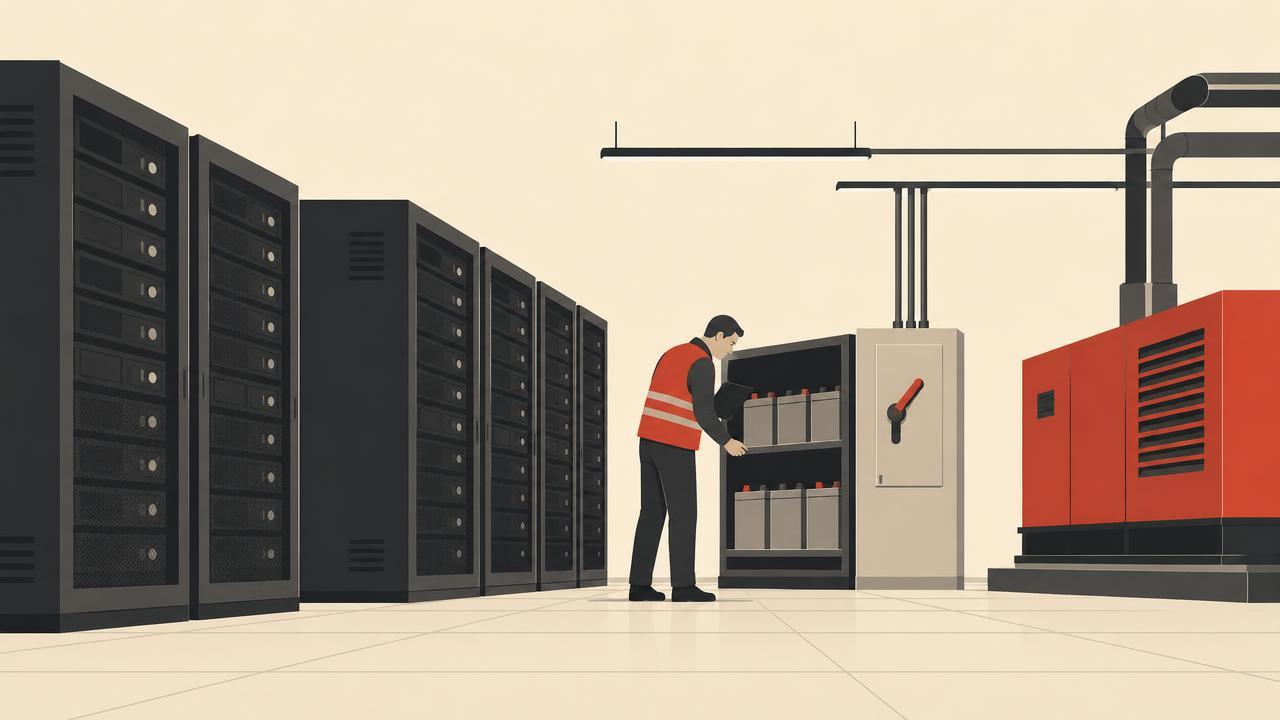
The security measures struck him most. He had to send his passport in advance, have it checked on arrival and use a key card for every door. The server room itself, however, was utilitarian: equipment stood in tall cabinet-like racks, cooled by air from nearby vents. The fans were so loud, he said, that someone spending a long time inside would probably need earplugs.
Water and electricity in local communities
Several stories drew Marx’s attention to the effects of data centers. Around Santiago, Chile, communities organized over concerns about water access as Google and Microsoft built facilities. In Ireland, data centers now consume more than 20% of the country’s electricity; Marx said this puts pressure on prices and the grid. In 2022, the grid operator imposed a moratorium on new data center connections around Dublin, before the construction surge driven by generative AI.
In The Dalles, Oregon, where Google built its first company-owned data centers around two decades ago, the company’s water use became contentious. Google wanted to build more facilities and needed additional water. When a journalist at The Oregonian asked the city for consumption figures, the request was met with a lawsuit rather than disclosure. Around a year later, Google revealed that it was using 29% of the city’s water.
For Marx, these examples, emerging around the release of ChatGPT, suggested that local conflicts already affecting some communities could spread much further.
Why opposition crosses political lines
Marx considers the current scale of data center construction unsustainable. In his view, the problem is not just the size of individual facilities but their growing number and cumulative demand for water and energy, particularly where fossil fuels are involved. He argues that many promised economic, productivity, healthcare and education benefits of generative AI have not materialized, while environmental and social costs are mounting. Among the latter, he cites possible mental health effects of chatbot dependence, false information and deepfakes.
Opposition crosses political lines: the interview cites both Ron DeSantis and Bernie Sanders. Marx says that is because the effects of a local data center can be tangible in electricity bills, access to water or noise from cooling equipment. Existing frustration with the technology industry can therefore become focused on a physical project in a community.
He sees similar resistance to physical manifestations of technology in the U.S. rollout of Flock cameras, Meta’s smart glasses and Waymo’s self-driving cars. Their effects, he argues, can be felt and challenged more directly than a company can be pressured by simply deleting an app.
Corporate responses and cooling trade-offs
Microsoft, Amazon and OpenAI have said they no longer intend to use nondisclosure agreements in negotiations with local governments. Marx said this could make project information easier to obtain, but would not by itself make a major difference. He views the decision partly as a response to opposition: secrecy can fuel distrust, so a promise of transparency also serves the companies’ public messaging.
Companies have also proposed paying more of the cost of the electricity infrastructure their data centers require and promised different cooling approaches. Marx said the industry has responded to environmental concerns with its own arguments, often comparing data center water use with national consumption by agriculture or golf courses. But, he argues, the decisive issue is local: national totals do not show the burden a project may place on a water-stressed area.
Evaporative cooling requires a continuous supply of replacement water. Closed-loop systems instead recirculate coolant, potentially reducing water demand, but Marx said cooling it can require more electricity. He added that pipes can contain chemical coolants as well, and some communities worry that leaks could reach their water supplies.
A different technological future
Marx stressed that he does not oppose technology or data centers in general. The title of the book’s final chapter, Human Scale, points to an alternative to hyperscale construction. In his view, the question is whether the benefits generative AI actually delivers justify the resources it demands.
He also challenges the idea that technology leaders’ vision is the only possible future. He considers debates about digital sovereignty important, but warns that replacing U.S. technology giants with local companies using the same business practices would not necessarily create a better model.
Marx would give the public sector a larger role in technology development. He sees European funding for public technology as a first step, particularly for services governments themselves use. Citing a recent Microsoft outage and Google’s threat to schools’ access to its search service if they did not accept its AI tool, he argued for investing in alternatives to major corporate offerings that could provide greater public benefit.