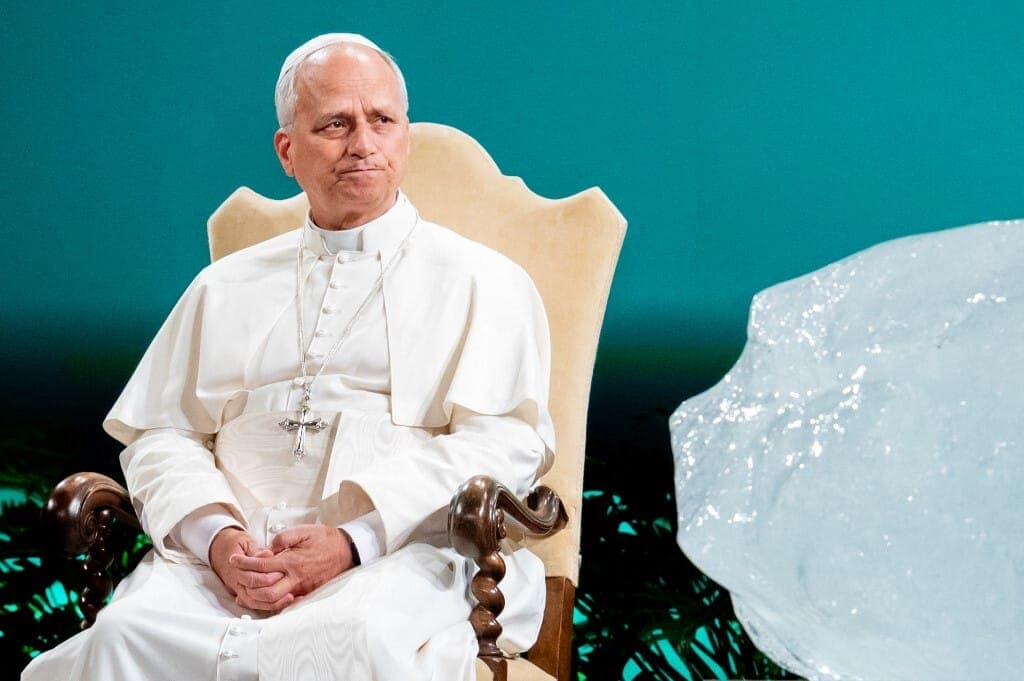
In his first encyclical since his election, Pope Leo XIV has urged restrictions on artificial intelligence and called for a prohibition of autonomous weapons, according to Politico.
The papal encyclical, a traditional instrument for communicating the pope’s position on major issues, treats artificial intelligence not only as a technological matter but as a civilizational turning point. It highlights the dangers posed by autonomous weapon systems, algorithmic decision‑making, and the removal of human responsibility from acts of war.
Pope Leo states that AI must not be allowed to dominate humanity and that it should never be permitted to decide life-and-death questions. The document also warns that chatbots and other AI‑based tools should not be treated as equivalent to human beings.
The encyclical calls for AI to be subordinated to moral and legal frameworks to ensure it serves humanity. The pope — who has a background in mathematics — does not reject AI entirely, but emphasizes the need for accountability and strict ethical limits. As the text puts it: “No algorithm can make war morally acceptable.”
The document also warns: “Any technology that can launch attacks without seeing human faces reduces the moral threshold for conflict.” In that respect, the encyclical represents the Catholic Church’s strongest intervention so far in the global debate over how AI will shape warfare, labor markets, and society.
Breaking with some traditions, Pope Leo personally unveiled the document in the company of Canadian tech billionaire Christopher Olah, signaling the importance he attaches to the issue. The encyclical’s positions could create friction between the Vatican and governments that are competing to develop AI‑based strategic weapons.
The core message of the encyclical is a call to restore human responsibility, to ensure oversight of military and algorithmic decision‑making, and to subject the use of artificial intelligence to stringent ethical constraints to mitigate future risks.
Practical implications
The encyclical does not lay out specific legal measures, but it clearly sets out the Vatican’s stance: the deployment of artificial intelligence cannot be governed solely by technical or strategic considerations. The pope’s appeal covers not only military applications but also algorithmic systems that make social decisions and could erode human accountability.
(Reported by Politico.)