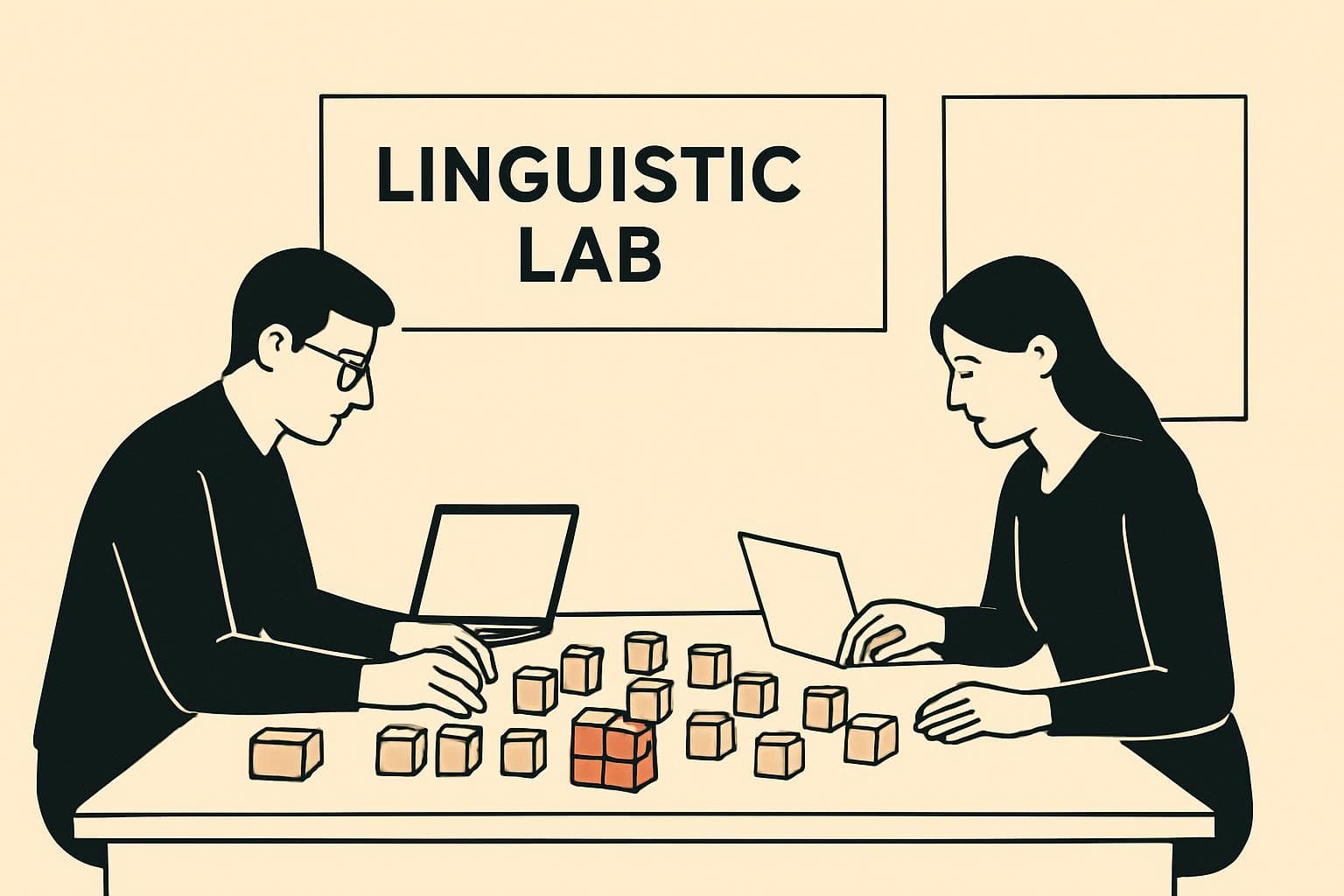
A Franco‑Italian research team found that merely having the option to use artificial intelligence (AI) significantly impairs people’s judgement and their ability to recognize the limits of their own knowledge. According to reporting in TNW, key results from the experiment were: when participants could consult an AI, the share who admitted they did not know the answer fell from 44% to 3%; the proportion of correct answers fell from 27% to 9%; and participants’ reported confidence rose from 30% to 76%. In short, AI availability led people to give more confident but often incorrect answers, even when they lacked knowledge.
Method: question selection and the model used
Researchers deliberately selected questions in domains where AI models commonly err. Examples included small visual details from films, such as the colour of a team’s kit in the movie Csavard be, mint Beckham. The experiment used the Step 3.5 Flash model, which typically provides incorrect answers on such tasks. In some instances, participants who would have answered correctly on their own changed to an incorrect answer after consulting the AI.
Financial incentives and their limited effect
The team also tested monetary rewards to encourage accuracy. Incentives produced only modest improvement: the proportion willing to admit “I don’t know” rose from 3% to 8%, and correct answers increased from 9% to 16%. Those rates remained well below the no‑AI group’s results, where the corresponding figures were 44% for “I don’t know” and 27% for correct answers.
Earlier work and the concept of ‘cognitive surrender’
This study builds on prior findings: researchers at the Pennsylvaniai Egyetem previously labelled the tendency to defer to AI errors as “cognitive surrender.” In a study earlier this year, they reported that people accept incorrect AI answers in about 80% of cases, while feeling more confident than participants who worked without AI.
Why this matters and who is most at risk
The authors argue the concern goes beyond blind trust in incorrect AI outputs: the mere presence of AI appears to suppress metacognitive processes used to recognise the boundaries of one’s knowledge. That effect is particularly worrying for children, who may grow up with these systems before critical thinking skills are fully developed. The findings indicate a need for improved user education on source criticism, uncertainty recognition, and verification practices as AI tools become more widespread.
Conclusion
The Franco‑Italian experiment suggests that access to AI does not automatically improve decision‑making. Instead, it can reduce people’s awareness of their own ignorance and increase confidence in wrong answers, with only limited mitigation from monetary incentives. Researchers stress the importance of communicating AI limitations and training users to evaluate and verify AI outputs.