Jensen Huang returned to lead Nvidia on November 23, eleven days after his departure, according to the account. Employees greeted the founder at the company’s Santa Clara headquarters by chanting his name. Huang apologized for the events of the preceding weeks and promised to be a better chief executive this time. He also remarked that he did not have a computer and would need the IT department to provide one.
Business Insider reported that more than 200,000 people had signed an online petition calling for his return, including several thousand who identified themselves as Nvidia employees. The welcome followed a rapid reversal by the board: on November 17 it had rejected Huang’s return, but six days later it supported the move unanimously.
Departure and board reversal
Nvidia announced Huang’s resignation on November 12 after information about his private life appeared in the press. The matter also acquired a national security dimension because of suspicions that one of the businesswomen involved had links to Chinese intelligence. Huang acknowledged marital infidelity, while the Chinese government rejected the espionage allegations.
Chief Financial Officer Colette Kress took over temporarily as the board began searching for a new chief executive. On November 17, board chair Harvey Jones said Huang’s personal conduct had been inconsistent with Nvidia’s code of ethics and cultural standards.
Bloomberg reported that the decision to bring Huang back was made on Sunday afternoon without prior consultation with senior executives, who were informed only at the last minute. According to the news agency’s sources, several potential chief executive candidates had withdrawn in the meantime.
The board later cited the interests of shareholders, employees and business partners in supporting his return. The reversal raises questions about what new circumstances affected the directors’ earlier ethical assessment and how much weight they gave to the economic consequences.
The White House role
The Wall Street Journal reported that US President Donald Trump and the White House worked actively to secure Huang’s return. According to the newspaper, US Attorney General Todd Blanche told Trump and Vice President JD Vance that Huang was not a target of Justice Department investigations and that the department had no evidence he had broken the law or posed a national security threat.
Nvidia said its board had received information from senior US government officials during its decision-making process. On that basis, the directors concluded that Huang’s return did not pose a national security risk. The company said it would nevertheless continue an independent investigation previously opened into suspected foreign intelligence activity.
The government’s interest may reflect the importance of Nvidia technology to US artificial intelligence infrastructure and the geopolitical significance of advanced semiconductor exports. The case also raises questions about the boundary between representing national economic interests and politically influencing the decisions of a publicly traded private company.
Share surge and key-person risk
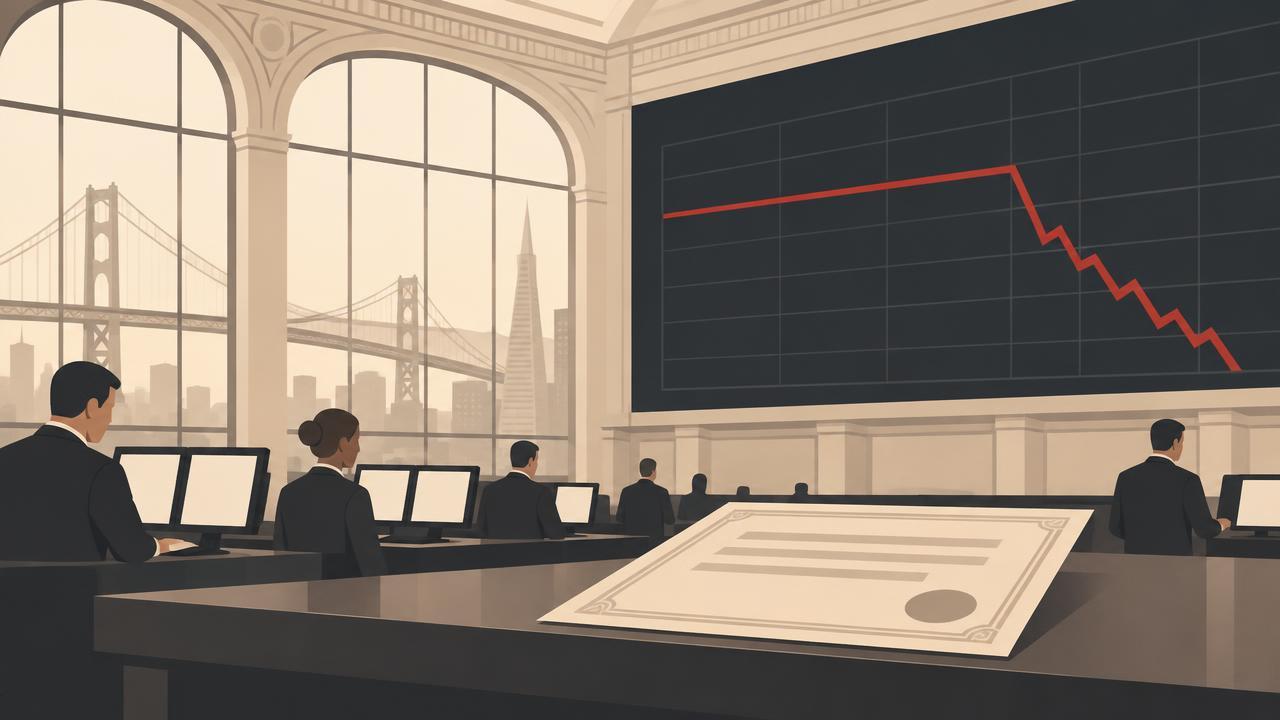
According to Financial Times data, Nvidia shares closed 31.5% higher on November 23, adding $952 billion to the company’s market capitalization. The newspaper calculated that this was the largest one-day increase in corporate value on record. Even after the rise, the share price remained about 5% below its November 11 level.
The market reaction suggests investors regard Huang as exceptionally important to the company’s prospects. Corporate governance experts describe such dependence as key-person risk: an organization can become vulnerable when its operations, reputation or growth depend disproportionately on one individual.
Over three decades, Huang became Nvidia’s leading strategist, the public representative of its technological vision and a prominent figure in the global AI industry. Following his departure, however, the company reported strong quarterly results on November 17 and issued an ambitious revenue forecast for the following quarter. Much of the foundation for that performance had been established under Huang’s leadership.
His return may have reduced immediate uncertainty over leadership, but the share-price movement also highlighted the importance of succession planning. Over the longer term, it remains an open question how effectively Nvidia can preserve its knowledge, decision-making processes and market stability independently of its chief executive.
Trump’s financial interest
Reuters estimated the value of Trump’s Nvidia shares at between $11 million and $55 million, based on his financial disclosures and securities transaction filings. Monday’s share-price rise could therefore have increased his wealth by as much as $17 million.
The White House said independent financial institutions manage Trump’s securities portfolio and that neither the president nor his family members can influence investment decisions. The financial interest and government involvement do not in themselves establish misconduct or market manipulation, but they raise questions about potential conflicts of interest and transparency in decision-making.
The broader significance of the case lies in the concentration of AI infrastructure, the strategic role of semiconductors and the interdependence of technology companies. Following Huang’s return, Nvidia still faces the task of handling the ongoing investigation and demonstrating that its stability does not depend exclusively on one leader.