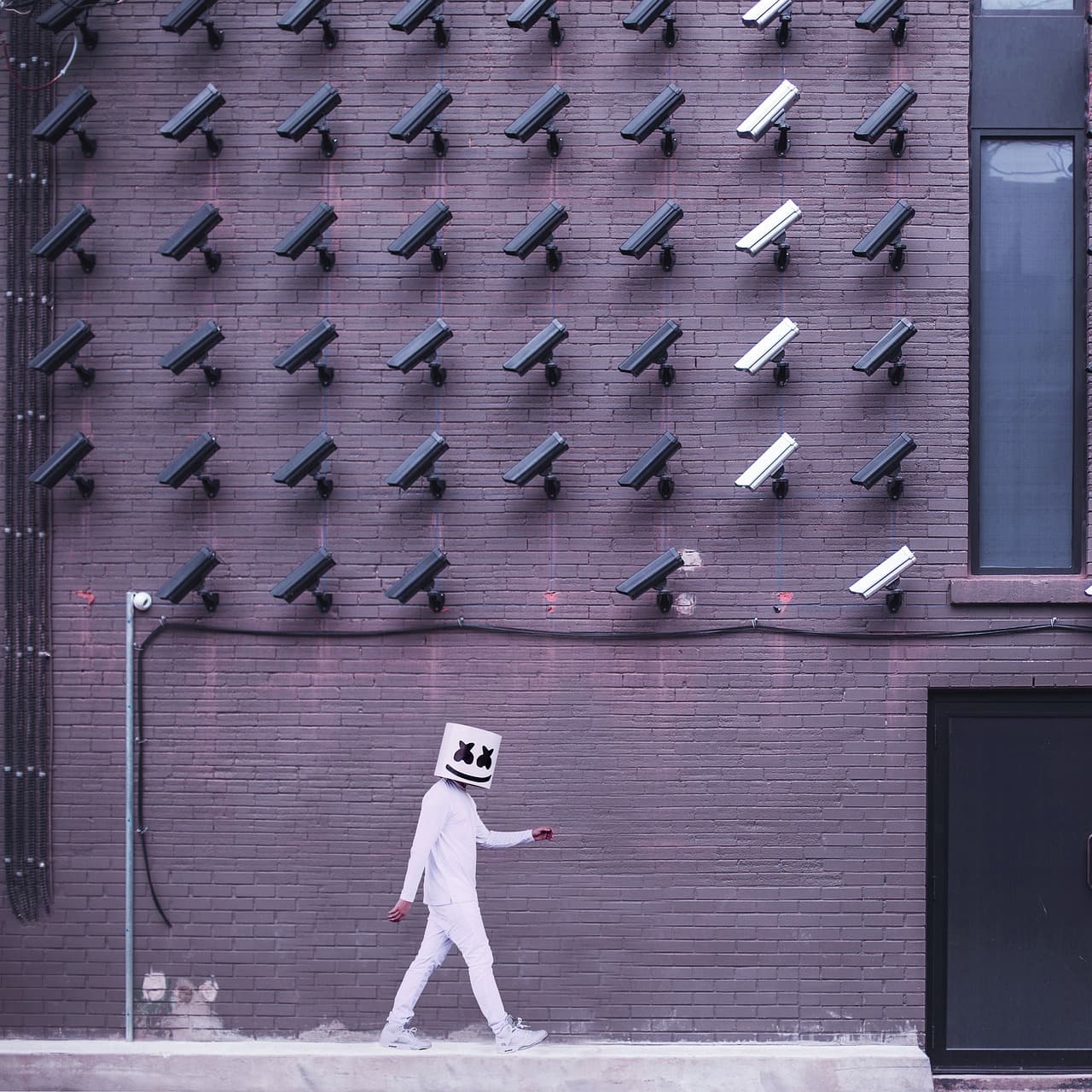
Bill Swearingen has spent the past year repeatedly running the same experiment to create computer-generated visual patterns that can prevent many commonly deployed street surveillance cameras and detection systems in the United States from recognizing what is covered by the pattern.
After roughly 31 million tests, Swearingen says he can now produce patterns on demand that, when printed on clothing or objects, prevent widely used systems — including license plate readers and surveillance cameras — from detecting the people or vehicles they cover.
What the project does and why it matters
The project, called noRecognition, does not stop cameras from recording video. Rather, it corrupts the cameras’ object-detection and alerting functions so that the covered subjects do not trigger automatic detection or selection by algorithms. Swearingen likens this to making someone a needle in a haystack again: the person remains hard to find unless someone already knows where to look.
Swearingen told TechCrunch, “Privacy is a fundamental right.” He describes his patterns as a way for people to “opt out of being tracked.”
How the patterns were developed
Speaking from his home in Kansas City, where he co-founded the SecKC cybersecurity meet-up, Swearingen said he and many others never opted in to pervasive camera surveillance in their towns. He noted that his city is saturated with cameras, sometimes spaced only a few feet apart, and said he was uncomfortable attending a protest because cameras could track people exercising their constitutional rights.
There have been prior efforts to defeat camera-based detection — from art projects and clothing brands to eyeglass makers — though with mixed effectiveness. Swearingen says his work builds on those efforts and demonstrates that camera detections can be disrupted.
He began last year with a proof-of-concept lab that attempted to incrementally defeat one open-source video detection algorithm after another. Over the year, he scaled up computing power and credited community contributors who provided hardware to accelerate the work.
The project evolved into a reinforcement-learning model: a self-contained system that trains itself to discover which patterns work against particular camera algorithms. In plain terms, Swearingen said he taught his model “how to paint.” Each time a pattern failed and an algorithm detected it, the model tried again until it eventually defeated multiple algorithms simultaneously.
The model learned pattern “recipes” capable of defeating all 11 open-source detection algorithms he tested, including software that powers Flock license plate readers, Axon body-worn cameras, and cameras running Clearview AI. Swearingen says the system now generates new patterns every minute, with each batch mathematically improving on the last.
Real-world demonstration at Def Con
On Friday at the Def Con cybersecurity conference in Las Vegas, Swearingen performed his first real-world test. With assistance from Donut Media, his team covered a 2009 Toyota Yaris in one of the new patterns to assess whether a Flock camera would detect the vehicle. Swearingen said, “We proved it was effective,” while noting the car’s wheels posed a particular challenge. Donut Media said the demonstration video will be released in the coming weeks.
The Las Vegas demo provides early proof that algorithmic detection in public spaces can be evaded. Swearingen said the next step is distributing patterns to people who want to use them.
Distribution, funding and caution
The noRecognition project is running a crowdsourcing campaign aimed at funding early merchandise sales, from T-shirts to hoodies, and potentially pattern-printed vehicle skins in the future. Swearingen said the plan is to produce high-quality, sufficiently high-resolution patterns that work at a distance while remaining visually acceptable.
He also said he is withholding his strongest patterns from the internet so camera and software makers cannot easily neutralize them. The research continues, he added: “Every failure improves my model, and so [the patterns] keep getting better and better.”
A photo from Def Con shows the 2009 Toyota Yaris covered in one of Swearingen’s patterns as part of the test to see whether it can defeat surveillance camera detection.