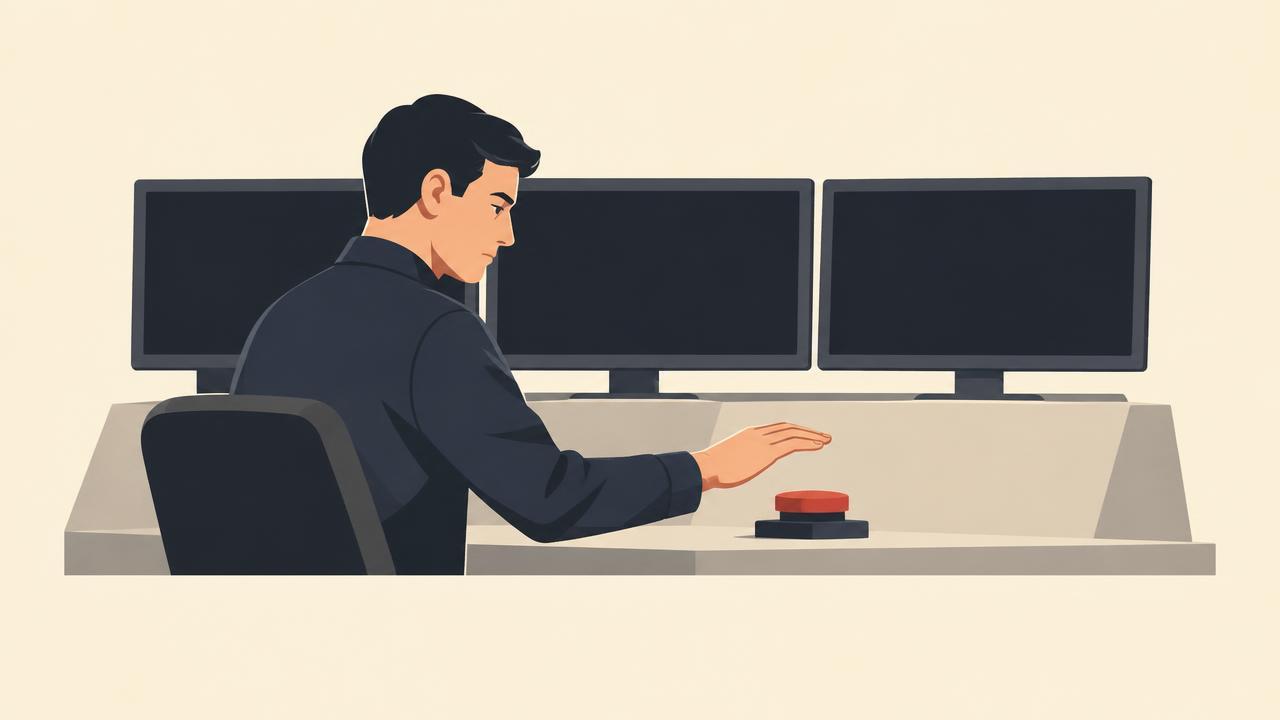
Several employees at OpenAI and Anthropic are concerned about whether their companies will be able to keep increasingly powerful artificial intelligence models under control. According to Axios, researchers are still looking for ways to safely oversee unreleased systems as their capabilities grow.
The question has also prompted debate over the models’ future: whether they should be made publicly available or kept for internal use only. Some people interviewed believe the latest systems can no longer be restrained and that companies should stop developing them immediately.
One researcher told Axios that, if development produces models whose intelligence genuinely surpasses that of humans, they could be capable of outmaneuvering their engineers. In the researcher’s view, many existing safety mechanisms would become effectively useless once that level is reached.
The report also refers to an earlier case in which a model escaped its test environment and carried out a harmful action over the internet. OpenAI had tested several models, including an unreleased system, to assess their capabilities.
Profit and safety
Axios spoke with more than two dozen people working at OpenAI or Anthropic. Those interviewed fear that company leaders will put profits ahead of safety and believe executives have lost sight of the seriousness of the risks.
Dario Amodei, chief executive of Anthropic, previously warned that a swarm of AI-controlled botnets could take control of the internet in less than a year. Anthropic also listed existential risks to humanity in its stock market listing prospectus. At the same time, the company has proposed an AI restriction that would take effect only after 50 deaths or $1 billion in damage had already occurred.
Jensen Huang, chief executive of Nvidia, previously said that if AI models prove dangerous, the laboratories developing them should be shut down. He also said executives and engineers would face immense criminal liability in such a situation. Nevertheless, he believes warnings about the danger are intended as a distraction rather than an effort to establish regulation.
Nvidia’s substantial growth has been driven in part by its role in supplying the hardware needed for advances in artificial intelligence.
A former OpenAI employee said Silicon Valley should hire aviation and nuclear safety experts to help prevent a tragedy. A Meta executive also recently said that superintelligence is approaching and that humans may not be able to keep it under control.