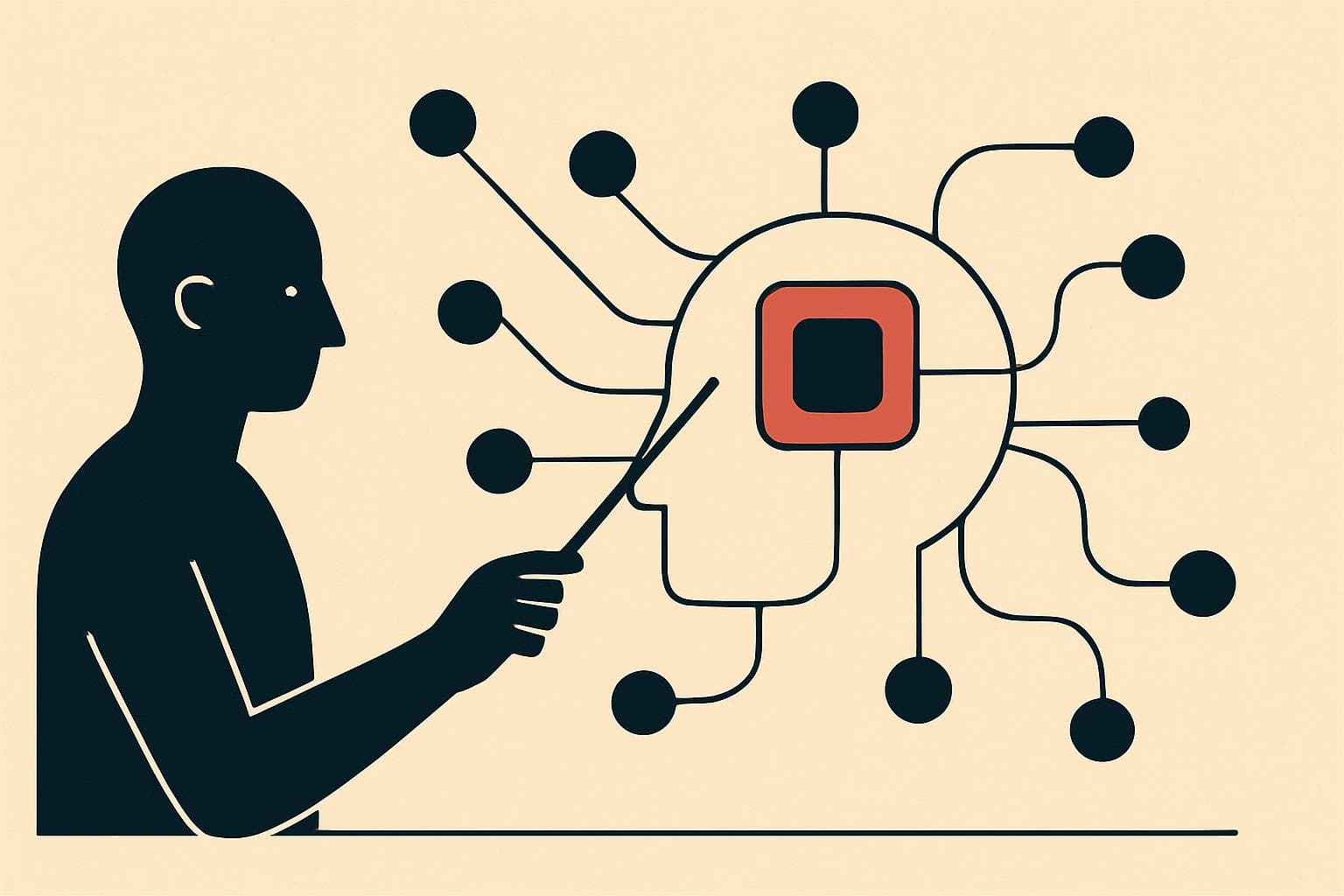
Tokyo‑based Sakana AI has released two new models designed to orchestrate other large language models and agentic workers through a single API. Fugu is targeted at fast, discrete tasks such as basic coding and chat, while Fugu‑Ultra is designed to manage long‑running, multi‑step workflows including extensive coding and research.
Capabilities and operation
Both systems accept text and images as input and return text outputs. They support OpenAI Codex compatibility, selection among underlying models, tool invocation, and configurable high and extra‑high reasoning levels. Fugu selects a worker model step‑by‑step until the output is produced. Fugu‑Ultra segments the input into subtasks, constructs an agentic workflow for those subtasks (potentially prompting workers in parallel), and may call itself to further subdivide work.
Sakana says the orchestrators can invoke a wide set of LLMs, including undisclosed open models and closed models from Anthropic, Google and OpenAI — specifically mentioning Claude Opus 4.8, Gemini 3.1 Pro and GPT‑5.5 — as well as instances of Fugu and Fugu‑Ultra.
Training methodology
According to Sakana’s technical description, the Fugu family began from an undisclosed base large language model that was fine‑tuned to perform agentic coordination across coding, mathematics, language understanding, multi‑step reasoning and tool use. Worker models were run multiple times on each task; their outputs were scored by success rate, and the Fugu models were trained to match the distribution of worker performance.
After supervised fine‑tuning, Sakana used a separable covariance matrix adaptation evolution strategy (sep‑CMA‑ES) to teach the Fugu models to choose appropriate worker models for customized, agentic tasks under different harnesses (for example Claude Code, Codex, and OpenCode). The company notes that models differ in how well they complete various task elements, motivating selective choice.
Fugu‑Ultra additionally uses a coordinator called Conductor to break tasks into subtasks and manage multiple independent agents. Agents can call whatever tools are necessary for their subtask and share memory so other agents can observe tool usage. Training of Fugu‑Ultra included reinforcement learning (GRPO) on an undisclosed base model to prompt pools of LLMs to perform five‑step agentic workflows; Sakana extended these workflows to arbitrary lengths and defined success as producing solutions matching human solutions.
Benchmark performance
Sakana reports state‑of‑the‑art or leading performance across multiple internal benchmarks and public suites for coding, reasoning and scientific knowledge:
- Terminal Bench 2.1, GPQA‑Diamond and LiveCodeBench: Fugu and Fugu‑Ultra outperformed Claude Fable 5, Claude Mythos Preview and GPT‑5.5.
- CharXiv Reasoning and CTI‑Realm: Fugu‑Ultra exceeded Claude Fable 5, Claude Mythos Preview and GPT‑5.5.
- SWE‑Bench Pro, Humanity’s Last Exam and LiveCodeBench Pro: Fugu‑Ultra outperformed all available models.
- GPQA‑Diamond (graduate‑level scientific knowledge): both Fugu and Fugu‑Ultra achieved 95.5%, the highest reported value.
- SciCode (coding for real‑world scientific problems): Fugu scored 60.1, the best among available models, trailing only Claude Fable 5.
- Long‑context reasoning (AA‑LCR): Fugu established a state‑of‑the‑art; on long‑context recall (MCRv2) both Sakana models were behind only GPT‑5.5.
Sakana notes that in some categories their models fall slightly behind certain non‑commercially available models (for example Claude Fable 5 in some areas), but perform strongly on long‑context tasks and software engineering benchmarks.
Availability and pricing
Outside Europe the models are available via the Sakana API and through providers including OpenRouter and Vercel. Pricing stated by Sakana:
- Fugu: charged at the standard rate of the highest underlying model used.
- Fugu‑Ultra: token pricing listed as 5/30/0.50 USD per 1 million input/output/cached tokens, with double rates for contexts over 272,000 tokens. Subscription tiers are standard/pro/max at 20/100/200 USD per month; pro and max plans permit 10× and 30× the standard usage respectively.
Undisclosed details
Sakana has not published its orchestration recipes, the detailed datasets used for training, architectural blueprints or the parameter counts of the models.
Why this matters
Model orchestration reduces reliance on any single provider or country because an orchestrator can include or exclude providers in its worker pool depending on sensitivity, cost or operational needs. Recent U.S. restrictions affecting access to models such as Claude Fable 5 and GPT‑5.6, together with some providers’ data retention policies, have increased interest in solutions that allow developers and organizations greater control over which models handle specific data and tasks.
Context and outlook
Sakana previously explored other approaches to combining model capabilities, including model merging, but views agentic orchestration as its most successful method so far. The approach echoes other recent work (for example OpenRouter’s Fusion) demonstrating that prudent combinations of models can outperform single models and sometimes deliver near‑state‑of‑the‑art results at lower cost. Orchestrators operate at a higher abstraction level of agentic engineering: they swap between models as well as tools and subagents, enabling new forms of competition in API provision and application design.