Samsung Electronics reported a historic quarter, posting record quarterly revenue of 171.5 trillion won and an operating profit of 89.5 trillion won. Revenue rose 28 percent from the prior quarter, and the operating profit slightly exceeded analysts' consensus of 88.1 trillion won. Earnings per share increased 52 percent to 10,849 won.
Year‑on‑year growth was even more pronounced: operating profit jumped 1,814 percent while revenue rose 130 percent compared with the same quarter a year earlier. The company says these gains were driven almost entirely by its memory chip business.
Memory division performance and product mix
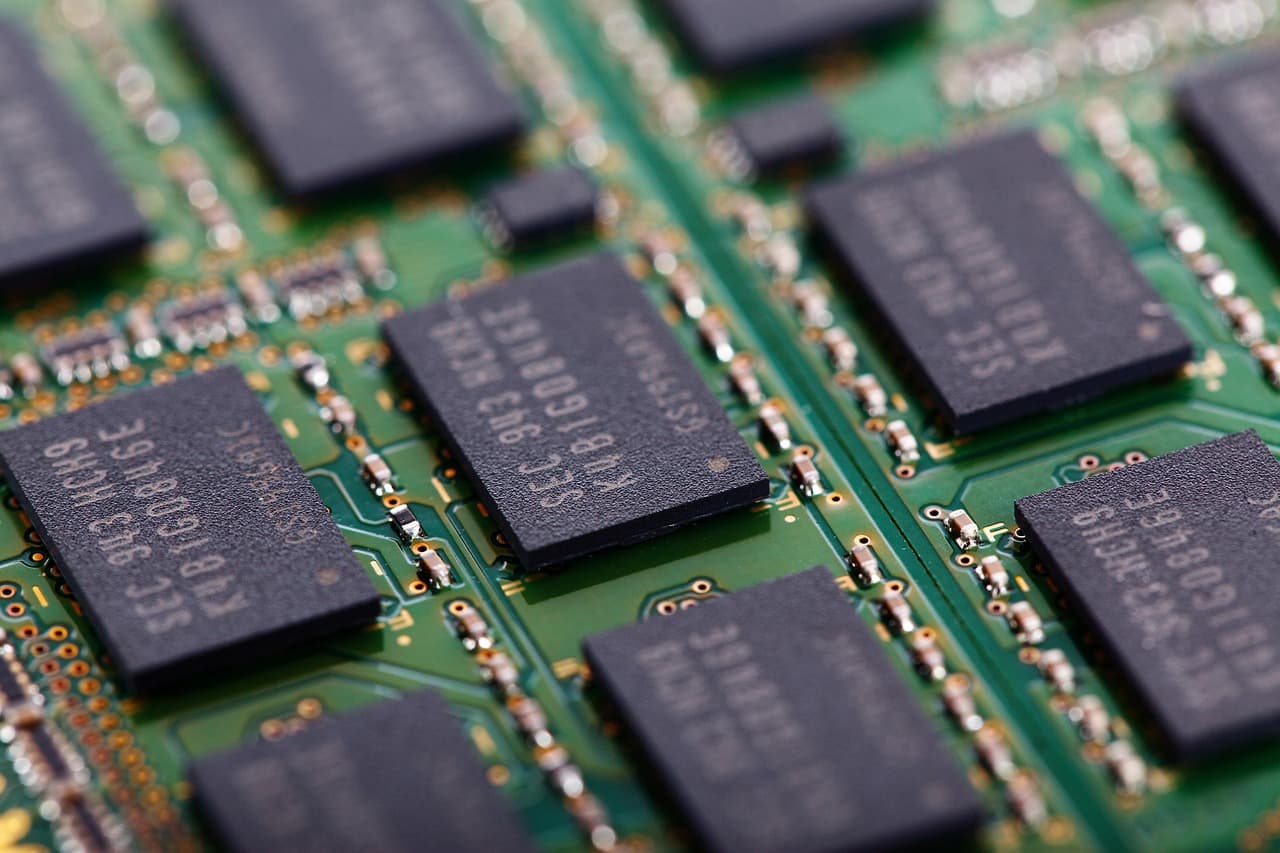
Samsung's Device Solutions division reported 127.5 trillion won in revenue and 89.2 trillion won in operating profit. The memory business closed its best quarter ever as demand for server DRAM and NAND flash surged. Rising memory prices also contributed materially to the strong results.
The company highlighted significant growth in HBM4 (high‑bandwidth memory) sales and said it delivered HBM4E sample units to major customers. These memory chips are key components in advanced AI accelerators; Samsung noted that they could be used, among others, by Nvidia's anticipated next‑generation Vera Rubin platform.
Supply tightness and customer commitments
Samsung warned that supply constraints could persist for years as demand from data center expansion and AI infrastructure remains strong. The company expects supply limitations may continue into 2027 and possibly tighten further because increasingly large AI models and a rapid rise in the number of AI tokens are steadily raising memory requirements.
As a result, more large customers are seeking multi‑year supply contracts. Samsung said it has already signed agreements with the world's five largest data center customers and is in final negotiations with five additional major partners.
Investment, capacity expansion and R&D
To keep pace with AI market growth, Samsung plans to increase capital spending in the memory business, expand capacity at its Pyeongtaek plant and build new infrastructure. The company will also continue to invest heavily in research and development.
Robotics and other business units
Samsung recently established a dedicated robotics division reporting directly to the CEO. The company sees robotics, alongside AI, as a key growth area in the coming years and is exploring startup partnerships, investments and acquisitions in the field.
The mobile business showed mixed results: Galaxy S26 and A‑series sales performed well, but higher component costs led to a loss in the unit. Samsung plans to offset this in the second half by launching the Galaxy Z8 foldable and new AI‑enabled products. It also confirmed ongoing development of smart glasses.
Market reaction and strategic options
Following the earnings release, Samsung shares rose as much as 8 percent intraday, but broader weakness on the South Korean exchange later left the stock roughly flat after a prior decline. The company mentioned the possibility of a U.S. secondary listing via American Depositary Receipts (ADRs) but said no such move is currently planned, while remaining open to the option long term.
Samsung reiterated that demand for memory is likely to stay very strong in the near term—particularly for server DRAM, enterprise SSDs and HBM—so it will continue to expand capacity and advance its technologies.
This article is not investment advice or a recommendation.