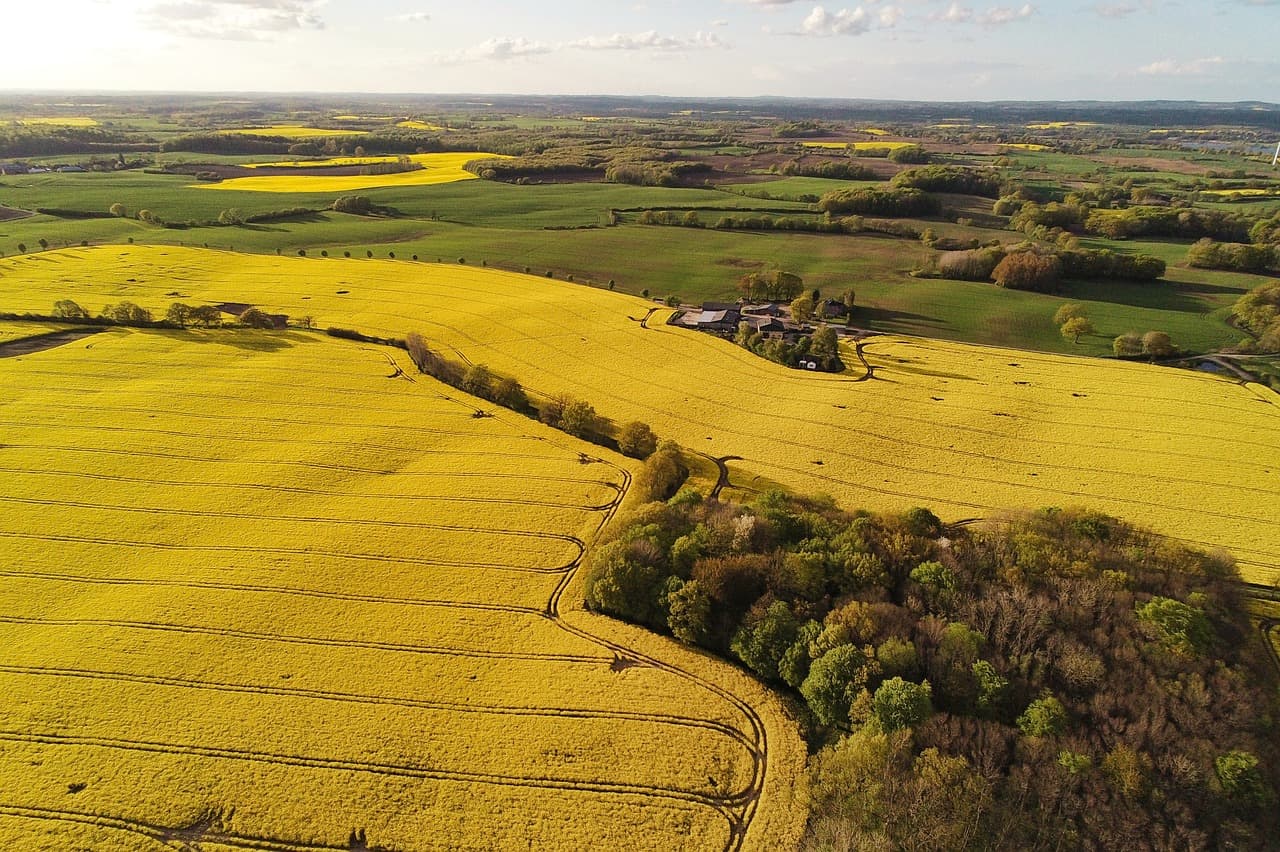
Precision farming has evolved into a complex digital ecosystem in which satellite data, ground and machine sensors, and artificial intelligence are used together to make production more efficient and predictable. These technologies enable site-specific management: instead of uniform treatment across a field, interventions are adapted to local soil, moisture, nutrient status and vegetation conditions.
Roles of satellite technologies
Operating such systems requires coordinated use of several satellite-based technologies:
- Centimeter-level accuracy for fieldwork and automatic steering of agricultural machinery is provided by satellite navigation combined with ground correction networks (GNSS plus correction stations).
- Optical satellites with multispectral sensors—especially measurements in the near-infrared (NIR) band—allow early detection of plant stress before symptoms are visible to the naked eye.
- Soil moisture is measured with radar satellites that can penetrate cloud cover (synthetic aperture radar systems).
- Thermal-infrared sensors help estimate crop evapotranspiration and current water demand.
- Meteorological satellites supply continuous atmospheric data essential for timing irrigation, spraying and other operations.
Combined, these data sources map field variability and enable targeted interventions.
Data fusion, services and artificial intelligence
Raw satellite imagery alone rarely provides a direct solution. Farmers rely on processed services such as vegetation maps, variable rate application plans and yield estimates. The greatest added value comes from data fusion—integrating satellite, drone, machine and in‑field sensor data—and analyzing them with artificial intelligence.
AI assists in pattern recognition, filtering noise and modeling the effects of interventions. The concept of digital twins for agriculture, intended to predict system behavior and intervention outcomes, remains largely at the research stage.
Limitations and practical considerations
The technology has inherent limits:
- Optical sampling is impeded by cloud cover.
- Radar measurement accuracy can decline under dense vegetation.
- Satellite imagery typically highlights problematic zones, but determining root causes and final decisions still requires on-site expertise from farmers and agronomists.
Therefore, implementing precision agriculture requires both digital systems and field knowledge.
Situation in Hungary and economic barriers
In Hungary, space technologies are present across navigation and Earth observation, and domestic space research ties into the agricultural sector. Nevertheless, adoption is held back by investment costs: according to the Hungarian Central Statistical Office (Központi Statisztikai Hivatal) data for 2023, only 9.8 percent of domestic agricultural holdings used any precision solution, mainly automatic steering and variable-rate nutrient application.
Public investments into the space industry can produce social benefits by supplying stable data sources and services for agriculture. One planned development that could give new momentum to domestic adoption is a national Earth-observation satellite fleet expected to be established by the end of the decade, which would provide a reliable data backbone for agrarian services.
Conclusion
The coordinated use of satellite observation, local sensors and artificial intelligence enables targeted, resource-efficient farming and more stable yields. However, cloud cover, reduced radar accuracy in dense crops and high entry costs limit current uptake in Hungary. The planned national satellite capacity and the spread of data-driven services may help reduce these barriers over the longer term.
An AI assistant contributed to preparing this article; the final content was edited and verified by a journalist.