A 2026 study by researchers at Milan–Bicocca University, École Normale Supérieure, and Sapienza University of Rome found that access to AI advice greatly reduces people's willingness to admit ignorance and simultaneously lowers answer accuracy while increasing confidence. The paper's authors are Valerio Capraro, Chiara Marcocci and Walter Quattrociocchi.
Experimental design
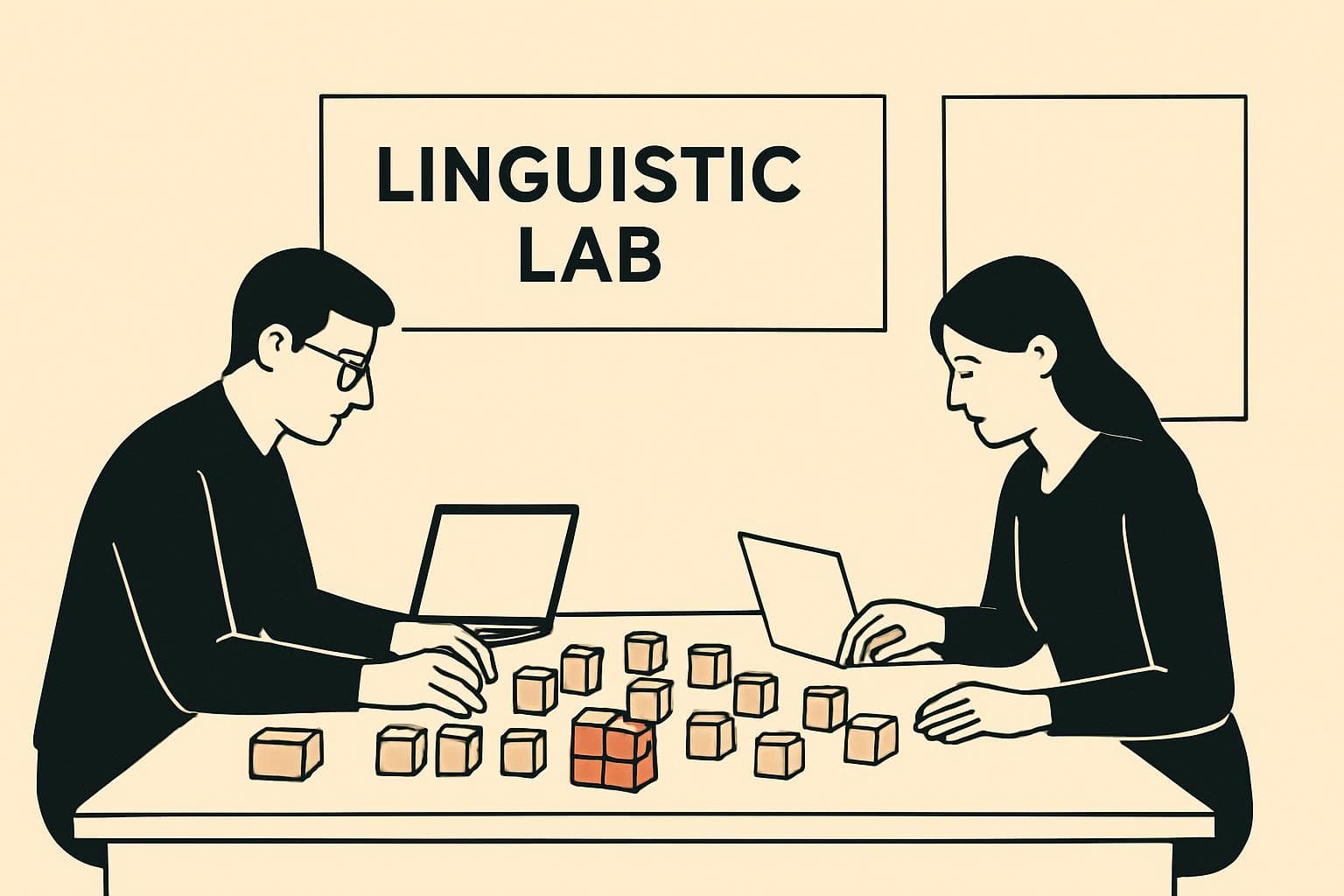
The team designed a questionnaire focused on small visual details from films—questions such as the color of the team jersey in Bend It Like Beckham or what vehicle Monica drives in the movie Nine Lives on the Highway. These items were chosen because large language models commonly mistake such details. The researchers evaluated several models: the experiment centered on Step 3.5 Flash (chosen because it produced mostly incorrect answers), and they also tested GPT-5.5, Claude Sonnet 4.6 and Gemini 3.5 Flash.
Participants were split into two groups: one answered without AI assistance, the other could request advice from an AI.
Key findings: far fewer "I don't know" responses, worse accuracy, greater confidence
In the no-AI baseline, 44% of participants answered "I don't know," suspending judgment. When AI advice was available, that share fell to 3%—an almost complete elimination of "I don't know" responses.
At the same time, accuracy declined. In the baseline condition 27% of participants gave correct answers, whereas with AI advice only 9% were correct. Some participants who would have answered correctly without AI instead followed the AI and answered incorrectly.
Self-reported confidence rose markedly: 30% of respondents were confident in their answers without AI, compared with 76% when AI help was used. Capraro summarized the effect by noting that accuracy fell to about one third of its original value while participants became roughly twice as confident.
Effect of monetary incentives
The researchers also ran a version with financial rewards for correct answers. Monetary incentives produced modest improvements: the fraction of respondents who said "I don't know" rose from 3% to 8% with AI present, and correct answers increased from 9% to 16%. These improvements, however, remained well below the no-AI baseline levels of 44% and 27% respectively.
Generalization and implications
Although the experiment used film trivia, the authors argue the findings likely generalize to other domains where immediate AI answers are available: people may become less willing to suspend judgment and more likely to endorse AI-provided information, even when it is incorrect.
Capraro recommends tackling the problem at a societal level, primarily via improvements in AI literacy and education policy. He also noted that model developers could help, but that existing incentives for developers may not align with this goal. He expressed particular concern about children, arguing that youngsters who grow up with these systems may fail to acquire basic critical-thinking skills.
The study was conducted and published in 2026 by Valerio Capraro, Chiara Marcocci and Walter Quattrociocchi.
Why this matters
The research highlights a paradox: while AI offers immediate answers, its availability can erode the user's willingness to acknowledge uncertainty and to exercise critical judgment. This has consequences for educational strategies and for how AI systems are integrated into everyday information practices.