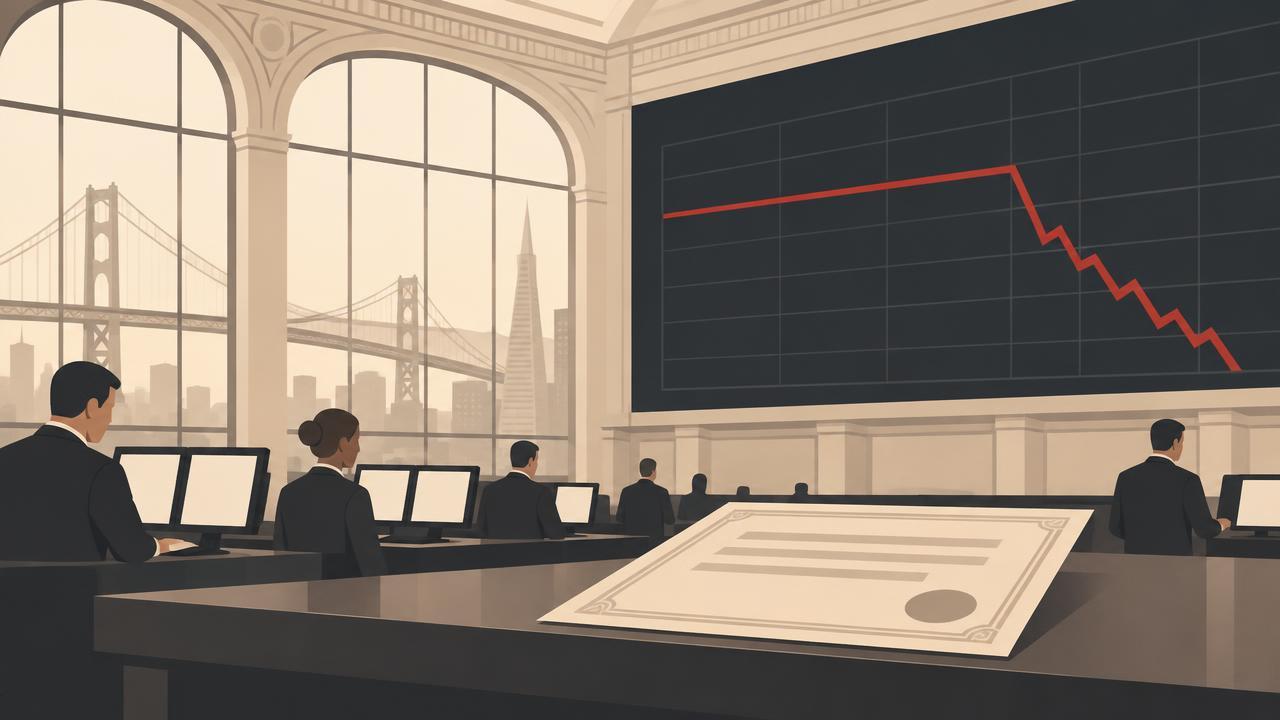
Supertake, a startup developing an AI-assisted investing service, has raised $20 million in seed funding. Its product lets users turn market ideas expressed in natural language into investment portfolios without having to select individual stocks themselves.
The round was led by Adjacent, the venture capital firm associated with Nico Wittenborn, with participation from Coinbase Ventures and Union Square Ventures (USV). Angel investors include Nat Friedman, head of product at Meta Superintelligence Labs; Guillermo Rauch, chief executive of Vercel; product manager Nikita Bier; investor Scott Belsky; and Nemil Dalal, a former Coinbase executive who is now a visiting partner at Y Combinator.
Michael Mignano originally incubated the startup at USV. He previously co-founded and led the podcasting platform Anchor, which Spotify acquired in 2019 for more than $150 million. After leading Spotify’s podcasting business for several years, he joined Lightspeed as a venture partner, investing in AI companies including Suno and Granola. He also co-founded the AI education startup Oboe and joined USV as a general partner in April.
Mignano will remain Supertake’s founder and executive chairman, but has handed day-to-day management to a new team. Co-founders Lincoln Murr, the chief executive, and John Peterson, the chief technology officer, both joined from Coinbase. Mignano says they led AI product and engineering there and worked on launches including Coinbase Advisor, Coinbase for Agents and agentic wallets.
Turning ideas into investments
Supertake currently works with Coinbase and Robinhood and plans to expand to additional brokerages. A user can describe in broad terms how they believe the world will change, and the AI helps develop that idea into an investable thesis through a back-and-forth conversation. The system uses frontier AI models and tools alongside the company’s own software, which directs and limits what the AI can do.
Users’ ideas also appear on a leaderboard, allowing others to invest alongside a thesis they find persuasive. One example is a portfolio built around the idea that efforts to improve physical appearance and increase longevity could become more popular. It includes shares in pharmaceutical and cosmetics companies that could benefit from that trend.
For now, the portfolios consist of stocks, but the team eventually wants to support other transactions, including short positions, derivatives, perpetuals and long exposure. It envisions access to prediction markets through partnerships with companies operating in that field.
Murr says Supertake is not a prediction market, but an improved version of the earlier robo-advisor experience: it turns ideas expressed in natural language into portfolios of underlying assets. The company is primarily focused on medium- and longer-term holdings today, but does not want to rule out short-term strategies, such as a thesis linked to the outcome of an election.
Safeguards and expansion plans
To address concerns about trusting AI with investments, the company is introducing a range of limits. The AI cannot deposit or withdraw funds without a user’s explicit consent. Drift limits help keep portfolios balanced, while allow and deny lists govern which assets the system may trade. The service monitors unusual activity in real time, offers trade-size limits and prevents agents from seeing users’ brokerage login credentials.
Murr compared the adoption of AI financial agents to the development of self-driving cars, saying that trust and technology advance together and that the technology is further along than many people think.
Supertake is in beta and currently available through a waitlist. Its founders have also entrusted their own money to the system: Murr says he has it managing tens of thousands of dollars, Peterson thousands and Mignano hundreds of thousands.
The new funding follows an earlier $2 million pre-seed round. Supertake plans to use the capital to expand teams including engineering, design and growth marketing. Mignano and Murr work in New York, while Peterson lives in the Austin area and sometimes travels to New York; the company hopes to establish a hybrid work model as it grows.