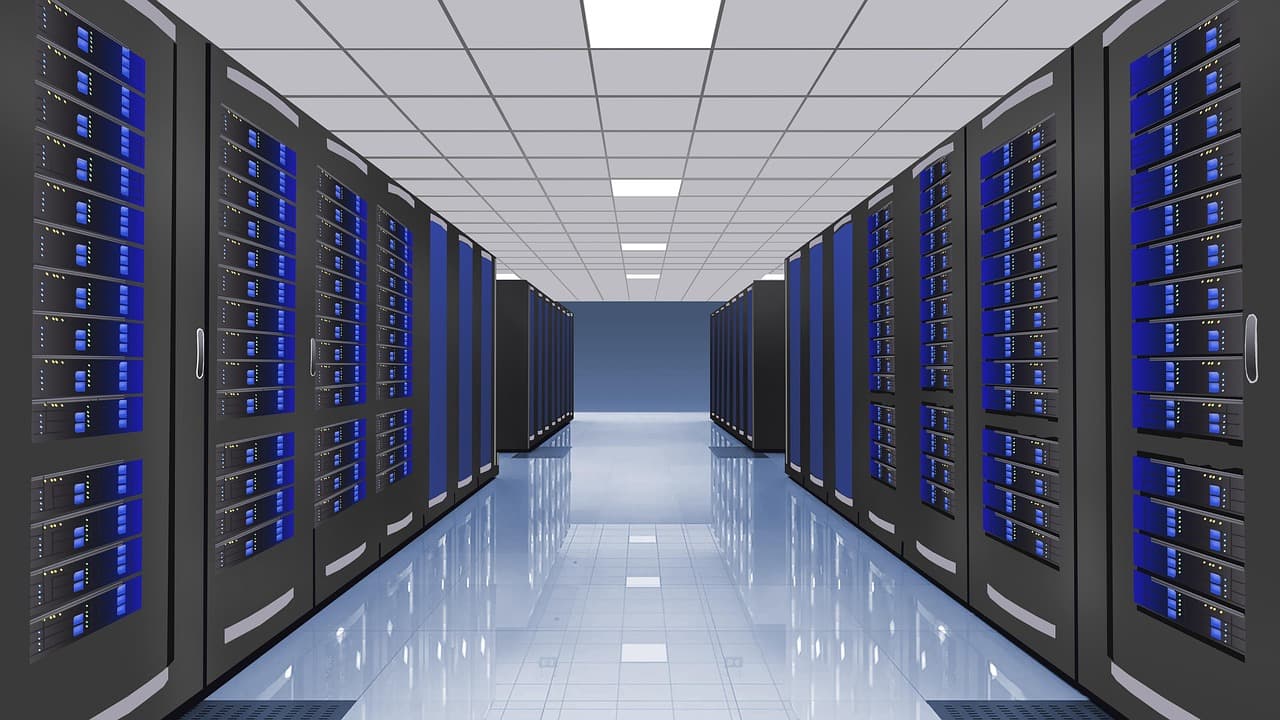
In recent years building data centres has become one of the biggest investment waves: capacity needed to run generative AI is driving multi‑billion‑dollar projects. Estimates for U.S. spending range from $2.8 trillion through 2030 to $10.3 trillion through 2032. A leaked filing from Anthropic indicates the company plans to spend $518 billion on AI infrastructure over the coming decade.
Goldman Sachs economists estimate U.S. AI investment will rise from about 1.8% of GDP today to 2.8% by 2028 — a share comparable to historical railway investment in 1880–1890 (roughly 2.43% of GDP). Columbia Business School economist Stijn van Nieuwerburgh projects an even larger share, about 3.6% of GDP by 2032.
Who benefits and which sectors profit?
The boom is creating new fortunes and lifting revenues for many suppliers. Among the thirty richest Americans today, eleven owe their wealth to companies central to the AI economy, including Jensen Huang (Nvidia) and Google founders Larry Page and Sergey Brin. Contractors, real‑estate developers, cable manufacturers and concrete and cement suppliers are also cashing in: Clayco expects nearly 75% of its roughly $12 billion projected revenue to come from data‑centre construction, while Southwire reported $9.7 billion in revenue driven by rising copper prices and data‑centre demand.
McKinsey estimates that globally, through 2030, some two‑thirds of data‑centre spending will go on GPU‑based servers and storage (about $4.4 trillion), with roughly $1.3 trillion on electrical and mechanical equipment, energy supply and grid infrastructure, and about $1 trillion on labour, buildings and land.
Cost breakdown of a typical centre
Clayco estimates the construction cost of a typical 40‑megawatt data centre at about $500 million. The cost composition is commonly:
- AI servers and IT (mainly GPUs): ~$250 million
- Power and electrical systems: ~$70 million
- Labour: ~$60 million
- Concrete, steel and copper: ~$55 million
- Cooling systems: ~$45 million
- Land and design: ~$15 million
- Water infrastructure: ~$5 million
Operating costs are dominated by electricity and water. A 40 MW centre may use roughly 227,000 litres (60,000 US gallons) of water per day.
Electricity and water constraints
The scale of planned capacity places heavy pressure on power grids and freshwater supplies. In 2024 data centres already consumed more electricity than the entire state of Ohio (population about 12 million). Projections suggest that by 2030 data‑centre demand could equal the present consumption of Texas (around 32 million residents); in the next four years their demand might increase by about 457 terawatt‑hours — approximately two years of California’s electricity use.
Many developers face immediate shortages of available grid capacity, so companies that can secure power contracts gain an advantage. Some former bitcoin‑mining operators have repurposed facilities to lease power‑connected capacity to AI firms. Utilities have pledged capacity expansions, but grid upgrades typically take years and lenders often withhold financing until network power is assured.
Water use also fuels opposition: Rystad Energy calculates that data centres used about 59 billion US gallons (around 223 billion litres) globally in the last year. Even under conservative water‑saving scenarios, that could rise to 102 billion gallons (about 386 billion litres) by 2030.
Debt, leverage and the risk of value declines
The building boom runs alongside large amounts of debt. Atrium’s data shows developers have already raised at least $1.3 trillion in debt financing; some forecasts put related lending as high as $10 trillion. Analysts warn that with such leverage, modest declines in asset values can quickly wipe out equity and put loans at risk.
For example, a data centre valued at $100 million financed with $90 million of debt and $10 million of equity would see the owner’s equity eliminated by a 10% drop in asset value (to $90 million). Further declines would leave lenders exposed. These losses can arise without a full market collapse: reduced demand, simultaneous activation of large amounts of capacity (oversupply), faster‑than‑expected equipment obsolescence (new, more efficient chips), or rising operating costs could trigger value falls.
Will all announced projects be built?
Some analysts doubt that all announced capacity will be delivered. Bernstein identified more than 400 GW of planned data‑centre projects in the U.S. — enough to power a country like Japan — but estimates that only about 35% of that planned capacity will actually be built.
If the projects do materialise, the economic upside is large. Bain & Company estimates AI could generate over $1.5 trillion of additional economic value. Yet van Nieuwerburgh calculates that by 2032 the sector would need to produce about $3.7 trillion in annual revenue to deliver a 10% return on those investments — a very high bar that calls into question whether the full scale of announced spending can be justified by future revenues.
Conclusion: huge opportunity coupled with major constraints
The data‑centre boom powering AI brings enormous investment, new winners among technology and construction firms, and the potential for large economic gains. At the same time, it creates acute stresses on electricity grids, water resources, labour and supply chains, and rests on large amounts of debt. Those factors mean that modest market shifts, delays in grid expansion, or faster technological change could produce severe financial losses. Over the coming years the pace of build‑out, the ability of utilities to expand capacity, and the long‑term demand trajectory for AI compute will determine whether the boom fulfils its promise or leaves large losses in its wake.