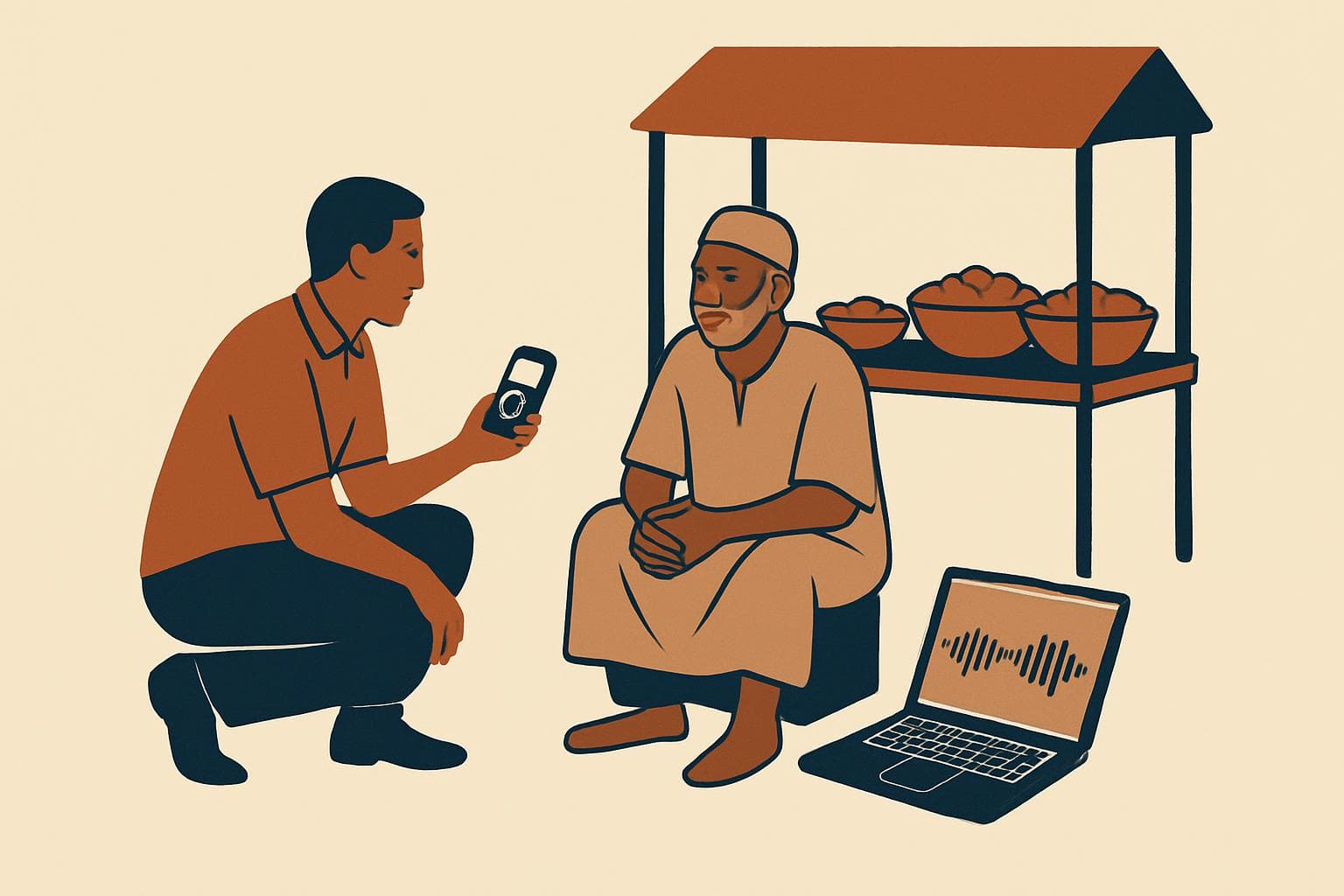
This month Togo invited citizens to submit texts, audio recordings and translations to help AI models understand the country’s 50 local languages. The effort aims to make systems that interact with the public more useful for government services and other applications.
Why this matters for Africa
The absence of African languages from large language models has become a growing concern for policymakers and tech leaders on the continent. Togo’s project illustrates that the critical issue is not necessarily who builds the biggest model, but who can make AI technologies actually useful for the most people.
Global AI investment is expected to reach $2 trillion this year, according to research firm Gartner, as major tech companies compete for computing power and infrastructure. African firms capture only a small share of the cloud spending: the World Bank says Africa accounts for 18% of the world’s population but only 0.6% of global data‑centre capacity, and just 5% of that capacity is equipped for advanced AI workloads.
Today the continent’s main link to the AI boom is demand for minerals such as copper and cobalt. The greater prize would be productivity gains — from how farmers reach markets to how governments deliver services. The African Development Bank estimates that inclusive AI adoption could add up to $1 trillion to Africa’s GDP by 2035.
World Bank: adopt and adapt rather than build frontier models
In its biannual Economic Update, published this week, the World Bank argues that most African economies should adopt and adapt AI instead of attempting to develop frontier models from scratch. Building cutting‑edge models is expensive, and for countries with limited resources it is often not the best use of funds.
Togo’s example shows what adaptation can look like: a model that cannot understand citizens’ languages has limited value for delivering public services. African countries do not need to win a race to build the largest model; they need to make AI productive across their economies. They also cannot afford to be merely suppliers of raw materials to the AI revolution or only consumers of finished AI products — they must become places where the revolution produces substantial local gains.
Low‑cost, high‑impact uses
The World Bank highlighted several low‑cost but impactful AI uses in Africa:
- tools that support student learning;
- solutions that help farmers detect and manage livestock diseases;
- automation of routine tasks such as accounting for small businesses.
These examples demonstrate that locally tailored, cost‑effective AI solutions can have direct effects on living standards and economic growth — provided that the necessary energy and infrastructure are in place to deploy them.
Conclusion
Togo’s language data drive underscores that success for AI in Africa will depend less on building the largest models and more on adapting existing technologies to local languages, needs and constraints. Without infrastructure and energy to deploy AI, the technology is unlikely to make a meaningful contribution to the continent’s economic growth.