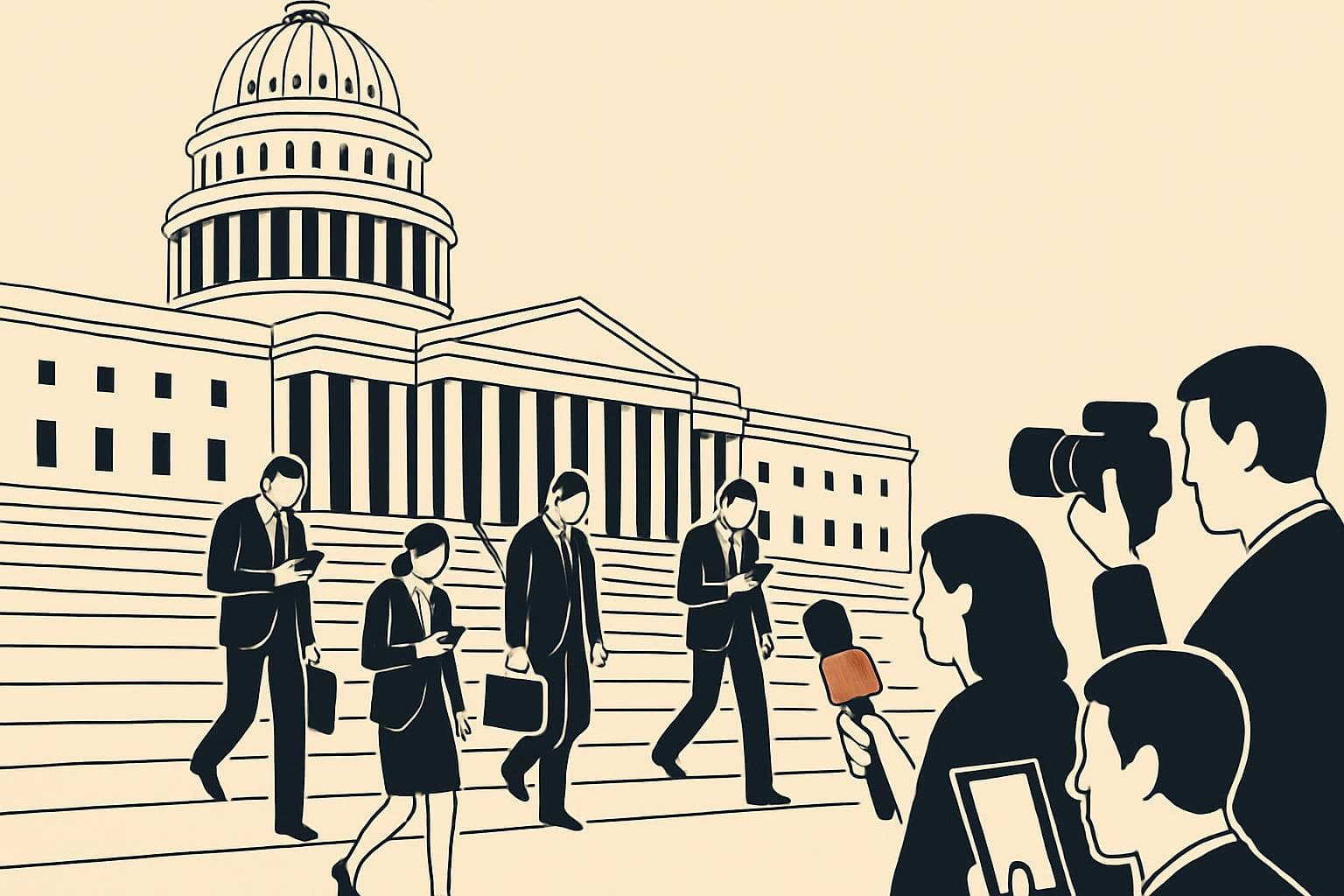
President Donald Trump is redefining what it means to be a U.S. ally in the artificial intelligence era. For the White House, alliance criteria now increasingly hinge on how partners can help the United States prevail in the AI competition.
What is changing in partnerships
For decades, shared values and security interests formed the foundation of alliances with Europe and other partners. The Trump administration views that as no longer sufficient: as AI becomes central to economic and military power, frontier AI models, chips and infrastructure are becoming instruments of American influence.
As part of this shift, the administration is restricting some allies' access to the world's most powerful AI models, tightly controlling licensing, while selectively allowing access in limited programs. The Anthropic partnership under Project Glasswing is one such channel: with export controls on Fable and Mythos lifted on Tuesday, Anthropic and the administration are continuing efforts to provide Mythos access to additional organizations across more than 15 countries. Fable has also been restored to availability in certain cases. The Commerce Department retains the authority to rescind access when it deems appropriate.
Political framing
In a recent interview on The Axios Show, Trump said the U.S. is "leading everybody by a lot" and warned that Europe must be careful about losing entrepreneurial momentum. He cited the U.K.'s decision not to exploit certain North Sea energy sources for environmental reasons as an example.
This AI restriction policy is part of a broader transactional approach to alliances: traditional, value-based ties remain important, but new conditions tied to technological access and supply chains are now central.
International reactions and dialogues
European Commission spokesperson Thomas Regnier said the bloc looks forward to intensifying discussions with Anthropic to secure Mythos access under Project Glasswing, and that the EU currently has access to GPT-5.5-Cyber. The EU has a delegation in the U.S. to clarify the scope, frequency and level of a future tech dialogue, which is expected to cover frontier AI models, chip supply chains and cybersecurity. Regnier emphasized that the EU's sovereign legislation is not negotiable.
Omran Sharaf, the United Arab Emirates' assistant foreign minister for advanced science and technology, told Axios it is important that trusted and strategic partners be included in the process so that standards are synchronized rather than imposed.
Initiatives and contradictions
AI is reshaping what the White House expects from partners: Europe is seen simultaneously as a restraint, an indispensable partner and a competitor. The administration has criticized the EU's safety-first regulatory emphasis while pursuing deregulation at home and signing agreements with European governments to secure supply chains — for example, through Pax Silica, the U.S.-led effort to protect AI supply chains and critical minerals.
At the same time, the ad hoc U.S. licensing regime is creating regulatory uncertainty. OpenAI's GPT-5.6 rollout was forced into a staggered schedule last month because of government concerns.
Implications for allies
In practice, allies will have to accept that only those who meet Washington's new, technology-focused criteria will be considered trusted U.S. partners in certain areas involving the most advanced AI. A.J. Bhadelia, head of global government and external affairs at Cohere, told Axios that governments are concluding they will join Pax Silica, cooperate with the U.S. ecosystem where possible, and build around capabilities they cannot access.
Conclusion
The rapid rise of AI adds a new dimension to international relations: technological access and critical supply chains now help determine who counts as an ally. The Trump administration's policies illustrate that alongside traditional value alignment, industrial and technological conditions are increasingly shaping the terms of trust.