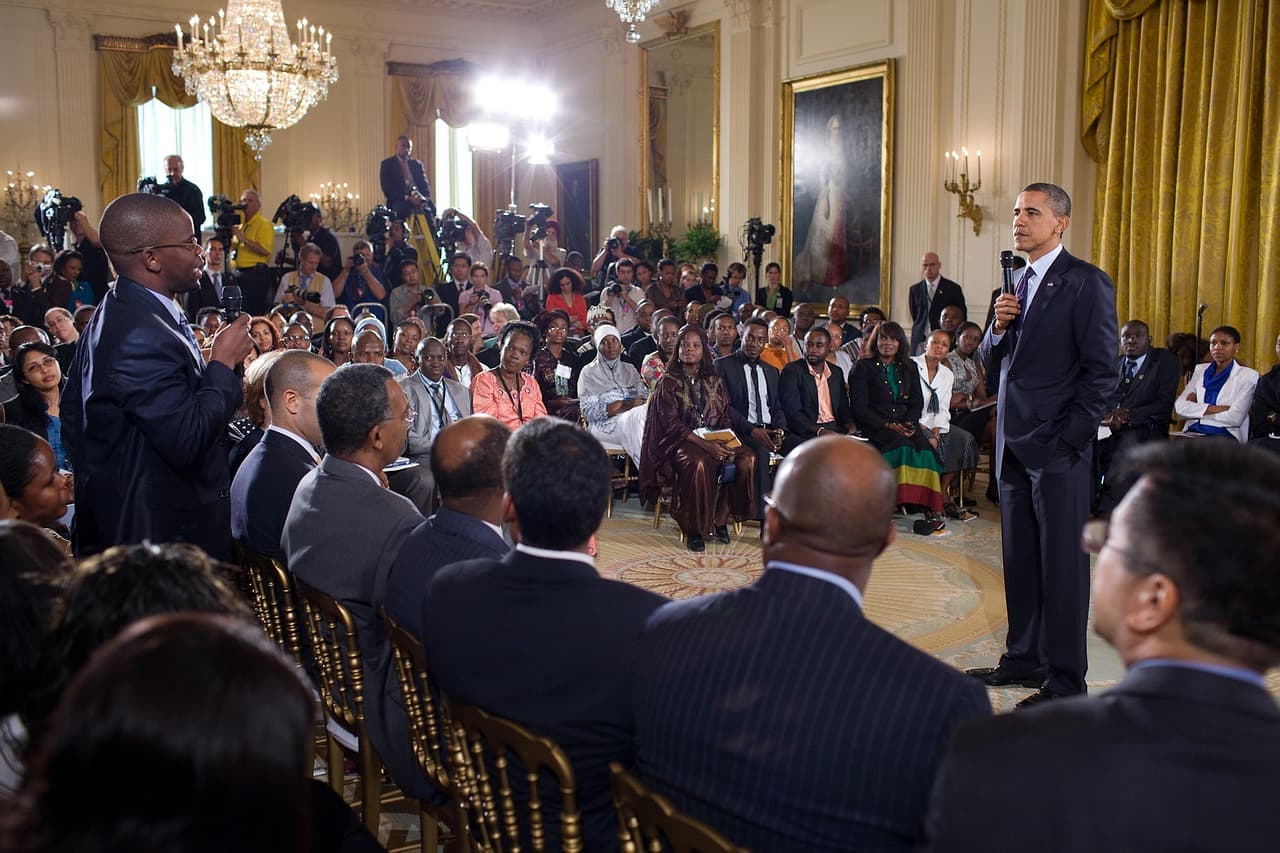
At the All-In Summit technology conference in Los Angeles, Nvidia Chief Executive Officer Jensen Huang was midway through a discussion about slowing AI development when President Donald Trump phoned in. Huang put the call on speaker so the room could hear.
During the call, Trump said, “the robots will not be taking over,” dismissing talk of an AI takeover as a hoax and warning that measures to slow U.S. AI development would only benefit China. According to the report, hours earlier Trump had posted that the only guardrail AI needs is a strong, smart, high-IQ president.
Why this matters
The exchange highlights tensions between commercial incentives in the AI industry and calls for caution or regulation. Nvidia is a central supplier of compute resources for advanced AI, and rapid development can be financially advantageous for market-leading firms. The presence of a sitting president publicly advocating against slowdowns underscores how political messaging can influence the broader debate about whether, and how, to regulate AI.
The description in the source characterizes the dynamic as a kind of ‘crowning’ of a single leader: when governance structures are not yet agreed, authority can concentrate around prominent individuals whose positions then shape policy direction.
Concrete elements from the event
- Location: All-In Summit, Los Angeles.
- Participants: Jensen Huang (CEO of Nvidia), Donald Trump (President of the United States).
- Interaction: Trump joined a live discussion by phone; Huang put the call on speaker for attendees. Trump dismissed AI takeover fears and argued against slowing U.S. AI progress.
- Follow-up: The report notes Trump had posted earlier that a strong, intelligent president is the primary ‘guardrail’ AI requires.
Potential implications
The brief public interaction illustrates how political leadership can influence public and industry perspectives on AI governance. If political leaders publicly oppose slower, precautionary approaches, that stance may reduce momentum for comprehensive regulatory measures. Nevertheless, formal AI policy and regulation remain the responsibility of legislative and regulatory bodies, not of single statements alone.
Conclusion
The Los Angeles exchange is a succinct example of how business interests, technological risk concerns, and political rhetoric intersect in the AI debate. The reporting emphasizes that in the absence of collectively agreed institutional guardrails, individual leaders’ positions can disproportionately shape the policy conversation.