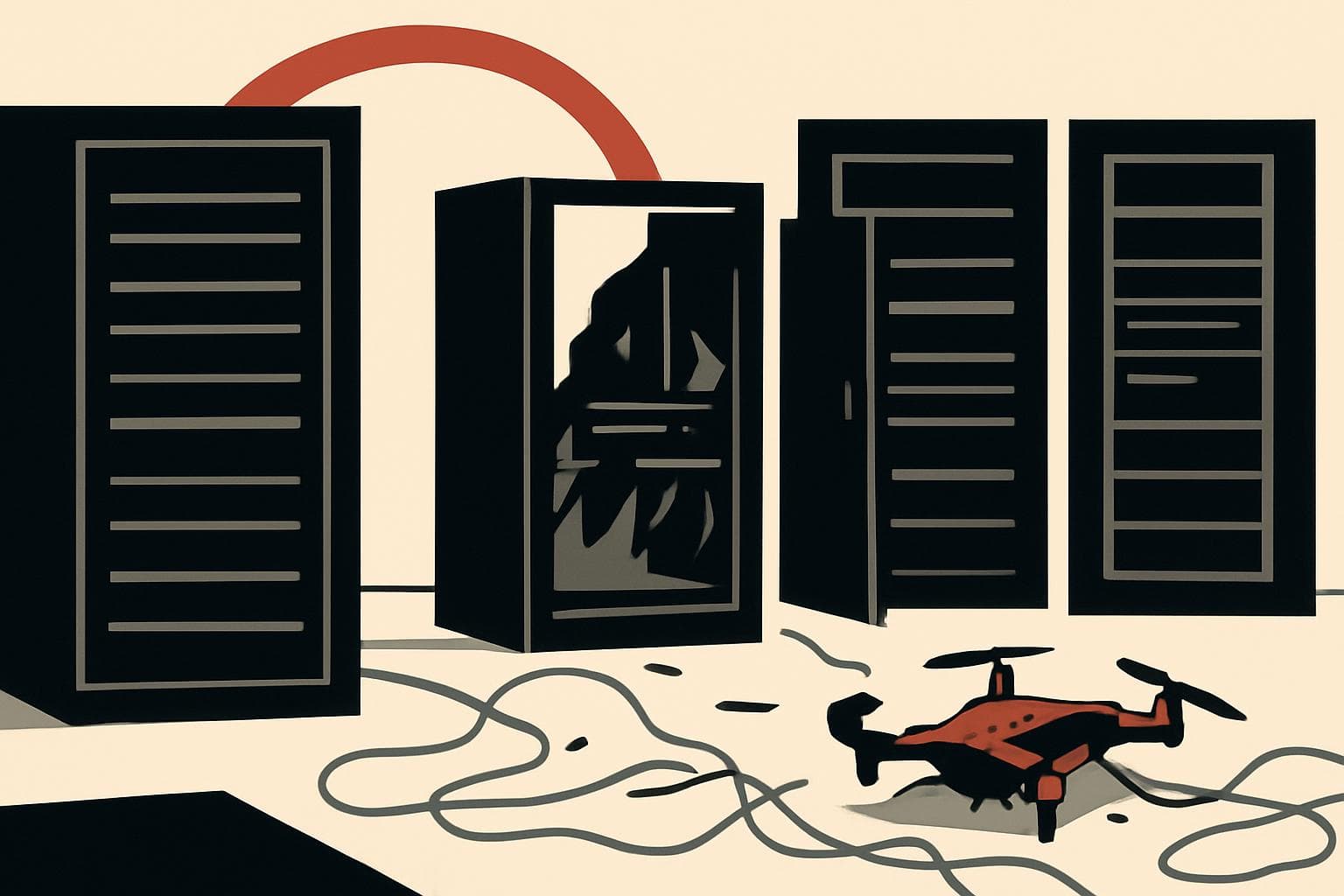
In recent days Ukraine has targeted large Yandex data centers inside Russia using long‑range, new‑generation drones. Of nine major complexes, three were knocked out in a short period, triggering significant outages in a range of online and cloud services.
What services were affected?
The disruptions caused intermittent or complete failures in online banking, transport systems and logistics in some regions, and affected food‑delivery services. Several messaging apps and webmail services became unavailable, and some content platforms went offline. Yandex has indicated it lacks the immediate capacity to fully remedy the damage, so the outages may have medium‑ to long‑term consequences.
Why is this particularly damaging for Russia?
The problem is compounded by a long‑standing policy that constrained the use of foreign data storage and services. That policy helped domestically trusted providers such as Yandex become dominant, leaving few quick alternatives in certain regions. Because most server parks are located inside Russia, there was no ready foreign infrastructure to which data could be immediately migrated. Sources report that some databases may not be recoverable due to missing backups.
Views of Frész Ferenc
Frész Ferenc, a cybersecurity expert who led the cyber defense center of the National Security Authority until 2015, said that technically services can be moved to data centers in other countries, but doing so is not a simple “server swap.” Adequate network infrastructure, compatible systems, encrypted backups and substantial capacity are required. Encryption can protect data during transfer and storage, so migration itself does not necessarily cause data leakage.
Frész also warned about risks when relying on foreign infrastructure: who controls encryption keys, who has access to systems, and what legal frameworks govern the data in another country. He noted that Yandex has agreements with other Russian cloud providers for accelerated relocation of customer systems, but their security is uncertain — especially after other Russian companies, such as Sberbank, have also been targeted.
Supercomputers, bots and traffic drops
Two of the affected data centers hosted high‑performance supercomputers used in part for developing AI algorithms and agents. There has been no official statement on their status; however, the fact that entire complexes were shut down does not bode well for a rapid restoration of those machines.
Some analyses and political statements have suggested a sharp drop in automated activity from Yandex’s network on certain social platforms. According to Cloudflare data cited in reporting, automated web traffic originating from the Yandex network fell by roughly 94 percent after the attacks. Frész urged caution: temporal coincidence does not prove causation, and there is a need to distinguish legitimate crawler traffic from bots used for political influence. Platform‑level traffic and account activity data would be necessary to establish a direct link.
Recovery challenges and timelines
Restoring the damaged Yandex data centers will be costly and time‑consuming. The hardware used in such complexes, notably HBM‑type memory modules, is in short supply worldwide because of rising demand from AI services. Manufacturer capacity is booked well in advance, so even with sufficient funds it may be difficult to procure components quickly. Conservative estimates put the minimum timeline for full restart at around six months. Yandex has not announced when it plans to bring the damaged centers back into service.
Key takeaways
The recent strikes underline that digital transformation brings strategic vulnerability as well as benefit: key data centers have become like life‑support organs for modern societies. Frész emphasized that the gravest consequence is not merely temporary service outages but the clear demonstration of Russia’s digital infrastructure vulnerability.
In the longer term the attacks can cause three major issues: economic losses (business interruption and recovery costs), loss of trust (concentration of critical systems with a few large providers becomes riskier), and technological lag (replacing advanced hardware is harder under sanctions and supply constraints).
The events also show that in contemporary conflicts data centers can be strategic targets on par with energy or transport infrastructure. Accordingly, enhanced protection and geographic diversification of critical infrastructure will be important considerations going forward.