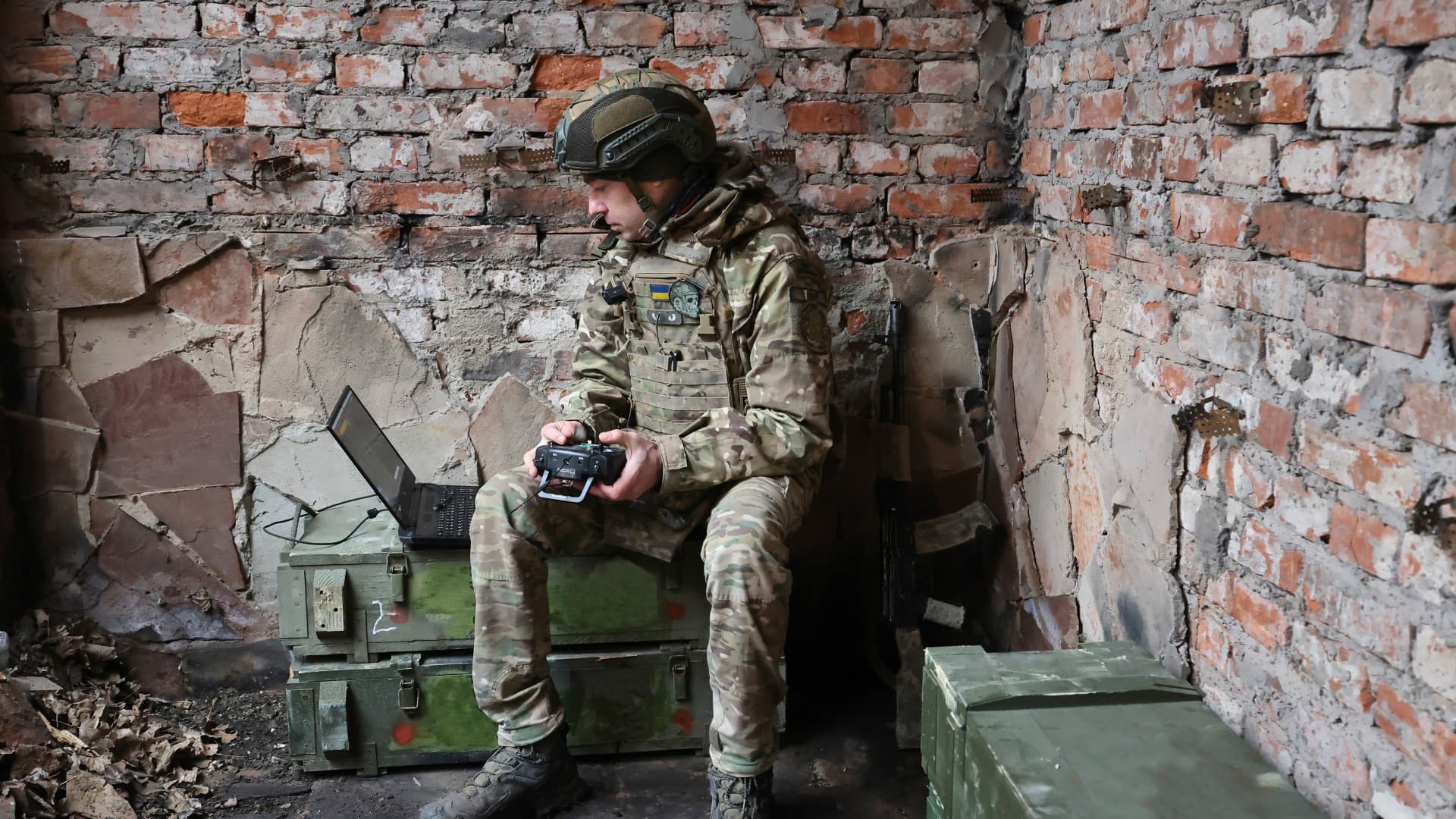
Ukrainian drone operators say an FPV drone struck a Russian minibus from 102 kilometres away without using a mothership drone, according to reporting by Euro Maidan Press. The operators' message was shared on Telegram by activist Szerhij Szternenko.
The claim states that following the hit, Russian troop movements in the area "completely stopped" because the perceived danger zone expanded dramatically. Multiple Ukrainian developers and defence companies reportedly believe current technology already enables strikes at such distances.
Technical context and industry views
Misa Rudominszkij, head of Himera, a company that produces military radio equipment and signal boosters, commented that a 102‑kilometre range "appears feasible" but would require specialized antenna systems and autonomous operation in the drone's terminal phase. Makszim Hnatik, a representative of Pawell Power, a maker of drone batteries, highlighted a shift from conventional lithium‑ion cells to semi‑solid‑state batteries. Hnatik said these provide roughly 30 percent more capacity at the same mass and tolerate the high discharge currents needed for aggressive manoeuvres.
Hnatik expects that current danger zones of 15–30 kilometres could soon expand to 50–80 kilometres if these advances become widespread.
Tactical consequences and battlefield impact
The article notes that much of the war's outcome depends on which side can strike effectively from greater distance. The number of Ukrainian medium‑range strikes more than doubled between February and March, during which air defences, infrastructure, trucks and trains were destroyed on occupied territory.
Typically, fixed‑wing drones are used for such ranges because they can carry heavier payloads, but their development and production are more expensive than FPV systems. Until now, extending FPV range was most commonly achieved by employing mothership drones.
Ukrainian defence firms are also working with signal boosters and repeaters to increase control range. The Wild Hornets company, for example, announced in April that operators had been able to control interceptor drones from distances up to 2,000 kilometres. Artificial intelligence has been used on the battlefield for months as well, primarily for terrain navigation and improving strike accuracy.
Credibility and countermeasures to watch
If the 102‑kilometre claim is verified, it would have two key implications: first, Ukrainian forces could strike lightly armoured targets beyond 30 kilometres with cheaper, lighter FPV drones without relying on motherships or fixed‑wing platforms. Second, the enabling technologies — better batteries, stronger networks and AI — can be applied to larger, more destructive drones, further constraining Russian movement and logistics in areas previously considered relatively safe.
The article cautions that independent verification of the reported record is lacking, and that Russia is simultaneously developing and rapidly adopting similar solutions. As a result, any expansion of danger zones is likely to affect both belligerents.
Summary
Euro Maidan Press reported — via a Telegram post by Szerhij Szternenko — that Ukrainian FPV pilots struck a target from 102 kilometres. If confirmed, this would mark a notable increase in practical FPV strike range with implications for tactics and logistics on the battlefield; however, the claim requires independent confirmation and the technological developments involved are being pursued by both sides.