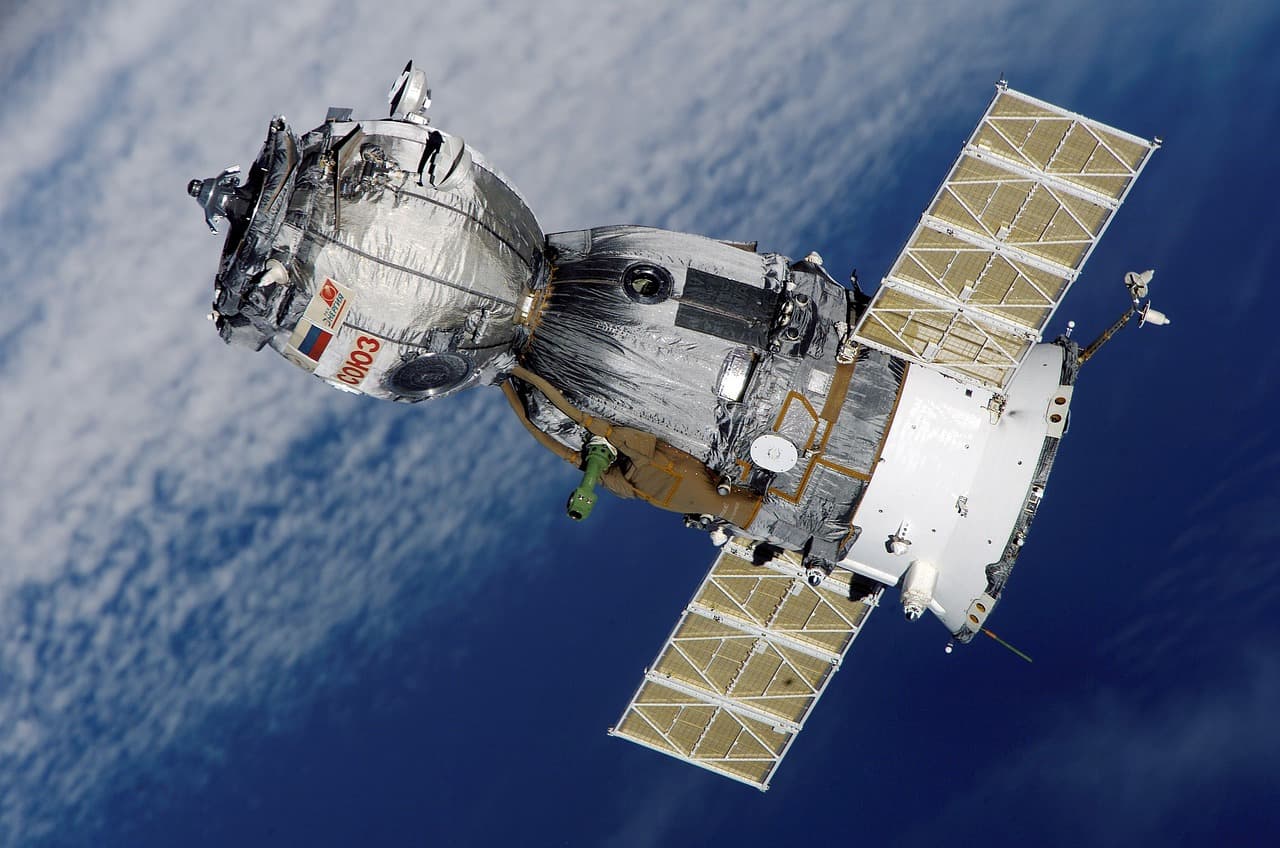
More companies and investors are exploring the idea of artificial intelligence data centers in Earth orbit: satellites powered by solar panels that perform computation and radiate waste heat into space. Although the concept has attracted sizable funding and experimental launches, technical and economic barriers related to launch costs and thermal management mean large-scale deployment is still uncertain.
Funding and startups
On October 26, the South Korean firm Dunamu & Partners announced it participated in financing the U.S. startup Starcloud, which develops space-based data centers. In August, Starcloud raised $250 million from investors including Nvidia and Cisco Investments; total funding to date is $450 million, and the company’s valuation stands at $2.3 billion. Founded in 2024, Starcloud plans a satellite-based compute network to complement traditional ground data centers.
In filings with U.S. authorities the startup listed a long-term ambition of 88,000 satellites and a total of 20 gigawatts of compute capacity. Those figures are far-term targets, but Starcloud has already run tests: in November 2023 its Starcloud–1 satellite carried an Nvidia H100 GPU and executed an AI model in orbit.
Why put servers in space?
Training and operating large language models and other high-performance AI systems requires growing compute and electricity. High-performance chips consume substantial power and generate significant heat; on Earth, data centers therefore require large amounts of electricity and often large volumes of water for cooling. Building new ground centers is also constrained by available land, grid connections and cooling infrastructure.
Proponents argue that satellite systems could avoid some of these constraints. Large solar arrays on appropriately chosen orbits could receive extended direct sunlight without atmospheric or weather losses, generating the electricity needed. Processors on board would run computations, returning results to Earth via radio or laser links. Multiple satellites could be networked to create a distributed server fabric rather than a single massive orbital station.
Cooling in space is still challenging
One key promise of orbital deployment is the reduced need for terrestrial, water-based cooling towers. However, vacuum is not an automatic freezer: without air to convect heat away, equipment heat must be transferred through conductive paths to radiators that emit thermal energy as infrared radiation into space. The Boston Consulting Group (BCG) estimates a roughly 400 square meter radiator area may be required to cool a 100 kilowatt satellite. Those radiators add mass and volume, increasing launch costs because they must be launched like any other component.
Satellites also must withstand radiation and large temperature swings, and faulty components that are readily swapped in ground data centers are far harder to repair or replace in orbit. Establishing continuous, high-bandwidth links between many satellites and to Earth is another technical requirement.
Tests by major companies
Development of space-based AI infrastructure is not limited to startups. Google’s Project Suncatcher launched its first experimental satellite on October 1, 2024, carrying four custom TPU chips. In tests conducted with Planet, Google is examining how the chips tolerate space radiation and thermal stress; the company intends to experiment with linking multiple satellites, but current hardware is still experimental rather than a production server farm.
In October, U.S. firm Redwire and Bulgaria’s EnduroSat signed a memorandum of intent to explore joint opportunities, including potential European space-based data centers; this is at the exploratory stage and does not yet represent concrete investment.
Elon Musk and SpaceX involvement
SpaceX-linked StarMind is also developing satellites intended to house high-performance computers. According to SpaceX, one such satellite’s compute unit could reach up to 250 kilowatts peak, with data relayed via the Starlink laser communications system. Nvidia said in August that SpaceXAI plans to apply the Vera Rubin system on the first StarMind satellites. In mid-October Elon Musk stated that engineers from the two companies are jointly developing space-grade compute hardware. SpaceX has indicated it could begin higher-volume production of these satellites as early as late 2027, but that remains a plan.
SpaceX’s vertical integration—satellite manufacturing, launch vehicles and the Starlink network—gives it advantages; the company also aims to lower launch costs by developing the fully reusable Starship system.
Economics and orbital risk
Return on investment is the major unknown. BCG’s analysis suggests that, at current launch prices of roughly $1,500 per kilogram, transporting one gigawatt of compute capacity to orbit would cost about $30 billion just for launch; that figure does not include all hardware and operational expenses. BCG estimates total costs for space-based data centers are currently roughly 2.5 to 3 times those of comparable ground systems.
Cheaper rockets and lighter satellites could narrow the gap, but BCG does not expect the cost differential to vanish entirely. Moreover, very large constellations of satellites would increase orbital debris and collision risks.
Given these factors, the technology is likely to become cost-effective first in cases where the data are already generated in space, such as heavy satellite imagery processing. Replacing traditional ground server farms is not a near-term prospect, but current investments and experiments show significant commercial interest in orbital AI infrastructure.