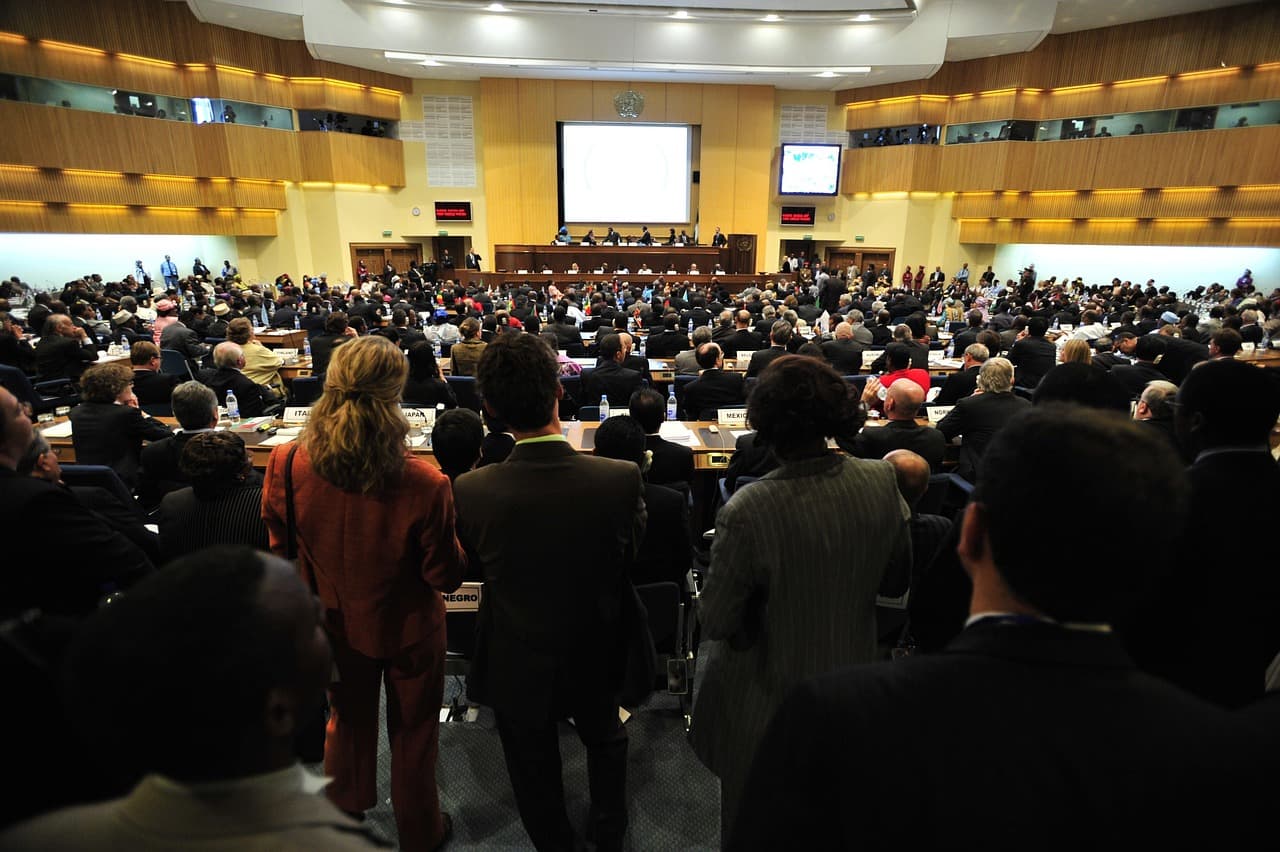
The heads of several leading artificial intelligence companies told the United Nations Security Council on Wednesday that concentration of power around the most advanced AI models represents a significant risk. They argued that no single person, company or country should have the ability to wield those models in a way that imposes a particular worldview or advantage.
Sam Altman, chief executive officer of OpenAI, stated: “No one person or company or country should be able to use the most powerful AI models to impose their worldview on everyone else.” His remarks emphasized concerns about geopolitical and social asymmetries that could arise if advanced AI capabilities are tightly held.
Dario Amodei, CEO of Anthropic, warned that “if managed poorly, AI could be a risk to humanity as a whole.” Amodei’s comments highlighted the broader safety and governance challenges around rapidly advancing models.
The chief executive of Hugging Face — who noted that the company had previously been compromised by malicious actions linked to competitors — cautioned about the “asymmetry of powerful AI,” saying the world could become vulnerable if a small number of large firms control capabilities that others cannot access.
Calls for global safeguards and a slowdown
Speakers urged stronger international regulation, greater transparency, and a temporary slowdown in development to give policymakers and industry time to build appropriate safety protocols and oversight mechanisms. These proposals aim to address political, ethical, and security questions raised by increasingly capable systems.
Divergence with political leaders
The industry warnings stood in stark contrast to U.S. President Donald Trump’s dismissal of AI’s existential risks as a “hoax.” The differing views underscore a lack of consensus about the technology’s trajectory and the need for coordinated international responses.
Why this matters
The interventions underline a core dilemma: how to balance rapid AI innovation with measures that protect global security and democratic processes. Given the potential consequences of concentrated capabilities and poor governance — from geopolitical manipulation to systemic safety threats — cooperation between governments and the AI sector will be crucial in shaping effective safeguards.