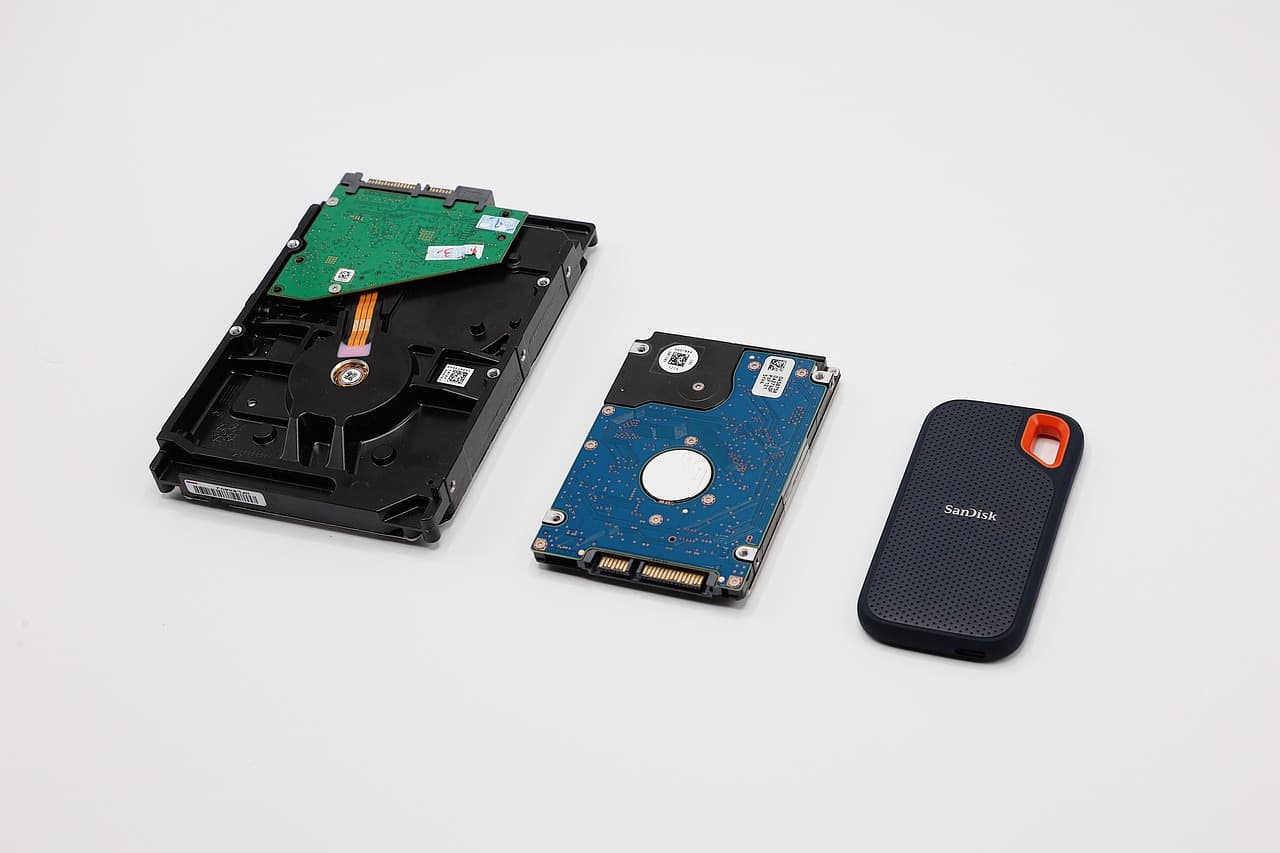
Weka has launched NeuralMesh 6 and its first self-designed hardware line, Wekapod 3, aiming to reduce the cost and limits of GPU memory by augmenting it with cheaper NAND flash. The company’s Augmented Memory Grid approach aggregates flash to behave like GPU memory at a fraction of the price.
Why this matters
GPU memory is the most expensive and fastest-depleting resource in production AI. Long context windows and multi-turn interactions force models to re-do expensive computation on previously processed inputs, increasing both GPU memory and compute consumption. Weka’s approach is to use a lower-cost storage layer to hold cached work so GPU resources can be used more efficiently.
Who benefits
The technology is most useful for organizations running AI at scale or expecting rapid growth: enterprises building internal copilots, customer service agents, software engineering assistants, or retrieval systems with long context windows. Smaller deployments will likely see less immediate benefit if GPU utilization is not already a bottleneck.
What’s new in NeuralMesh 6
NeuralMesh 6 introduces four features targeting gaps Weka says have cost them deals in competitive evaluations:
-
Composable and virtual multi-tenancy. Composable clusters provide hardware-level isolation for anchor tenants (dedicated CPU, memory, and storage). Virtual multi-tenancy runs over Weka’s RDMA fabric to provide network-level isolation that scales past 1,000 tenants per cluster, with provisioning in under 30 minutes. A single physical cluster running 50 composable clusters can support up to 50,000 tenants.
-
Unified file and object storage. Instead of maintaining separate file and object paths (and typically duplicating data or using a gateway), Weka says the same physical data is directly readable through both file and object APIs without a translation layer or a second copy. Liran Zvibel, Weka co-founder and CEO, specifically targets non-AWS GPU clouds—naming Lambda, Nebius, G42, and CoreWeave—and claims roughly two orders of magnitude better performance than conventional S3, with capacity-based pricing instead of per-API charges.
-
Metadata-first replication. Destination environments become browsable before a full data copy arrives; data hydrates only when accessed. Zvibel contrasts this with prior workflows that could take days, weeks, or in extreme cases a month for a full transfer, and says NeuralMesh 6 enables customers to grab new GPU allocation and be running within about an hour.
-
AlloyFlash and Always-On data reduction. The platform mixes TLC and QLC NAND in a single cluster: latency-sensitive workloads are routed to TLC while bulk-capacity workloads run on QLC, lowering cost per terabyte without penalizing performance for latency-sensitive tasks. Data reduction runs by default rather than as an optional feature.
Addressing the context problem
NeuralMesh 6’s Augmented Memory Grid is designed to reduce wasted recomputation when context windows and multi-turn interactions grow. Each prompt has two stages: prefill (which computes attention and is computationally expensive) and decode (which is comparatively lightweight). In multi-turn sessions, prefill can be retriggered for previous turns unless those results are cached.
Zvibel gives a simple scaling example: with 10 turns you may overcalculate 100 times, with 20 turns you may overcalculate 400 times. Weka argues that by using two orders of magnitude more NAND than would be affordable in shared memory, they can cache 100% of the pre-calculated tokens so the system never needs to redo that work.
Competitive positioning
Storage vendors have repositioned around AI over the past 18 months; Dell, NetApp, Pure Storage and VAST are among them. Steve McDowell, chief analyst at NAND Research, said companies like Weka and VAST are true AI-native data companies that have worked on these problems from the start. McDowell highlighted Augmented Memory Grid as Weka’s clearest technical lead and noted Weka’s contractual guarantees around data reduction as an underappreciated point.
His advice to enterprise buyers evaluating competing claims is to look for vendors solving real-world problems today and to speak with organizations running similar workloads at similar scale; a lack of comparable references should be a warning sign.
Summary
Weka’s NeuralMesh 6 paired with Wekapod 3 offers a flash-augmented memory architecture that aims to lower inference costs and speed deployment of AI workloads by caching pre-computed model state on NAND flash. The approach is most advantageous where GPU memory is already a limiting factor and where long-context, multi-turn workloads are common.