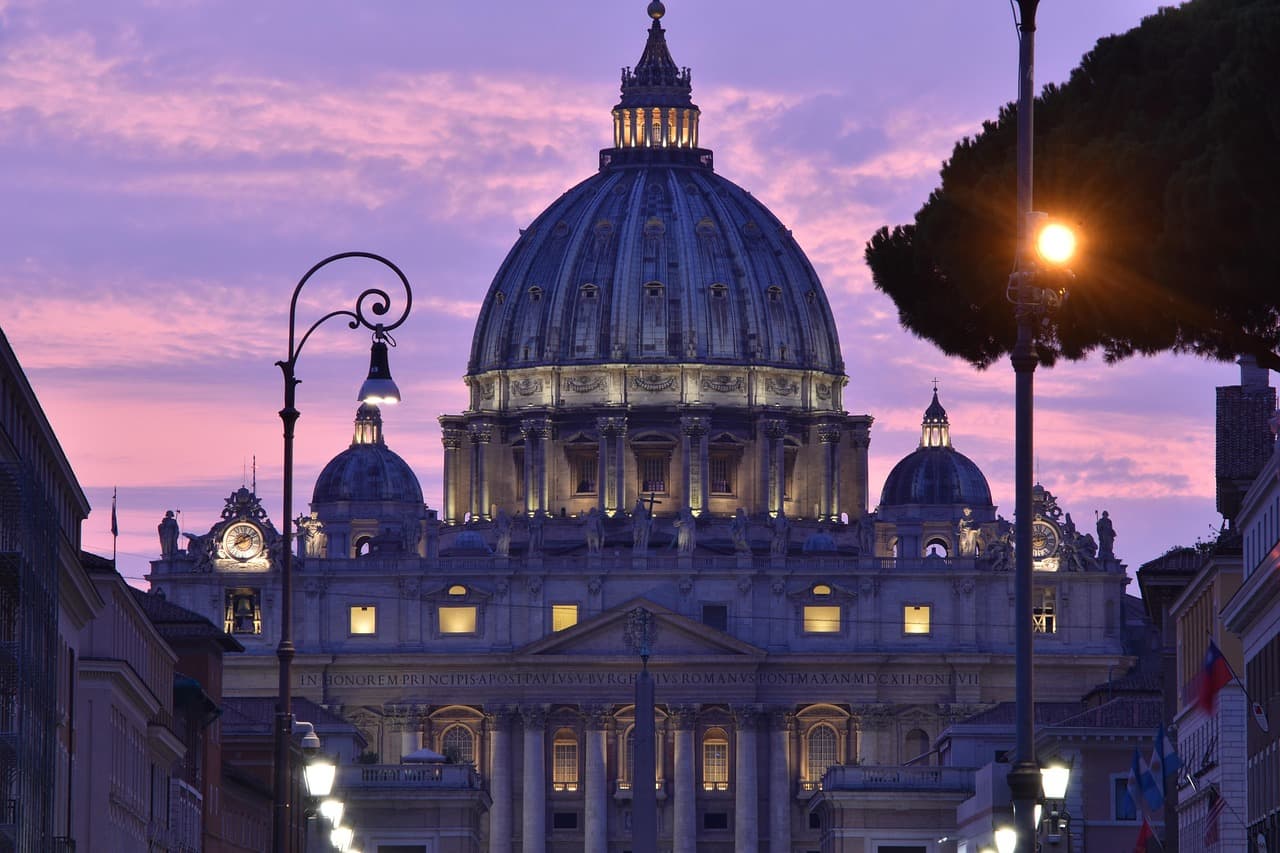
Pope Leo XIV told reporters aboard his flight home from France that warnings issued by AI researchers deserve serious consideration and are not to be dismissed as "fake news." He said he was not in "panic mode" over AI anxieties but argued that experts' concerns should not be written off as conspiratorial or financially motivated disinformation.
Why his comments matter
Leo's remarks carry weight because he leads the Catholic Church at a time of widespread societal debate about artificial intelligence and has made addressing AI risks a central theme of his papacy. As the first American pope, his statements also have political resonance: they stand in contrast to U.S. President Donald Trump, who previously called AI safety concerns a "HOAX" and a "SICK conspiracy."
What he said on the plane
Closing his trip to France, the pope said he is not in "panic mode" but emphasized: "I do think that the concerns raised by many of the experts, specialists in AI, should be taken seriously. I don't think that is fake news, as some have said, to try and cause whether financial or some other kind of benefit." He added, "We have to keep working, we can't sit back and pretend nothing is going to happen."
References to industry actions and leaders
Leo acknowledged NVIDIA's recent software release intended to help secure AI agents, noting the context of increasing incidents of agentic misbehavior that have fueled safety debates. He also criticized NVIDIA CEO Jensen Huang, saying Huang has argued against limits and government regulation. The source material notes that Huang has at times dismissed AI fears, suggesting at a conference that panic could serve cybersecurity companies' business interests.
The Vatican's prior engagement on AI
Earlier this year, Pope Leo XIV published his first major encyclical in May, positioning the Vatican as a moral voice in the growing AI debate. The document recognized AI's usefulness but warned it could erode human judgment, deepen inequality and destabilize democracies, among other risks — points summarized at the time by Russell Contreras.
Political follow-up
The pope urged continued dialogue among political leaders, AI developers and social organizations to assess current developments and future possibilities. This discussion is unfolding as President Trump and House Speaker Mike Johnson (R-La.) are scheduled to meet with technology CEOs on Tuesday, offering another venue for diverging views on AI safety.
Bottom line
Pope Leo XIV sought to strike a balance: he rejected labeling experts' AI concerns as "fake news" while avoiding alarmism, and he called for sustained collaborative work to address the technology's potential risks.