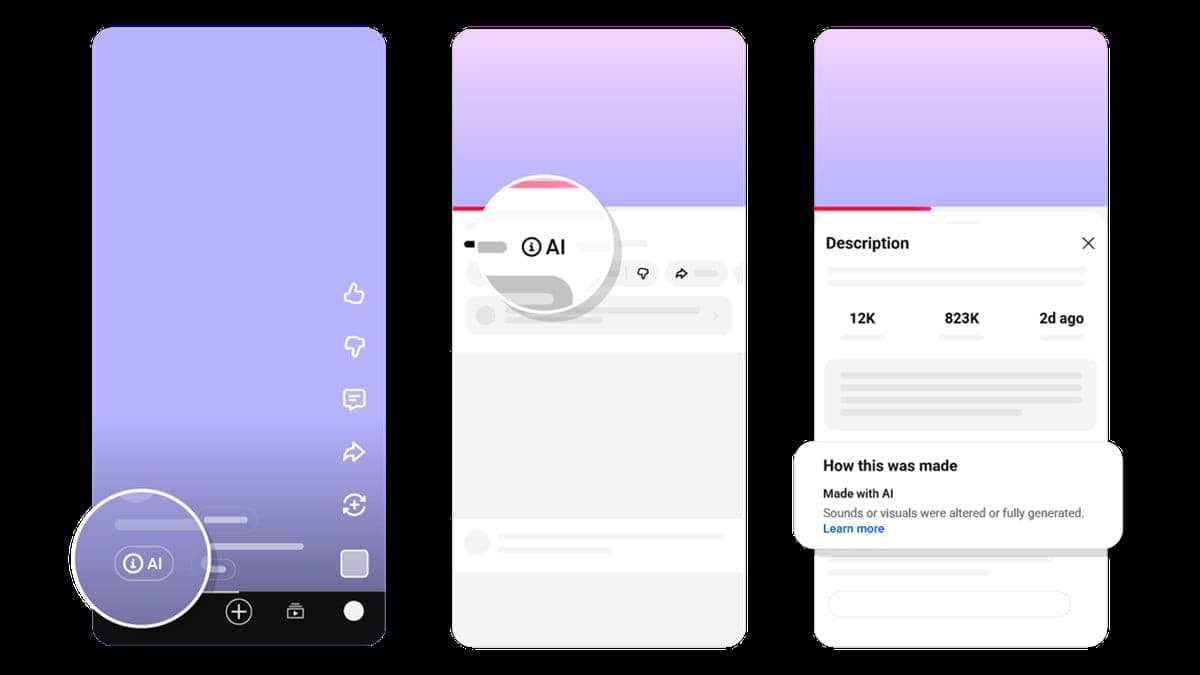
YouTube has announced that it will automatically detect and label “significant photorealistic AI” content this month. This marks a shift away from the past practice of relying on creators to disclose AI use, disclosures that were often tucked into video descriptions.
Where and how the labels appear
The new labels will be displayed directly beneath the video player and overlaid on Shorts, rather than being hidden in descriptions. Content produced with YouTube’s own tools — including Veo and Dream Screen — and files tagged with C2PA will receive a permanent label that creators cannot remove.
Practical implications
The change effectively ends about two years of largely voluntary self-disclosure. Many creators previously avoided direct mention of synthetic elements or used vague terms such as “edited.” With automatic labeling, those workarounds will no longer prevent a visible AI tag from appearing if the platform classifies a video as significantly photorealistic.
Who is affected
Channels and business models that rely heavily on synthetic material are likely to feel the impact most. Examples include stock-video farms, faceless explainer channels, and automated AI-driven music channels. Because some audiences react negatively to an explicit “AI” label, visible tagging could affect viewership and audience perception.
Why this matters
The move signals a preference by platforms for systemic transparency over voluntary disclosure. While the labels are intended to make it clear to viewers when a video is largely produced with AI, they may also carry a reputational cost for creators in the short term.
Next steps
YouTube said the change will take effect “this month.” Further details on the technical criteria for automatic detection and the exact circumstances that trigger a permanent label (for example, thresholds for what counts as “significant”) may be clarified by the platform in upcoming communications.
Summary
YouTube’s automatic labeling replaces the mostly voluntary disclosure regime: videos deemed “significant photorealistic AI” will now display visible, sometimes permanent labels. The policy will alter how audiences encounter synthetic video and how creators present and monetize such content.