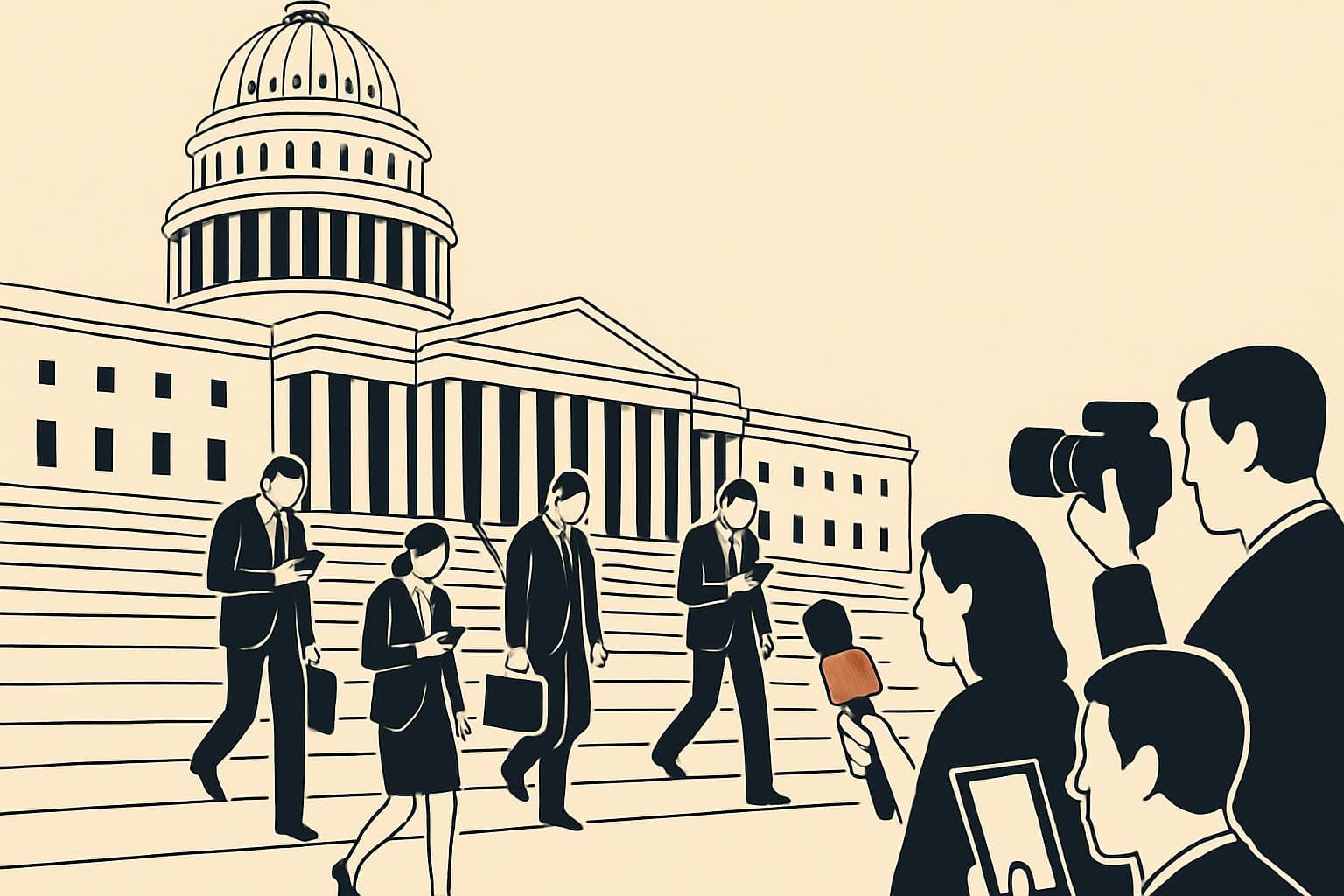
On September 29, Donald Trump hosted leaders of the U.S. AI industry at the White House. At the meeting the president presented a one-page, voluntary agreement encouraging corporate oversight of the most advanced models, which he described as "morally binding." Of the fourteen billionaires in attendance, six signed the document: Elon Musk, Jensen Huang, Mark Zuckerberg, Dario Amodei, Greg Brockman and Sundar Pichai. Jeff Bezos, Satya Nadella and Lisa Su did not sign.
The meeting did not produce stronger government action on AI regulation; the presented agreement represents a retreat compared with what proponents of tighter oversight had sought.
Why this matters now
With the November midterm elections approaching, the expansion of AI and data centers has become a political issue. The debate centers on how much freedom companies should have in development and what safety requirements the state can impose. Financial influence from industry figures is a key factor shaping which policy directions gain traction.
How much money and where it went
According to an American Forbes compilation, the AI billionaires and their families examined have spent about $145 million on political contributions in this election cycle. Approximately $119 million of that sum went to Republican candidates and organizations.
- Elon Musk alone is listed with $91 million in contributions, much of it to America PAC, which supports Republican causes.
- Greg Brockman (co‑founder of OpenAI) appears with $25 million; together with his wife Anna their total reaches $50 million. Their donations were split among recipients including the pro‑Trump MAGA, Inc. and Leading the Future, a group that supports pro‑AI development candidates. OpenAI has said Brockman’s political activity is personal.
- Alex Karp of Palantir gave $1.5 million, about 94 percent of which went to Republican‑aligned actors. Shyam Sankar is listed with $1.4 million, about 99 percent to Republicans.
- Dario Amodei of Anthropic donated $1 million to an organization within the Public First network that advocates stricter AI safety measures.
Forbes’ database lists Jeff Bezos at $15,000, Sundar Pichai at $10,000, Lisa Su at $5,000 and Mark Zuckerberg at $5,000 for this cycle. Jensen Huang, Satya Nadella, Nikesh Arora and Tom Brown showed no recorded contributions in the Forbes review for this cycle.
Two camps and differing strategies
Two major networks figure prominently in the political spending: Public First and Leading the Future. Public First has raised about $30 million and has backed candidates pushing for tougher AI‑safety measures. Leading the Future and affiliated organizations have spent roughly $78 million and generally back policies friendlier to continued AI development; major backers include investors Marc Andreessen and Ben Horowitz, as well as Greg Brockman and his wife.
The split is not simply Republican versus Democrat: the two networks’ spending to date — roughly $59 million combined — has been distributed almost evenly between the two parties, and Leading the Future has at times supported candidates who favor stronger safety measures.
Key takeaways
- Political contributions from AI industry billionaires in this cycle have flowed predominantly to Republican causes, with Elon Musk’s donations comprising a large share of the total.
- The September 29 White House meeting produced a voluntary one‑page agreement rather than legally binding oversight; advocates of stricter regulation view the outcome as a step back.
- The industry remains divided between those who call for slowing development and stronger state regulation and those who favor faster progress and lighter intervention.
Who this affects
The mix of donations and public positioning by leading AI companies matters for both policy and technology: funding patterns and industry lobbying can shape what kinds of rules are enacted for AI development and deployment, especially during an election season when political priorities are in flux.