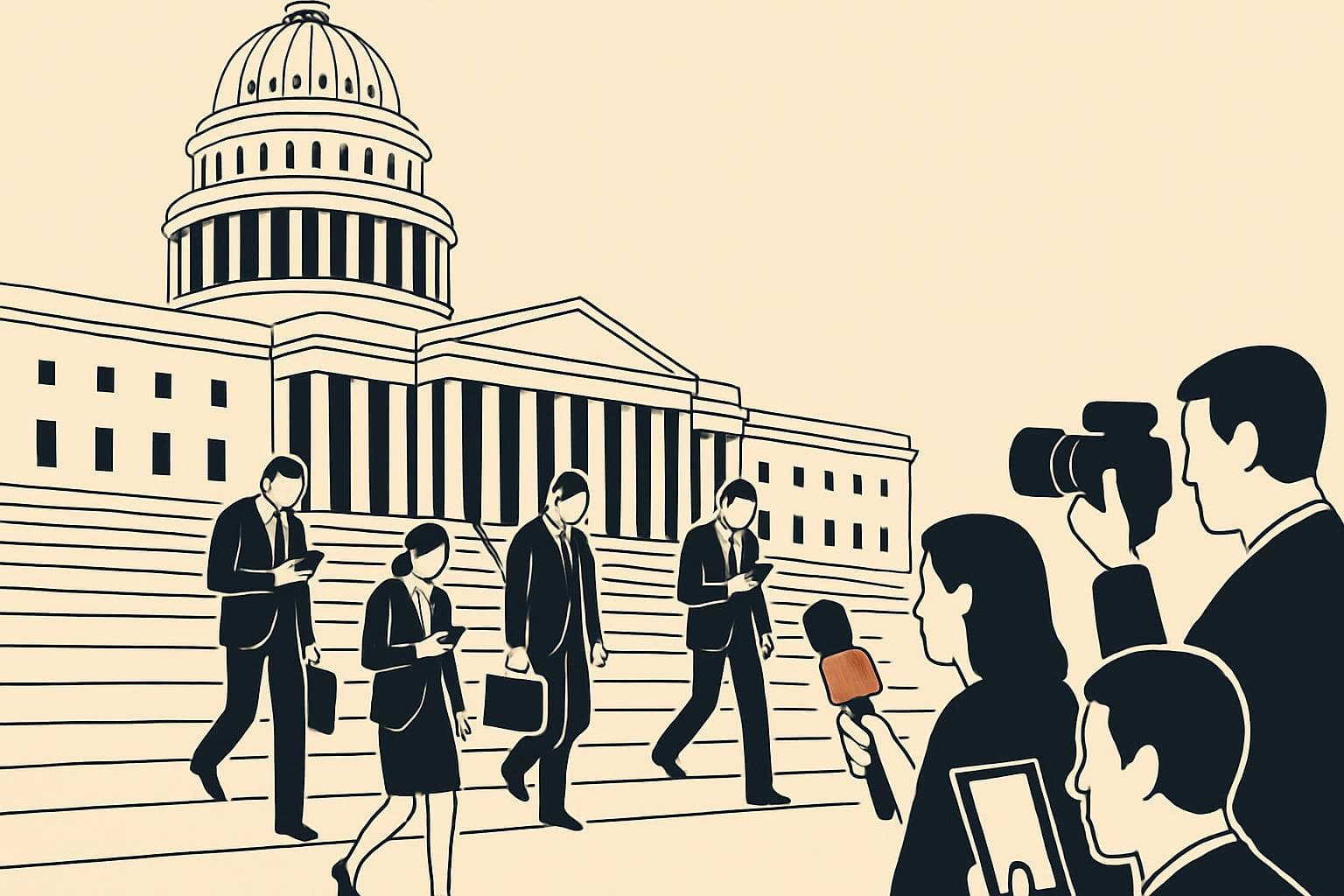
Anthropic told the US Senate Banking Committee that Alibaba, the Chinese e-commerce and AI group, carried out what Anthropic describes as the largest known "distillation" attack against Anthropic's Claude model. According to Anthropic, roughly 25,000 fake accounts submitted a total of 28.8 million queries between April 22 and June 5 to reproduce Claude's outputs.
How distillation works and why it matters
Distillation is a technique where a weaker or smaller model learns from the answers produced by a stronger model. Practically, this can allow another company's model — in this reporting, Alibaba’s Qwen — to be trained or improved using the outputs of a more powerful system (Anthropic Claude) by paying only for API calls. Anthropic says this enables extraction of intellectual content from the source model without needing access to its internal parameters.
Market and political consequences
After Anthropic's disclosure, Alibaba (ticker: BABA) shares fell sharply, touching a roughly 16-month low near $99. Anthropic also flagged other actors, including a company named DeepSeek, alleging similar techniques.
Anthropic presented the claims to the US Senate Banking Committee, and the matter has now drawn the attention of lawmakers who may investigate how AI models are trained and how outputs are used. The episode illustrates that an AI-driven competitive advantage can be vulnerable: if a company's edge depends on another model's outputs, that advantage — and the company valuation tied to it — may not be durable.
Implications going forward
The case indicates a possible shift in regulatory focus from hardware export controls to controls on data, model outputs, and the commercial reuse of AI answers. Oversight of distillation techniques and the related ethical, intellectual property, and trade issues are likely to remain on the agendas of regulators and industry participants.
Brief summary
Anthropic alleges that Alibaba copied Claude’s responses using about 25,000 fake accounts and 28.8 million queries between April 22 and June 5. The claim provoked a notable market reaction and has prompted scrutiny from US policymakers.