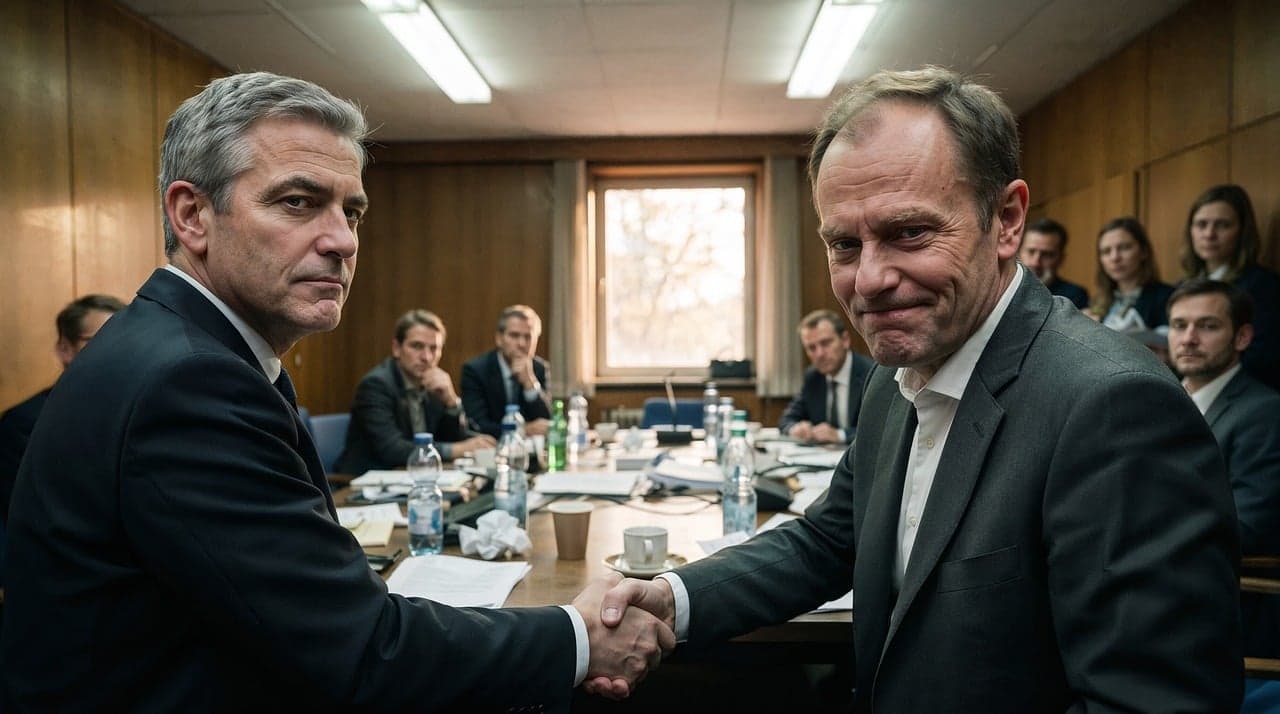
After strengthening relationships with the Trump administration in recent years, major technology companies are now attempting to rebuild connections with Democrats following the midterm elections, as Democratic lawmakers have pledged tougher oversight of artificial intelligence.
Concrete moves and optics
Shortly before the midterm elections, OpenAI hired Jessica Schumer, daughter of Democratic Sen. Chuck Schumer, and announced it would start referring to its data centers as "compute campuses." These actions are part of a broader pattern: Silicon Valley firms have attended White House events, scaled back some diversity, equity, and inclusion (DEI) programs, and executives and companies donated millions to super PACs that supported President Donald Trump and allied candidates.
Administration policies also aided the industry with measures such as tax breaks, the temporary pausing of certain federal investigations, and looser AI regulation. At the same time, companies like Meta have faced lawsuits and multibillion-dollar fines, and OpenAI has been the subject of suits alleging harm to users.
Partnerships, programs and critique
Observers view many recent initiatives as efforts to improve public image. J.B. Branch, director of federal AI governance and technology policy at Public Citizen, described moves such as the Schumer hire and the rebranding of data centers as "PR washing." He expects more public–private partnership-style investments, citing OpenAI’s partnership with the American Federation of Teachers announced last year, Anthropic’s newly launched Claude Corps, and Meta’s America’s Workforce Academy.
Alice Marwick, director of research at Data & Society, said Big Tech will likely try to pivot back toward the center — if not to the left — but that it may be too late. Marwick argued companies should focus on how their products make people’s lives better, since that objective currently appears unmet.
Meta executives have publicly emphasized the need for bipartisan engagement. Meta president Dina Powell McCormick told WSJ Tech this week that companies must work with the government elected by the American people and that bipartisan buy-in is essential for moving projects forward.
Real fights may be at state and local levels
Many analysts say actual regulatory battles will play out at the state and local level over the next two years. Aryan Ranjan, founder of political campaign management software company Baraza, noted that states have already sued tech firms and passed regulations; he expects a coalition of newer, working-class voters to push Democrats to focus on tangible issues like electricity bills, data-center siting and jobs rather than abstract AI-safety debates.
That local focus is already emerging: data center moratoriums and heightened scrutiny of siting decisions have gained traction in several places, and multiple states have enacted laws covering chatbots and deepfakes.
Federal posture and the AI Litigation Task Force
Last December, the Trump administration issued an executive order that created the AI Litigation Task Force, a federal group intended to challenge state AI laws. The administration has argued U.S. AI companies "must be free to innovate without cumbersome regulations." A White House official told TechCrunch that American leadership in superintelligence is essential to national security, economic prosperity and quality of life, and that President Trump is committed to maintaining that leadership while protecting consumers.
Whether the White House will issue further AI-related executive orders or veto bills perceived as anti-AI remains to be seen.
Market turbulence and political risk
Financial markets reacted sharply after the midterms: on the day after the elections a roughly trillion-dollar sell-off unsettled investors, some of whom began to reconsider Anthropic’s reported potential IPO. Branch warned there is a strong likelihood of an AI bubble popping, which could have political fallout tied to President Trump, since his political fortunes are increasingly linked to the AI industry.
Conclusion
Big Tech’s recent hires, partnerships and community-facing programs appear aimed at repairing relationships with Democrats and improving public optics. But experts caution that where regulation and real consequences are decided — state capitals, local permitting fights, and the markets — these PR moves may not be enough unless companies make substantive changes to their products, business practices and local engagement.


