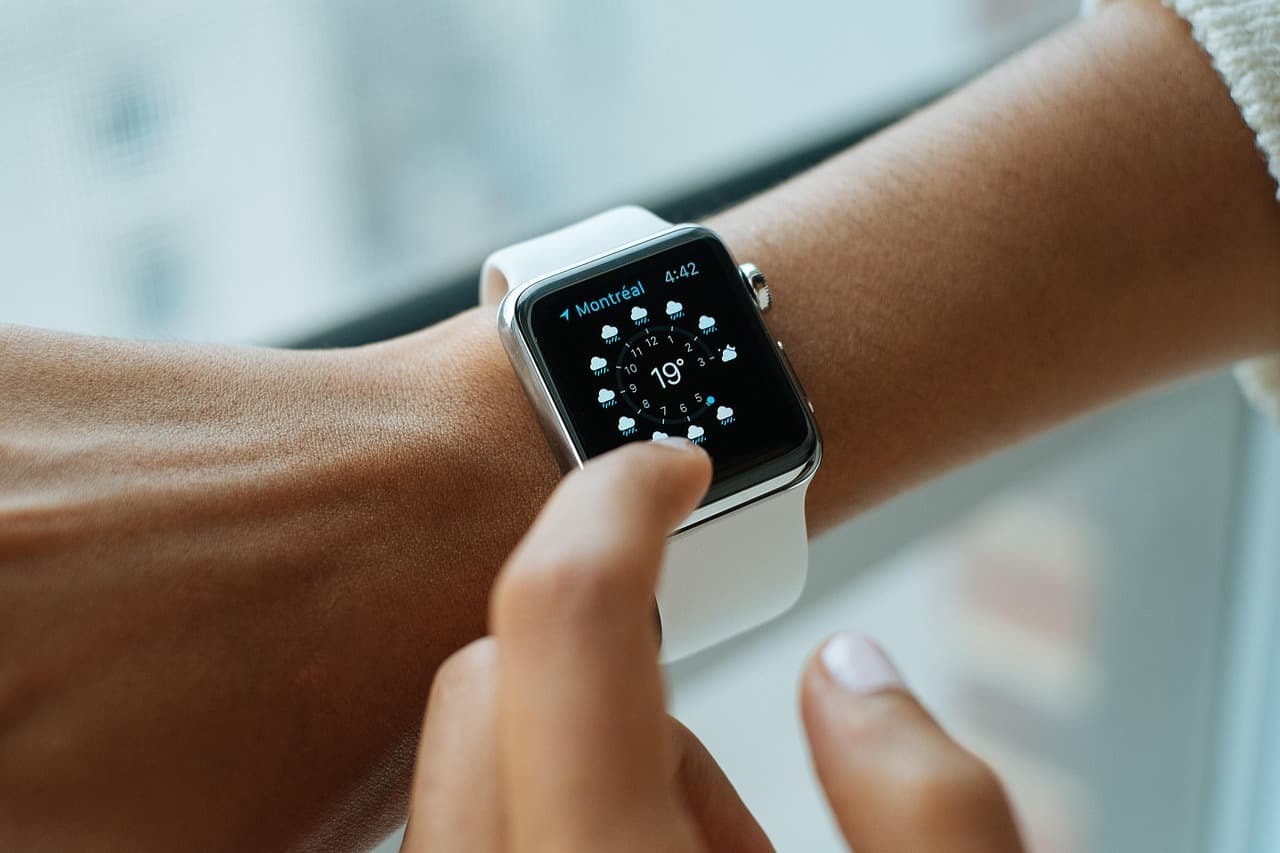
A new cuffless, smartwatch-based system can passively detect signs of persistent hypertension without calibration against a traditional arm cuff. The multimodal AI system, called AI-PPG-ACC-HTN, was validated in a study published in Nature against 24-hour ambulatory blood pressure monitoring (ABPM) and achieved diagnostic performance comparable to conventional cuff-based workflows for both initial screening and confirmatory testing. The research also informed the Blood Pressure Trends feature in the Google Health app.
Why this matters
Hypertension affects more than one billion people worldwide but often remains undiagnosed because it usually causes no obvious symptoms. More than half of adults with high blood pressure are unaware of their condition, a problem particularly acute among younger adults aged 18–44. Missed diagnoses can delay early interventions and raise the long-term risk of cardiovascular events such as stroke or heart failure.
How the system works
Rather than attempting to estimate instantaneous systolic and diastolic blood pressure values — which are vulnerable to transient noise — the system aims to identify an individual's underlying, persistent hypertensive state by aggregating passive physiological signals over multiple days.
The method uses two sensors commonly found in consumer smartwatches:
- Photoplethysmography (PPG): an optical sensor that measures blood volume changes at the wrist and captures pulse wave contours.
- Accelerometry (ACC): a motion sensor that detects stillness and records the ballistocardiogram (BCG), the subtle wrist vibrations caused by the heart's mechanical ejection of blood into the aorta.
Development employed a two-stage machine learning pipeline:
-
Self-supervised pre-training (waveform encoder): a 1-D deep convolutional neural network was trained using self-supervised contrastive learning. The model ingested a large unlabeled dataset — 492,347 hours of sensor data from 2,109 consenting participants — and learned to map overlapping 15-second PPG and ACC waveform segments from the same individual close together in latent space. This approach enabled discovery of complex, physiologically meaningful features without manual feature engineering or medical labels.
-
Person-level aggregation and classification: 15-second embeddings were mean-aggregated across multiple days of wear to reduce ephemeral noise. The aggregated embedding was combined with the user's height (a proxy for arterial path length) and fed into a regularized logistic regression classifier to produce a continuous hypertension probability score.
Clinical validation
The system was prospectively evaluated in a multi-center clinical study across five U.S. sites with 196 consenting, diverse participants who had no known cardiovascular disease and were not taking blood pressure medications. Performance was benchmarked against 24-hour ABPM, the clinical gold standard for hypertension diagnosis. Two clinical use cases were assessed: initial screening and confirmatory testing.
-
Initial screening: the smartwatch system achieved a sensitivity of 65.8% and specificity of 90.0%, yielding a positive predictive value (PPV) of 80.6%. By comparison, initial office-based screening showed a sensitivity of 55.3% and a PPV of 77.8% versus the gold standard.
-
Confirmatory testing: among participants with elevated initial office BP (N=48), the multimodal smartwatch system had a sensitivity of 78.4%, specificity of 90.9% and PPV of 96.7%. Repeat office BP measurements in this subgroup produced lower point estimates (sensitivity 67.6%, specificity 63.6%, PPV 86.2%). Multi-day home monitoring yielded sensitivity 89.2%, specificity 81.8% and PPV 94.3%; the smartwatch approach was competitive with these results.
Overall, the findings indicate that the cuffless smartwatch system can detect hypertension with accuracy levels comparable to traditional cuffed devices within current clinical workflows.
Model interpretability and observed signal differences
To probe what the AI model attends to, researchers visualized average pulse waveforms for users with the highest and lowest predicted hypertension probabilities. Observed differences included:
- Reduced pulse width: waveforms associated with higher predicted risk showed slightly narrower pulse width, suggesting smaller blood volume change and possibly stiffer arteries.
- Pulse wave reflection: higher risk scores correlated with a slower systolic upstroke and a lower d/a ratio, a metric comparing the forward-traveling pulse wave to the reflected wave from the vascular network.
- Mechanical heart vibrations: the accelerometer-captured BCG showed distinct modulations in higher-risk users, including deeper "K waves" and wider "IJK complexes."
The study annotated PPG and BCG fiducial points and first and second derivatives to illustrate these distinctions.
Limitations and outlook
Smartwatch-based hypertension screening is not intended to replace standard arm-cuff measurements or to provide a definitive, standalone medical diagnosis. Rather, it may serve as a scalable, passive tool for opportunistic screening that prompts at-risk individuals to seek formal clinical assessment. The authors emphasize that this is early feasibility research; the described methods are exploratory and do not necessarily represent an existing or imminent commercial product or device capability. If deployed responsibly, the approach could help close the global awareness gap and identify hypertension earlier, potentially preventing permanent cardiovascular damage.
Acknowledgements
This research was a collaboration between Google Research, Beth Israel Deaconess Medical Center, and Harvard Medical School. The paper lists co-authors Lawrence Cai, Jiang Wu, Mingwu Gao, Bhavna Daryani, Jonathan Wang, Utkarsh Khanna, Ho Ko, Anupam Pathak, Mark Malhotra, Shwetak Patel, Jacqueline B. Shreibati, Stephen P. Juraschek, Pramod Rudrapatna, and Matthew Thompson, and acknowledges additional contributors including Jennifer Block, Anu Gabbita, Sushalini Sunku, Keerthana Natarajan, Alexandros Pantelopoulos, Tuan Phan, Tracy Giest, and Florence Thng.