White House science advisor Michael Kratsios accused the Chinese company Moonshot of building the Kimi K3 model by copying Anthropic’s Fable and by using Nvidia chips that are not cleared for export to China. Kratsios made the allegation in a tweet amid broader discussion about potential bans on Chinese open‑weight models.
Government claims
Kratsios wrote that “large‑scale, covert industrial distillation aimed at stealing proprietary U.S. technology and undermining American research is unacceptable.” Treasury Secretary Scott Bessent similarly said they are “finding watermarks of our U.S. large language models on many of the Chinese models, and that that’s unacceptable.” Kratsios did not disclose additional evidence for his claims, and Moonshot did not answer questions about its training process.
Experts doubt distillation alone explains Kimi K3
Several AI researchers expressed skepticism that distillation by itself could produce the advanced capabilities Kimi K3 shows in a short timeframe. Braden Hancock, a researcher at the Laude Institute and co‑founder of Snorkel AI, told TechCrunch that Fable has been publicly available only since July 1, and argued it would be infeasible to distill, train and release a comparable model within weeks.
Nathan Lambert, an AI researcher at the Allen Institute for AI, said on a recent podcast that supervised fine‑tuning (SFT) is becoming less impactful as models grow more complex, and that achieving Fable‑level capabilities would likely require reinforcement learning approaches. Those techniques typically involve a larger model grading a smaller model’s outputs and using that feedback to adjust the smaller model.
Advanced reinforcement learning runs also demand substantial infrastructure and costs: large RL jobs can require tens of millions of agent evaluations, and using a frontier lab’s API for that could be prohibitively expensive, slow, and potentially not provide the desired performance uplift.
Prior accusations and industry practices
Earlier this year Anthropic publicly accused Moonshot, DeepSeek and MiniMax of systematically distilling its models, saying it found millions of exchanges between its models and users it attributed to those companies via IP addresses and other metadata. Anthropic told those queries were distinct from normal usage and reflected deliberate capability extraction. Anthropic did not respond to follow‑up questions about Fable distillation.
Distillation is not unique to Chinese firms: Elon Musk testified earlier this year that his SpaceXAI distilled OpenAI models to develop Grok, and said the practice is common in the industry. The boundary between distillation and creating synthetic datasets can be blurry.
The chip question and supply‑chain concerns
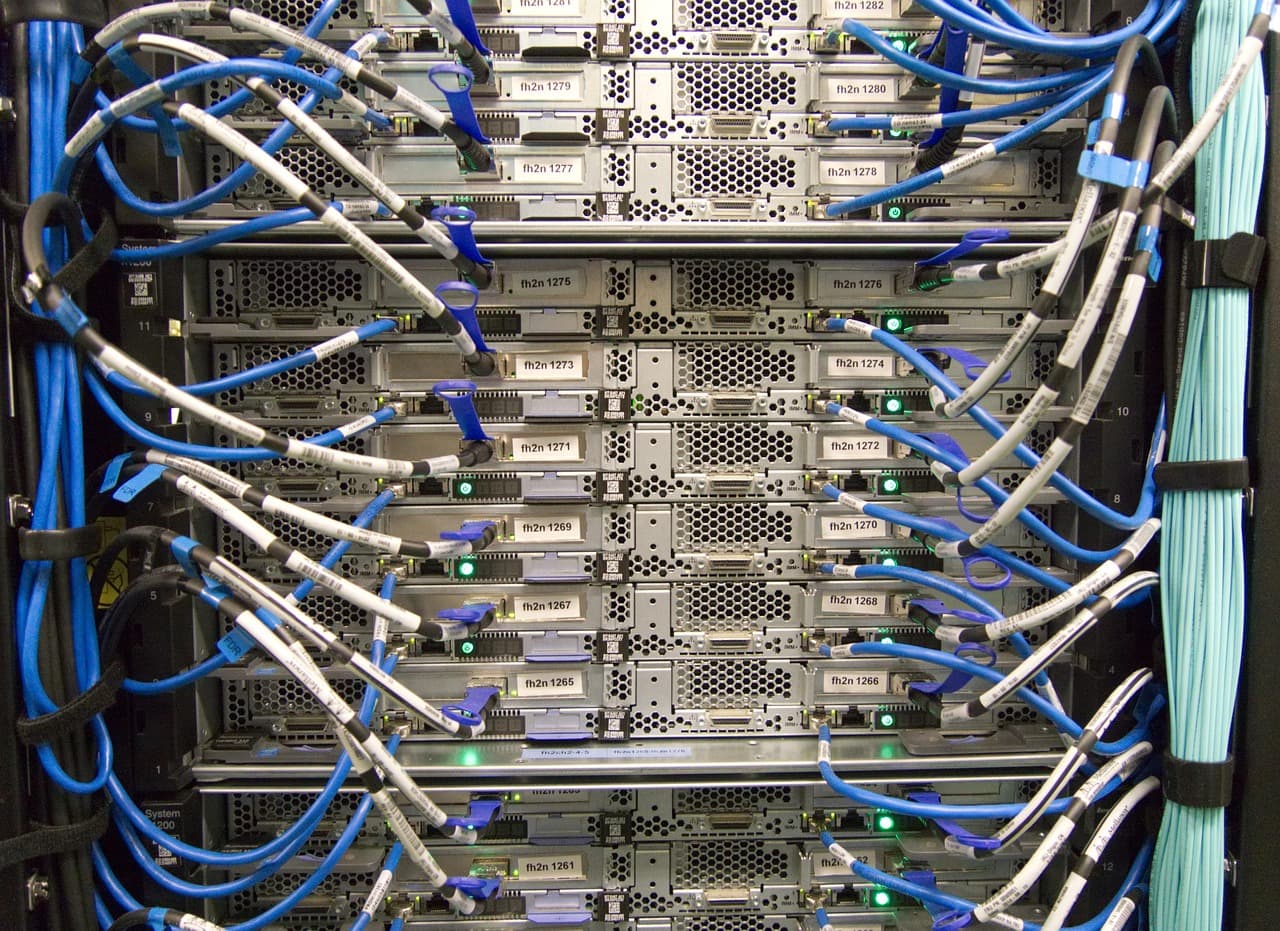
Kratsios also claimed Moonshot obtained advanced Nvidia chips — Grace Blackwell 300s and GB300‑equipped servers in Thailand — which are banned from export to China. Sam Bresnick, a research fellow at Georgetown’s Center for Security and Emerging Technology, noted that a black market exists for such chips; in May the founder of Supermicro, a U.S. server builder, was indicted related to smuggling advanced chips into China.
Bresnick argued for global ‘‘know your customer’’ rules for data centers: if an operator allows a company to run large training jobs on state‑of‑the‑art hardware, there should be a reporting mechanism identifying the company and its activities. The Biden administration’s Department of Commerce proposed federal know‑your‑customer rules for data centers in 2024, but the article notes no further progress under the Trump administration. Exporters are supposed to ensure advanced chips sent abroad are used only for approved purposes.
Why this matters
The dispute highlights questions about protecting intellectual property, enforcing export controls and assessing how quickly rivals can replicate frontier models. While distillation is a common tactic, experts say matching a model like Kimi K3 likely requires more than supervised fine‑tuning alone — it typically involves reinforcement learning, large compute budgets, and significant engineering effort.
Next steps
Kratsios and other government officials have raised allegations that require further evidence and technical analysis: public disclosure of proofs, responses from Moonshot, and potential regulatory measures will shape how this controversy affects international AI competition and export control enforcement. More detailed comparisons of public claims and technical audits are needed to determine how much of the Kimi K3’s capabilities come from model extraction versus other development paths or illicit hardware procurement.