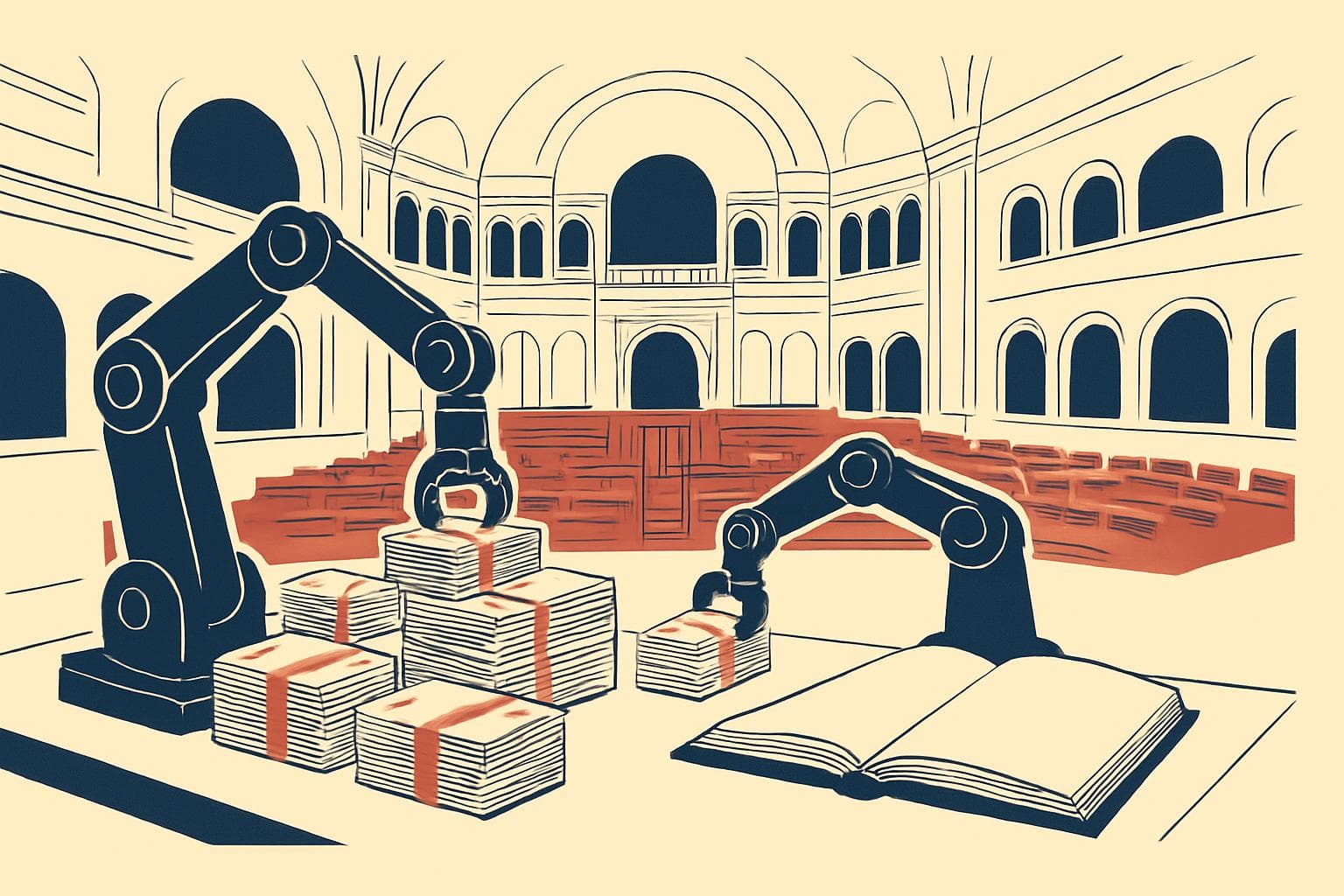
In recent discussions within AI development, experts argue that traditional prompt engineering is losing importance as memory- and agent-based models gain prominence. Examples cited include GPT‑5.5 (mentioned by OpenAI co-founder Greg Brockman), Opus 4.6, and the OpenClaw project. These systems demonstrate the ability to interpret high-level goals, read context, use external tools, and complete messy workflows with fewer step-by-step prompts.
What was reported and who said it
Greg Brockman, co-founder of OpenAI, has stated that GPT‑5.5 can accept a high-level goal, read the surrounding context, use browsers, build spreadsheets, create slides, and finish disordered workflows without requiring a detailed sequence of prompts. Opus 4.6 is described alongside GPT‑5.5 as part of a new class of models that display real intuition rather than merely improved instruction-following.
Technical approaches illustrating the trend
The OpenClaw project illustrates this direction by injecting runtime context before each generation and tool call in the form of files such as agents.md, memory.md, and tools.md, and by maintaining a memory wiki. With that context in place, the system no longer depends on the user to craft a perfect mega-prompt: it already knows who the user is, what tools exist, what it remembers, and what kind of work the user usually wants.
Why this matters
The main takeaway is that prompt engineering is declining as a defensible moat. Memory engineering — the practice of enabling models to use durable stored knowledge and context — is becoming more important. Winners in this environment will be systems that provide persistent memory, tool context, and enough autonomous intuition to act with less direct supervision.
Consequences and open questions
- Shift in development focus: organizations and research groups will likely allocate more resources to memory architectures, persistent state, and tool integration.
- User experience: end users may need to issue fewer crafted prompts and interact more naturally, as models rely on prior knowledge and persistent context.
- Data handling and security: the use of persistent memories raises privacy and security concerns that will require technical and legal solutions.
Conclusion
The examples mentioned — GPT‑5.5, Opus 4.6, and OpenClaw — signal a shift in how AI systems are evaluated: capability increasingly depends on maintaining robust, context-rich memory and integrated tool support rather than the sophistication of individual prompts. Consequently, prompt engineering's role is shrinking while memory- and agent-based approaches take center stage.