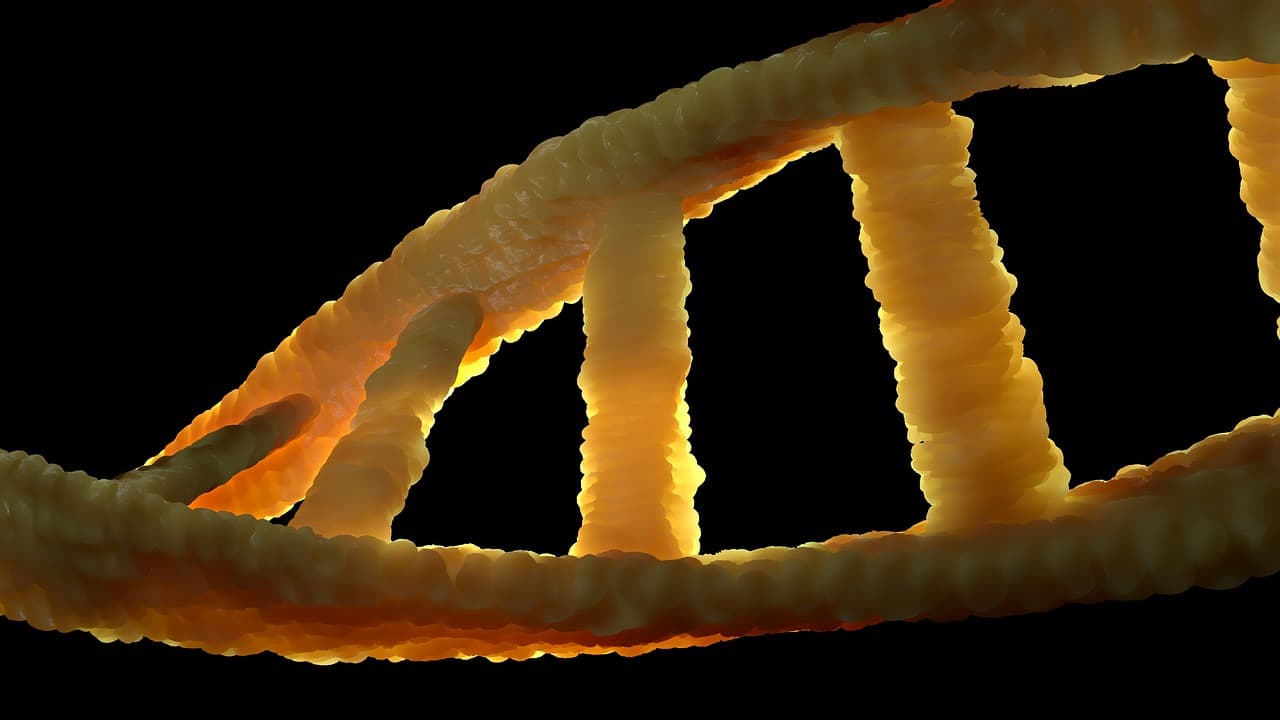
César de la Fuente and his laboratory probe the genomes of living and extinct organisms to find molecules that might help combat drug-resistant infections. Drug-resistant bacteria, fungi, parasites and viruses are an increasing global threat: about five million deaths in 2021 were associated with bacterial antimicrobial resistance, and that toll is projected to roughly double by 2050.
Why a different approach is needed
Much modern antimicrobial development focuses on modifying existing drugs or searching within familiar chemical classes, which yields diminishing returns. De la Fuente has said that “antimicrobial resistance is one of the greatest existential threats to humanity in my opinion,” and notes that there has not been a new class of antibiotics in the past 50 years.
His lab begins in a less explored place: the code of life. The central idea is to treat biology as an information system: DNA nucleotides and the amino acids that make proteins and peptides form a kind of alphabet. Framing biology as information enabled the team to develop methods that start to decipher the organizing principles that produce functional molecules.
Using AI to scan genomes and proteins
The lab trains deep-learning models to recognize patterns in biological sequences, allowing them to search vast genome and protein databases for potential antimicrobials. This approach can shorten the initial search for candidate molecules from years to hours.
Alongside their own models, the lab uses ChatGPT and Codex to brainstorm hypotheses, write and refine code, process datasets, analyze results, and connect ideas across scientific disciplines. AI is particularly well suited to this needle-in-a-haystack task: it can scan enormous datasets, spot patterns that humans might miss, and prioritize a manageable set of candidates for experimental testing.
From candidate to medicine: still a long road
Identifying a promising candidate does not guarantee it will become an effective medicine. Researchers must first confirm that a molecule kills the target microbe, determine the effective dose, and test effects on human cells. Chemists may optimize the molecule to improve efficacy, safety or stability.
Further studies assess the dose at which the molecule becomes toxic, how readily microbes develop resistance to it, and the molecule’s pharmacokinetics. Teams must also establish reliable manufacturing methods. Candidates that clear these hurdles still face regulatory review and clinical trials before they can be approved for patients.
De la Fuente therefore emphasizes that AI and laboratory biology must advance together: “Ground-truth experiments are essential to validate AI predictions.” He argues this will be critical for deepening our understanding of biology in the years to come.
Transdisciplinary teams and AI as a bridge
Exploring genomes of living and extinct organisms, understanding how encoded proteins form and function, and determining molecular activity requires expertise across biology, chemistry, computer science and engineering. De la Fuente describes his group as “highly transdisciplinary,” with team members who are strong programmers but less versed in biology or chemistry, and others with the inverse skill set.
Codex and ChatGPT help bridge those gaps: biologists can build programs and programmers can tackle biological problems. AI also assists team members in reviewing unfamiliar topics, clarifying terminology, comparing methods across fields, and organizing ideas for drug discovery. Some lab members use AI to download, organize and pre-process large genome datasets. ChatGPT additionally allows researchers to work in their native languages, lowering barriers and accelerating workflows.
De la Fuente uses ChatGPT as a brainstorming partner to shape hypotheses and values the collaborative aspect of a shared ChatGPT workspace that collects varied inputs from people who think differently about the problems at hand. He cautions against relying on AI alone: “Obviously you have to always double-check for accuracy.”
A longer scientific tradition
De la Fuente places this work within a long tradition of relying on tools and machines to extend human understanding. “The telescope illuminated the cosmos, and the microscope revealed the world of the invisible,” he said, and today machines help researchers understand, predict and engineer biology. “That is what our work is all about,” he added.
In sum, the combination of genomic databases and AI in de la Fuente’s lab promises to substantially accelerate the early-stage discovery of potential antimicrobial molecules, while the experimental, chemical optimization, manufacturing and regulatory steps required to turn a candidate into an approved drug remain indispensable.