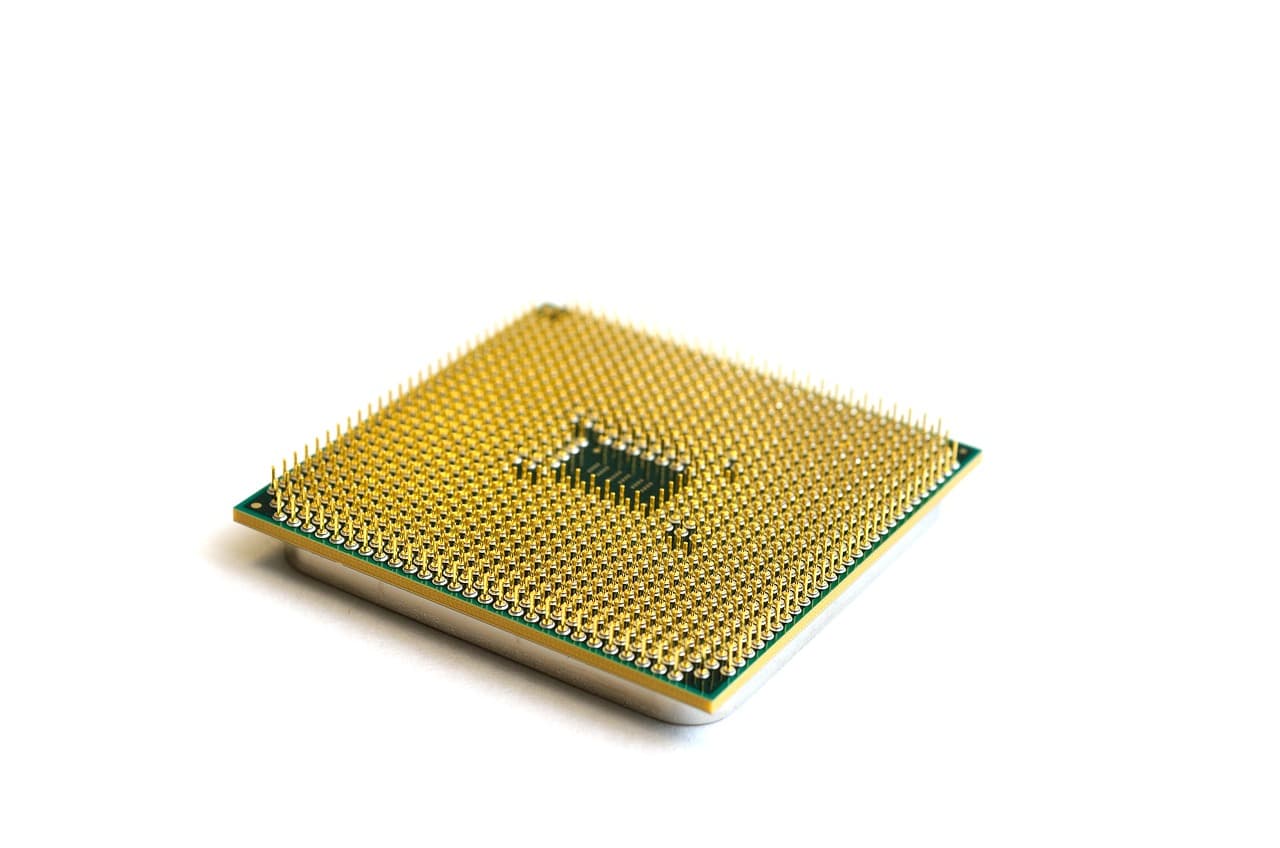
OpenAI has expanded beyond software by designing its own AI accelerator, the Jalapeno, co‑designed with Broadcom. According to Sarah Friar, OpenAI’s chief financial officer, the company used its own AI tools in the chip design process; the project reached the stage of handing off a finished chip design to a manufacturer in just nine months. That handoff marks the point when the design is finalized and ready for pre‑production work.
Developing in‑house chips has both financial and technical implications: running large language and other AI models is computationally expensive, and a major operating cost is compute capacity. Owning custom processors can reduce dependence on external chipmakers and allow hardware to be tailored more precisely to OpenAI’s workloads.
Samsung partnership extends beyond ChatGPT usage
Harrison Kim, OpenAI’s head in South Korea, said the company’s collaboration with Samsung has seen some of its biggest advances in jointly researching and producing next‑generation chips. Neither company disclosed detailed terms, and Samsung declined to confirm specifics citing customer relationships. What is clear is that the partnership goes beyond internal ChatGPT use by Samsung employees: the two firms are working together in the semiconductor domain.
Previously, Samsung and SK Hynix indicated they could supply memory dies for OpenAI’s Stargate data‑center program. Samsung is a particularly notable partner because it participates across much of the semiconductor value chain: it manufactures memory chips, designs processors, operates foundry capacity, and is also one of the world’s largest smartphone makers.
Could OpenAI chips end up in Samsung Galaxy phones?
Based on available information, it is not accurate to claim that OpenAI’s chips will later appear in Samsung Galaxy devices. The Jalapeno was described as an accelerator intended to speed inference for OpenAI’s services in data centers, not as a mobile phone processor.
Neither OpenAI nor Samsung has announced a joint mobile processor or a chip specifically intended for Galaxy devices. Nevertheless, the possibility is not out of the question: phone makers are increasingly moving AI tasks onto devices, which requires hardware optimized for those computations. If OpenAI develops lower‑power inference processors or chip designs suitable for on‑device use over the longer term, Samsung would be an obvious partner for manufacturing or integration.
One enabling factor already exists: since June, employees in Samsung’s Device eXperience unit have been allowed to use ChatGPT, Google Gemini and Anthropic Claude in their work, reflecting growing openness to integrating third‑party generative AI into devices.
Present reality: chip design and collaboration, no mobile guarantee
To summarize: it is a fact that OpenAI is designing its own chips (as the Jalapeno shows) and that it cooperates with Samsung on researching and producing next‑generation semiconductors. What is still only a technological possibility — not a confirmed plan — is that this cooperation will eventually result in an OpenAI‑designed accelerator appearing in a Galaxy phone.
The move indicates OpenAI’s intent to gain more control over the full technology stack required to run AI, from model development to hardware design and production.
The AI boom is reshaping finance
The spread of AI is already affecting global credit markets because data centers and AI chips require large capital investments. Morgan Stanley estimates that by the end of May 2026 some $236 billion (about 73.6 thousand billion forints) of AI‑related loans and bonds had been issued worldwide, roughly four times the level a year earlier. The bank expects that amount could rise to $570 billion (about 177.8 thousand billion forints) by year‑end.
Large guarantees from Google, Meta, Amazon and Microsoft play a key role in financing by lowering the cost of funding data centers and chip purchases. Morgan Stanley has sold more than $40 billion (about 12.5 thousand billion forints) of a new type of AI‑infrastructure bond since last year and is promoting the structure in Europe and Asia.
Rapid growth, however, brings fresh risks: an increasing share of financing is based not only on the creditworthiness of the largest tech firms but also on the business performance of AI developers such as OpenAI and Anthropic.
Conclusion
OpenAI’s hardware ambitions and its deepening semiconductor cooperation with Samsung mark important steps toward greater self‑sufficiency in AI infrastructure. Today, Jalapeno and the Samsung relationship are primarily focused on data‑center and research work rather than announced mobile integration, but the technical and commercial conditions exist for that relationship to expand into device‑level solutions over time.