Tibor Prievara, an English teacher and education expert, says that artificial intelligence (AI) is an unavoidable technology in education: like the internet, AI will be present whether schools ask for it or not. Although usage rates are high in Hungary, he notes a lack of regulation and pedagogical guidance compared with countries such as South Korea or Finland.
Prievara emphasizes that AI reshapes learning methodology rather than curricular facts — the Pythagorean theorem remains the same, but the approach can change. He argues that AI is beneficial when it supports learning, but harmful when it enables avoidance of work. For example, copying an AI-generated essay without engaging with it is cheating. To detect misuse, he suggests practical classroom checks, such as instructing students to include an unusual element (for instance the name of an Arsenal player, Declan Rice) so that its unexpected appearance in a generated text signals a problem.
Who should take responsibility, and what must teachers learn?
Prievara believes that setting frameworks is primarily the responsibility of education authorities, but teachers must also develop skills to recognize AI use and to decide where tools help learning and where they replace thinking. He highlights the technology’s astonishing speed as the major challenge: a book he wrote with Nádori Gergő was not published in print because its content would have become partly outdated by the time it reached press, so they issued a continuously updatable PDF instead.
To stay current, Prievara recommends teachers spend 1.5–2 hours daily on self-education. The aim is broader digital literacy, not only AI familiarity, so educators don’t become what he calls "dinosaurs."
A pedagogical shift is needed
Prievara does not advocate purely technical, uniform guidelines; he calls for a pedagogical paradigm shift. If teachers use AI to accelerate old, frontal methods — for example producing prettier presentations — that does not renew education. Real progress demands rethinking the teacher’s role and methods so that AI becomes genuinely empowering.
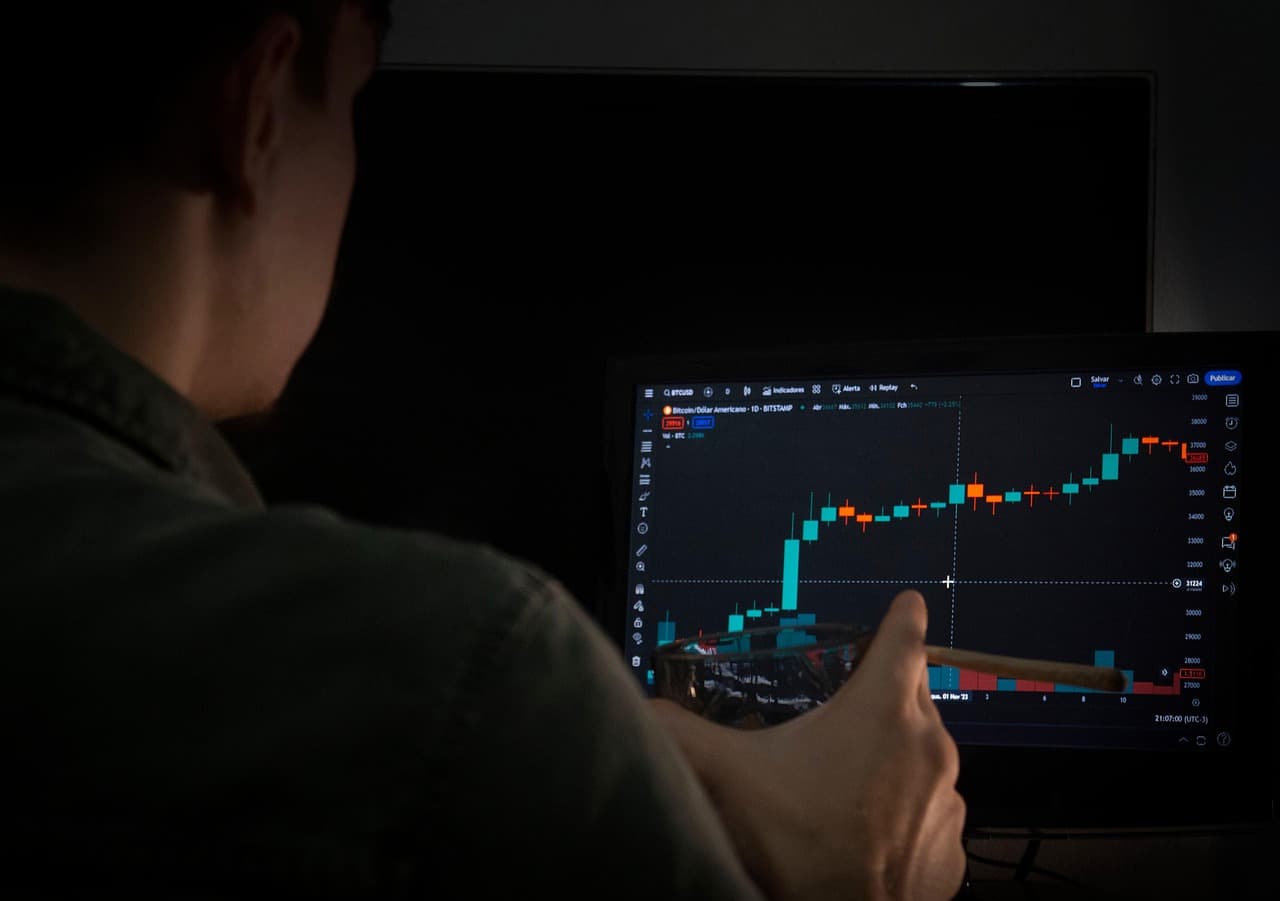
He illustrates creative uses from his own practice: without programming skills he created 124 interactive applications, and AI can enable complex learning scenarios — such as an interactive stock-market simulation where students make investment decisions, manage portfolios, and experience profit or loss while practicing reading comprehension, decision-making, and data analysis within an English lesson.
What is AI good for, and where are the pitfalls?
Prievara says AI’s true power lies in handling processes too complex to manage manually: for example, running a multi-factor decision-making simulation or instantly generating practice exercises that combine a new grammar point with previously learned vocabulary. But he warns that AI’s statistical nature can produce errors — it may be mostly accurate but occasionally serious mistakes can occur (for example placing a country on the wrong continent). Therefore teacher supervision and professional oversight are essential.
The most dangerous trap is apparent speed: the first 70 percent of development is easy, but the final 10 percent that makes a product truly usable and error-free requires much more time and energy. AI can take over the "dirty work," but in return it requires more vigilant and thorough checking from educators.
Labour market effects and skills to cultivate
Prievara expects AI-driven labour-market shifts to affect occupations unevenly: trades requiring physical skills (for example plumbers or electricians) and high-level creative work (for example composers) are relatively secure because humanoid robots are costly and human creativity is hard to substitute. Middle-level administrative and customer-service roles are more likely to be replaced. The main challenge is motivating students for long-term learning in an era of fast generative tools, and building frustration tolerance so learners persist through lengthy development processes rather than accept immediate, mediocre outputs.
Context: Forbes and HiSchool collaboration
This article was produced in collaboration between Forbes Hungary and HiSchool, a foundation that supports secondary schools. As part of the program, eight students learned about the Forbes newsroom and wrote articles on chosen topics; their pieces were edited by Kis Judit, senior staff writer, who served as mentor.
Tibor Prievara currently teaches English at Budapest Baptista Középiskola, previously taught at ELTE Apáczai Csere János Gyakorló Gimnázium, and is known in Hungary as an expert in gamification. His work has received several recognitions, including the title Digitális Pedagógia Nagykövete.