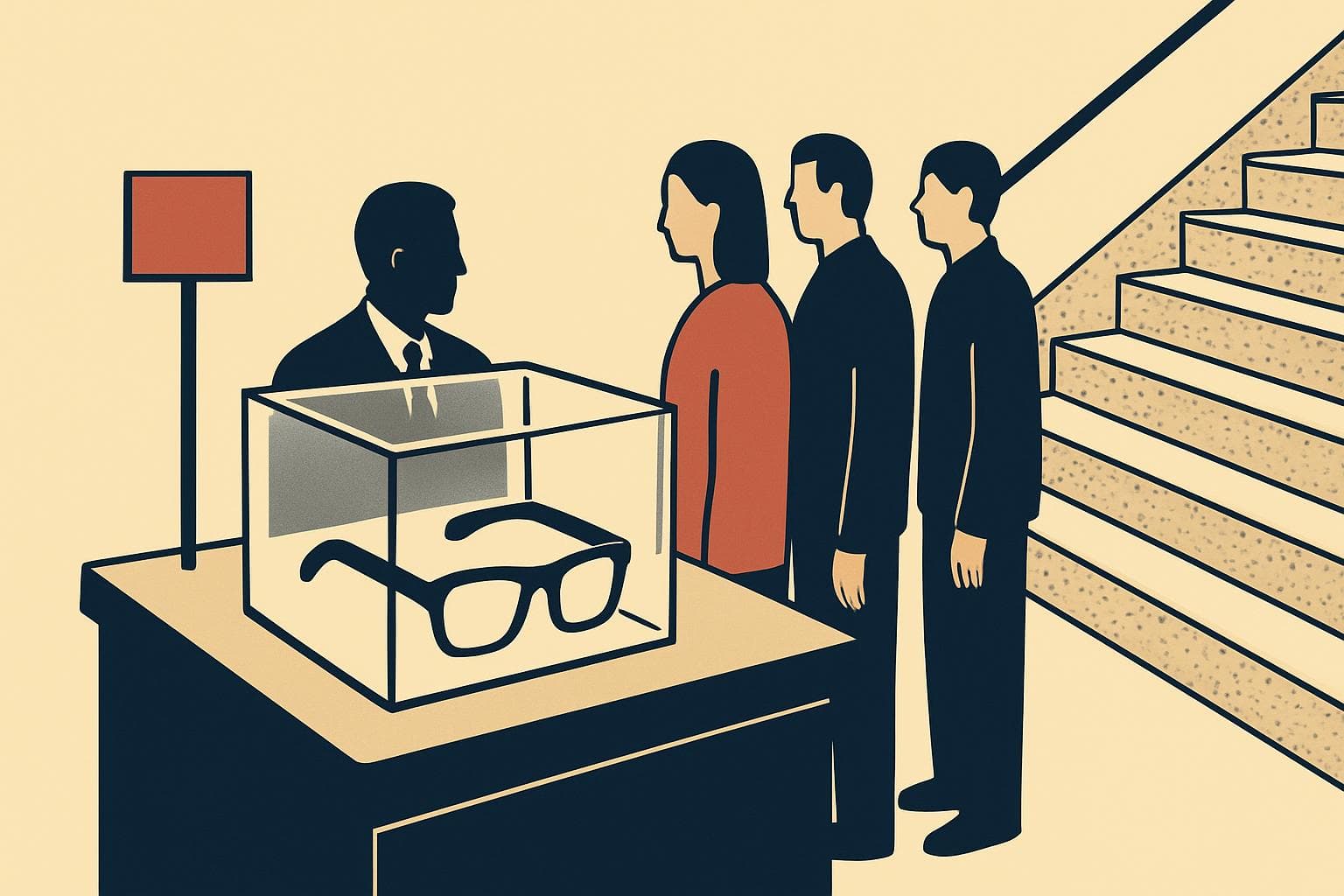
Restrictions on smart glasses are spreading across pubs, court buildings and public offices. The British pub chain Wetherspoons banned recordings made with smart glasses in roughly 800 of its pubs in August. Courts in England and Wales have also prohibited the devices from courtrooms. In the United States, New York State has barred smart glasses from all courthouse buildings. The Australian government is considering a move that would, if implemented, make it the first country to prohibit smart glasses in public offices and other government buildings.
Why authorities are acting
The measures stem mainly from privacy and security concerns. Cameras and microphones built into smart glasses can continuously record and transmit images and audio, raising issues for personal privacy, legal proceedings and public safety. In courts, for example, live recordings could endanger the integrity of proceedings and the rights of the parties; in hospitality settings, customers and staff may reasonably expect protection of their privacy and a secure environment.
Rapid market growth and a dominant player
Part of the increased scrutiny is linked to rapid sales growth. Meta Platforms, Inc. partnered with EssilorLuxottica, the manufacturer of Ray-Ban sunglasses, in 2023 to produce smart glasses. Although adoption was not immediate, sales accelerated: in the first half of this year sales of smart glasses rose by 212 percent compared with the same period last year.
Meta now accounts for about 85 percent of the market, and the company sold roughly 7 million units last year. Those figures help explain why the technology has attracted attention from both public authorities and private operators.
Practical consequences for users and operators
Visitors and patrons should expect that recording with smart glasses may be forbidden in many settings. Hospitality operators are introducing their own rules, courts are prohibiting the devices from courtrooms on legal grounds, and potential Australian government action could extend bans to state buildings and public offices.
The evolution of these rules will depend on technological developments, consumer behavior and legislative responses. Current measures aim to protect data and maintain public safety while the market dynamics and manufacturers’ actions continue to shape the debate.