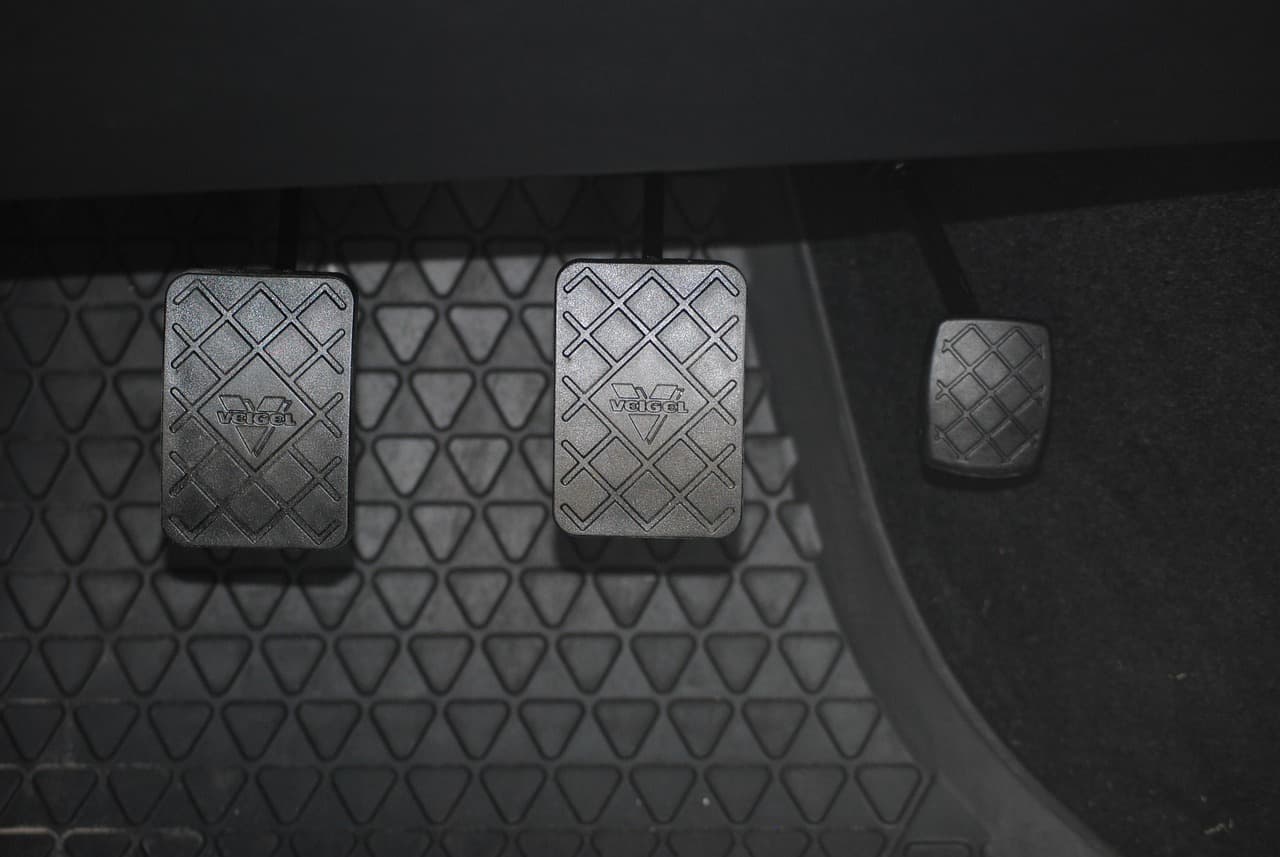
The U.S. Department of Transportation (DOT) has put forward a regulatory change that would permit manufacturers to omit brake pedals from vehicles that are “designed to be driven exclusively by automated driving systems.” If enacted, the proposal would remove a significant regulatory hurdle for companies like Tesla and Zoox, which are developing purpose-built, fully autonomous vehicles without steering wheels or pedals. The public now has 30 days to submit comments before the DOT decides whether to approve the change.
Regulatory context and recent actions
The proposal is the latest in a series of DOT-era changes affecting vehicle rules. Late last year, the National Highway Traffic Safety Administration (NHTSA) proposed rescinding or amending several Federal Motor Vehicle Safety Standards (FMVSS) requirements, including rules related to windshield wipers and defogging systems and tire placards.
Similar steps were taken under the Biden administration as well: during his presidency the NHTSA proposed and finalized a rule that allowed autonomous vehicles to operate without steering wheels.
At present, companies developing autonomous vehicles that lack parts required by FMVSS must request exemptions from the federal government. Even when exemptions are granted, regulations can limit how many exempted vehicles are allowed on public roads.
According to the NHTSA, removing mandatory parts such as brake pedals could in theory accelerate getting fully autonomous vehicles into service.
NHTSA statement
“We are at the cusp of the greatest technological revolution in vehicle technology since the innovation of the Model T,” said Jonathan Morrison, NHTSA Administrator, in a statement. He added that under Secretary Sean Duffy’s AV Framework, NHTSA is removing pointless barriers to innovative designs while strengthening the fundamental safety requirements that matter and holding AV developers accountable for safe performance.
Industry developments
Tesla has spent recent years developing a two-seater vehicle it calls the Cybercab, intended to operate without a steering wheel or pedals. Tesla has not applied for an exemption from FMVSS standards that require those controls; CEO Elon Musk has said repeatedly that the company would deploy the vehicles nationwide once regulatory approval is received.
Meanwhile, Tesla has operated a small robotaxi service in Austin, Texas, over the past year. The service began with safety drivers in the front seats but has steadily removed those drivers, with the cars now operating described as “unsupervised.” Tesla has admitted to the NHTSA that it uses teleoperators to monitor and, in rare cases, remotely move vehicles at low speeds after crashes or to avoid obstacles.
Zoox, owned by Amazon, applied for and was granted an exemption from FMVSS standards last year so it could demonstrate its purpose-built robotaxi. The company has since applied for a further exemption to operate that robotaxi commercially and is awaiting a decision.
Companies such as Waymo, which retrofit or modify regular production vehicles (for example the Jaguar I-Pace), have been able to deploy as many robotaxis as they wish because those vehicles retain manual controls.
Why it matters
The DOT proposal would make it easier for manufacturers to bring fully autonomous, interior-optimized vehicle designs to market more quickly. At the same time, it raises questions about safety oversight, regulatory control, and how exemptions will be managed, given that prior exemption regimes have limited the number of exempted vehicles allowed on roads.
After the 30-day public comment period closes, the DOT will decide whether to finalize the changes.