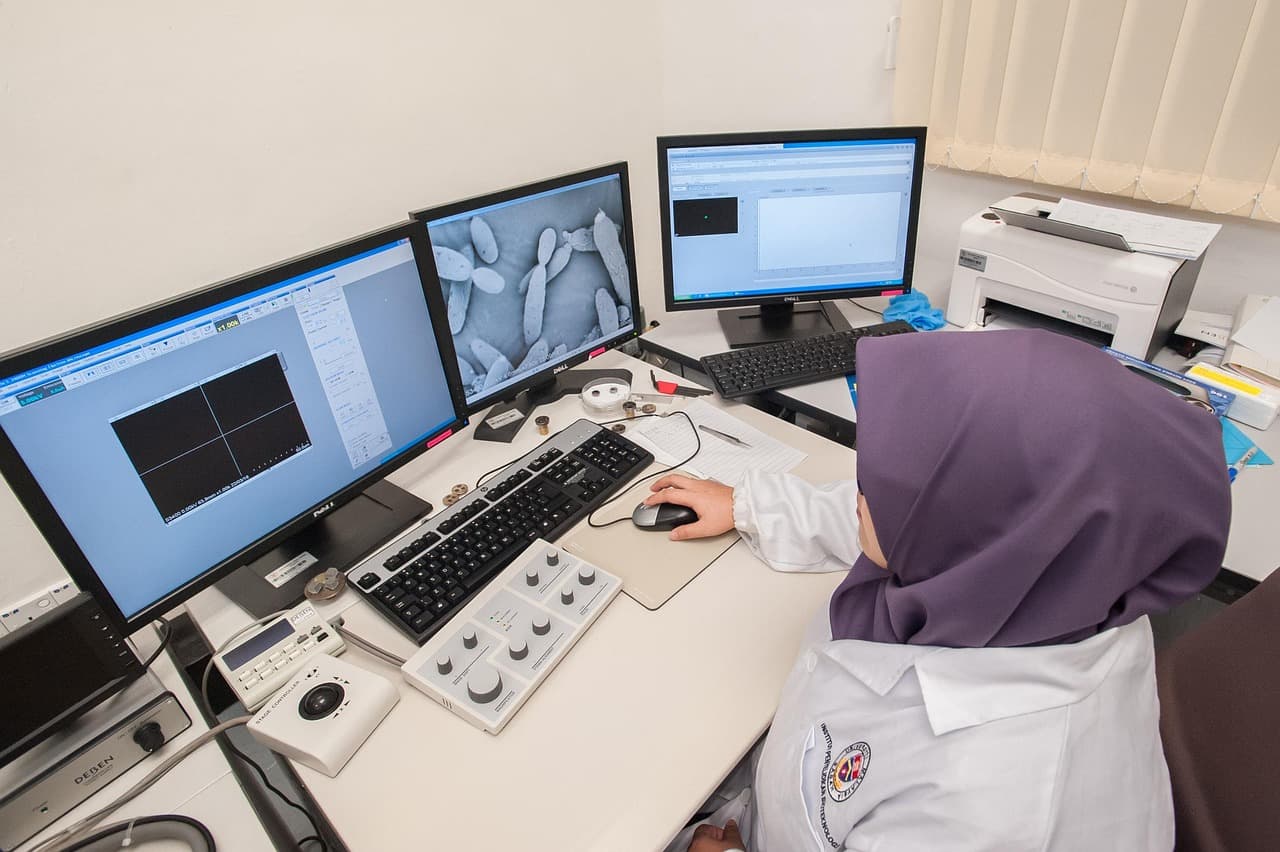
Drug-resistant infections kill more than one million people each year, while major pharmaceutical companies have largely stepped back from developing new antibiotics because the necessary research and development is time-consuming and expensive. Autumn Arnold, a PhD student in the Stokes Lab at McMaster University, developed an artificial intelligence model intended to help address this gap.
The ESKAPE model
The model, called ESKAPE, predicts which chemical compounds might have antibacterial activity. It is available free to researchers: users upload a list of compounds and receive predictions about their likelihood of killing dangerous bacteria. Jonathan Stokes, a microbiologist who runs the lab, said, “All you need is an internet connection.”
Researchers retain ownership of any discoveries made using the tool, and they are not required to share the compounds they submit.
Why this matters now
Stokes highlighted structural barriers in antibiotic development: “We have this perfect storm with rising resistance, a really lean antibiotic pipeline, and enormous economic headwinds.” He noted that developing a new drug can cost about $1 billion and rarely returns that investment.
Performance and scale
According to the team, the ESKAPE model has screened more than 12 million molecules to date. The system can evaluate over 40,000 compounds per day, which could dramatically accelerate the identification of candidate antibiotics and reduce the number of laboratory experiments needed.
Other approaches
The article also notes parallel efforts: researchers at the Massachusetts Institute of Technology (MIT) and Sweden’s Karolinska Institutet are using “generative deep learning” to design entirely new molecules to target antibiotic resistance.
A collective effort
“This is a global problem,” Stokes said, emphasizing that broad collaboration is necessary. Making ESKAPE freely available gives researchers worldwide a tool to speed up compound screening and potentially advance the discovery of urgently needed antibiotics.