Nvidia’s board reinstated its previously dismissed leader Jensen Huang after an intervention by US President Donald Trump, according to the source article, which cited an analysis by MarketWatch. The company’s shares rose more than 31% following the decision, but the president’s involvement also raised corporate governance and national security questions.
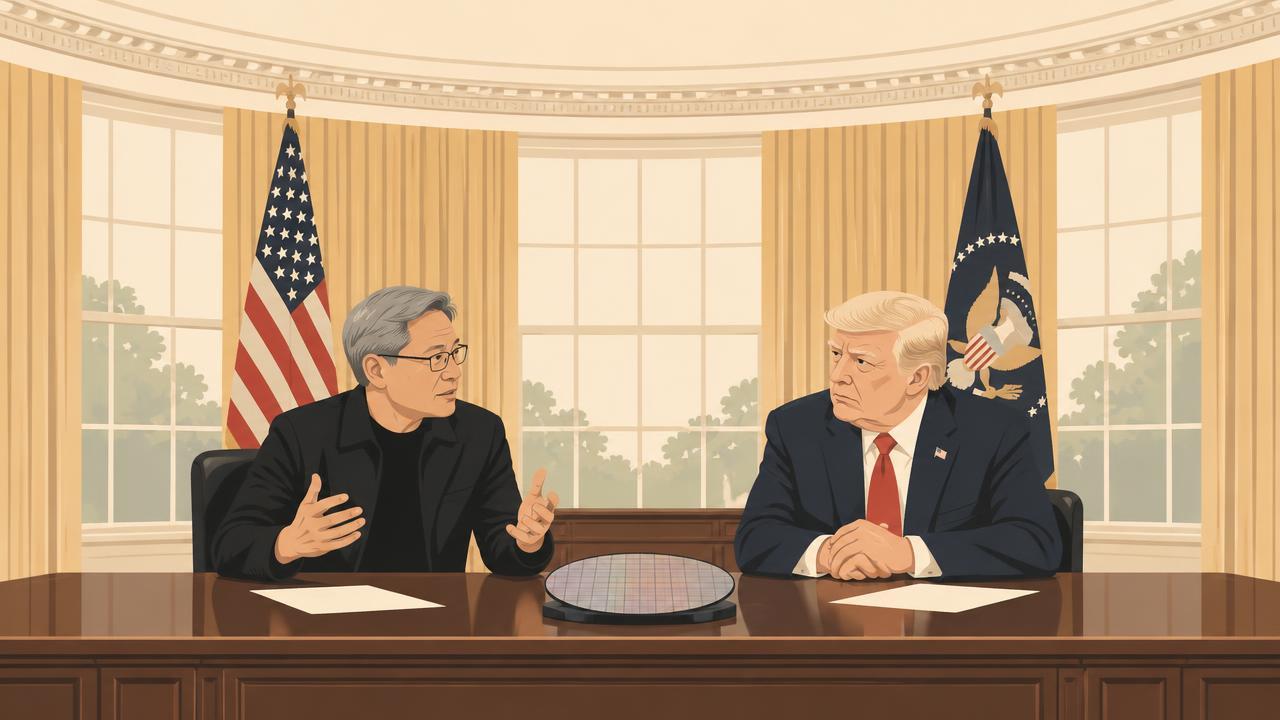
Trump told CNBC on Monday that he had personally helped secure Huang’s return, calling him a national treasure. He said he spoke with Nvidia’s board on Sunday and found it easier to persuade directors after the previous week’s share-price decline, which intensified on Friday, than he had a week and a half earlier.
MarketWatch reported that some market participants compared the intervention to government rescues during the 2008–2009 financial crisis and the idea that an institution can be “too big to fail.” Analysts at investment bank William Blair argued that Huang was too important to dismiss. They said his return had eased pressure on the stock while leaving serious questions about the company’s governance.
Background to the dismissal
According to the source article, Huang’s dismissal followed undisclosed relationships with a direct report and with another woman suspected of working for Chinese intelligence. The board had previously commissioned an independent investigation into whether Huang had been targeted by a foreign intelligence operation. Press reports said directors were particularly concerned about his lack of candor and lies.
Trump played down the national security concerns, arguing that the US technology industry would face a greater loss if it were deprived of Huang’s expertise in artificial intelligence chips. The president suggested that Huawei or another Chinese company could recruit the Taiwan-born executive.
In a statement issued before the stock market opened, Nvidia said its board had unanimously reinstated Huang as chief executive and chair. The company said the decision followed discussions with Huang in which directors were satisfied with his candor. It also said information received from senior levels of the US government indicated that his return posed no national security risk.
Congressional and expert criticism
Lawmakers from both major US parties criticized the decision. Congress is also examining how Chinese companies obtained Nvidia’s advanced semiconductors despite US export restrictions.
Democratic Senator Elizabeth Warren called Huang’s reinstatement irresponsible and asked the Trump administration to explain the government guidance it had given the company. Republican Senator John Cornyn questioned the basis for asserting that there was no national security risk.
According to the source article, Huang is due to appear behind closed doors before three House committees on December 1 and at a public hearing before the Senate Banking Committee on December 3.
Corporate governance specialists also criticized the developments. Ann Skeet, acting head of Santa Clara University’s ethics center, called it astounding that the board had brought back a leader who had broken rules before completing its own investigation. She described the presidential intervention as a step toward nationalization. Adam Grant, a management professor at the Wharton School, said the episode sent a message that accountability was lacking. Another expert, however, argued that the board had erred in the first place by forcing out a founder considered irreplaceable over a single rule violation.