ResearchMythos Preview often gave better suggestions for research steps than human researchersThe system Mythos Preview suggested a better next step than human researchers 64% of the time when evaluating research sessions that had gone off track; this is a significant improvement over 22% in 2024.1 min read
ResearchMythos Preview achieved a 52× speedup on a code-optimization test, Claude Opus 4 only ~3×Two large language models were compared on a code-optimizing test: Claude Opus 4 achieved on average about a 3× speedup in May 2024, while the April Mythos Preview showed roughly a 52× improvement.1 min read
ResearchEnsuring sex-aware digital twins in cardiologyDigital twin technology promises personalized cardiology by creating patient-specific virtual heart models, but its effectiveness depends on representative, sex-aware medical data.4 min read
ResearchRichard Sutton and Banafsheh Rafiee Outline 'Enactive AI' Vision but Offer Few Practical StepsRichard Sutton and Banafsheh Rafiee propose "enactive AI," an approach that treats intelligence as something emerging from agents acting in environments rather than from passive prediction on labelled data.2 min read
ResearchMiniMax M3 became the leading open model in Next.js agent evaluationsMiniMax M3 became the best open model according to the latest Next.js agent evaluations, thereby surpassing other open solutions.1 min read
ResearchDeepSWE: a new, more realistic agent code benchmark in place of swe-bench's problemsIn response to evaluation issues with swe-bench, the DeepSWE benchmark was introduced; it is the first substantive agent codebench and offers a more orderly, reproducible measurement framework for studying LLM-based code agents.1 min read
ResearchTerence says AI reduces the cognitive barriers of research and expands scientific possibilitiesIn a conversation with OpenAI's Mark Chennel, Terence said that artificial intelligence can reduce the cognitive friction of research, preserve the pathways behind discoveries, and expand what…1 min read
ResearchFine-tuned model composes and corrects generated images in stagesResearchers fine-tuned BAGEL-7B to generate images by iterating through planning, sketching, inspecting and refining stages, using datasets produced with GPT-4o and FLUX.1 Kontext.4 min read
ResearchMicrosoft Research's SkillOpt trains agent skills in text via SKILL.mdMicrosoft Research introduced SkillOpt, a method that trains agent skills entirely in text by treating a SKILL.md file as a trainable external parameter rather than fine-tuning model weights.2 min read
ResearchMultiple AI systems independently solved longstanding Erdős problems within daysIn a single week, models from Anthropic, OpenAI and DeepMind independently overcame an 80‑year‑old barrier in the Erdős unit‑distance conjecture and related problems.5 min read
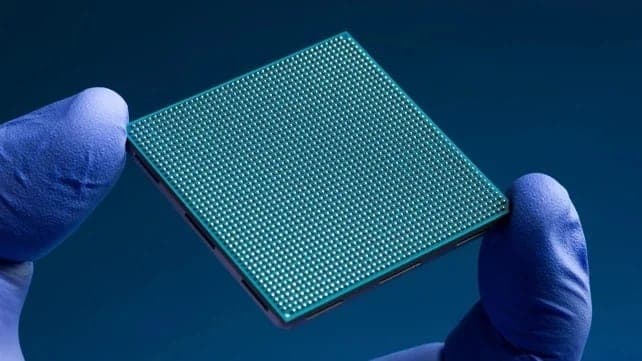
ResearchNASA develops radiation-hardened AI-capable SoC for deep-space missionsNASA, in cooperation with Microchip Technology, has built and begun testing a radiation-tolerant system-on-a-chip called High Performance Spaceflight Computing (HPSC) to enable local AI-driven data processing on distant missions.2 min read
ResearchAI refutes Erdős's 1946 lattice-graph conjectureA recent artificial intelligence system has produced a counterexample to a conjecture proposed by Pál Erdős in 1946 that the square lattice maximizes the number of unit-length connections among points in the plane.2 min read