ResearchDeepSWE: a new, more realistic agent code benchmark in place of swe-bench's problemsIn response to evaluation issues with swe-bench, the DeepSWE benchmark was introduced; it is the first substantive agent codebench and offers a more orderly, reproducible measurement framework for studying LLM-based code agents.1 min read
ResearchTerence says AI reduces the cognitive barriers of research and expands scientific possibilitiesIn a conversation with OpenAI's Mark Chennel, Terence said that artificial intelligence can reduce the cognitive friction of research, preserve the pathways behind discoveries, and expand what…1 min read
ResearchFine-tuned model composes and corrects generated images in stagesResearchers fine-tuned BAGEL-7B to generate images by iterating through planning, sketching, inspecting and refining stages, using datasets produced with GPT-4o and FLUX.1 Kontext.4 min read
ResearchMicrosoft Research's SkillOpt trains agent skills in text via SKILL.mdMicrosoft Research introduced SkillOpt, a method that trains agent skills entirely in text by treating a SKILL.md file as a trainable external parameter rather than fine-tuning model weights.2 min read
ResearchMultiple AI systems independently solved longstanding Erdős problems within daysIn a single week, models from Anthropic, OpenAI and DeepMind independently overcame an 80‑year‑old barrier in the Erdős unit‑distance conjecture and related problems.5 min read
ResearchAI refutes Erdős's 1946 lattice-graph conjectureA recent artificial intelligence system has produced a counterexample to a conjecture proposed by Pál Erdős in 1946 that the square lattice maximizes the number of unit-length connections among points in the plane.2 min read
ResearchNASA develops radiation-hardened AI-capable SoC for deep-space missionsNASA, in cooperation with Microchip Technology, has built and begun testing a radiation-tolerant system-on-a-chip called High Performance Spaceflight Computing (HPSC) to enable local AI-driven data processing on distant missions.2 min read
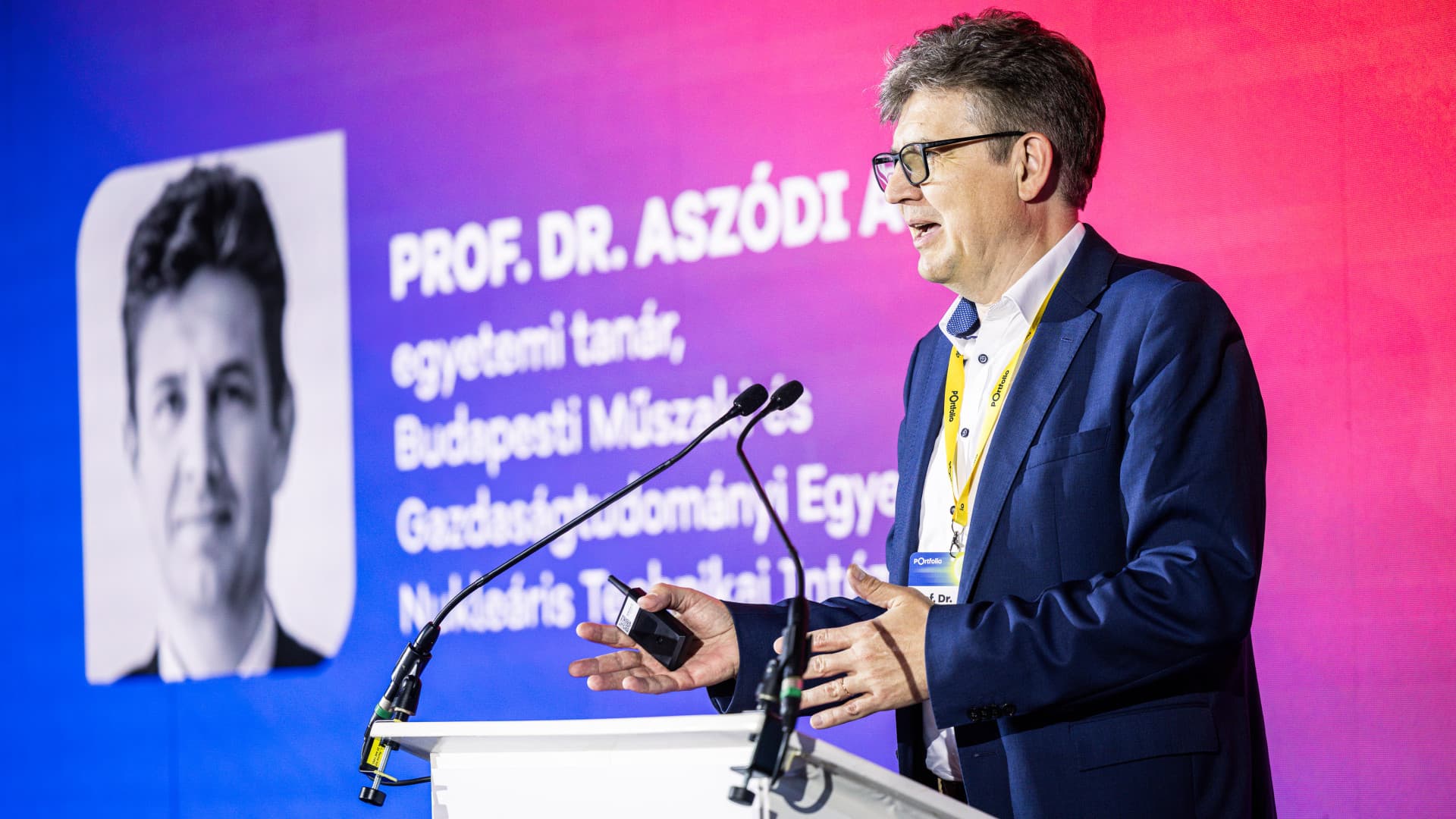
ResearchAI and Data Are Reshaping Power Systems, BME Research ShowsAt the Portfolio AI in Energy 2026 conference, Aszódi Attila of the Budapesti Műszaki és Gazdaságtudományi Egyetem (BME) argued that data-driven artificial intelligence is transforming electricity systems by handling growing volumes of distributed generation and stochastic processes.3 min read
ResearchAI now writes roughly a third of code and boosts senior developers' productivityA study by Johannes Wachs (Budapesti Corvinus Egyetem and ELTE KRTK KTI) finds that around 30% of code is already produced with AI assistance, with rapid adoption following tools like GitHub Copilot and ChatGPT.3 min read
ResearchAI systems using Large Language Models and Lean prove multiple longstanding Erdős problemsGoogle DeepMind’s AlphaProof Nexus, which pairs a large language model with the Lean proof assistant, has reportedly solved nine open problems posed by Paul Erdős, including two that had been unsolved for 56 years.3 min read
ResearchEKÖP and EKÖP KDP Fellows Present Research on AI, Sustainability and Industry at Széchenyi UniversityRecipients of the Egyetemi Kutatói Ösztöndíjprogram (EKÖP) and the Kooperatív Doktori Program (EKÖP KDP) presented 62 research talks across eight sections at a conference organized by Széchenyi István Egyetem in Győr.3 min read
ResearchOpenAI internal model produces counterexample to Paul Erdős's 1946 unit distance conjectureAn internal reasoning model at OpenAI generated a construction that refutes a 1946 conjecture of Paul Erdős about the maximum number of unit-distance pairs among n planar points, producing about n^{1+0.014} pairs.2 min read